'Books like this get people debating': Why smash-hit tradwife satire Yesteryear is 2026's most divisive book

 Getty Images/ Harper Collins
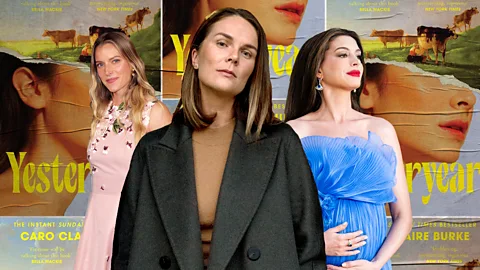
Caro Claire Burke's debut novel Yesteryear is the book of the season – and quite likely the year, too. Here's why this satirical novel about tradwives and womanhood in the US has everybody talking.
Take a quick scan of the hotel pool, beach or airplane this summer and there's a good chance you'll see someone immersed in the pages of Yesteryear.
Caro Claire Burke's debut novel was published in April to great fanfare. It is the story of a successful "tradwife" influencer who finds herself transported back to the 1800s. Buzz about the book has only snowballed from there. It's spent weeks on the New York Times bestseller list, and topped the Sunday Times hardback fiction chart in the UK.
It's not just that people are buying it in droves – they're also talking about it en masse. On Bookstagram and BookTok, the literary nooks of social media, Yesteryear takes are ubiquitous. In June the novel topped the new BookTok chart, meaning it was the most talked-about title on the platform. In group chats and bookclubs, readers are fiercely debating its merit.
What's it about?
Yesteryear's protagonist is Natalie Heller Mills, a 32-year-old married mother of five (soon to be six) who documents her family's apparently idyllic life on their 500-acre Idaho farm to millions of social media followers. Her character mirrors the real-life internet subculture of women who promote and imitate traditional gender roles, where men are the breadwinners and women their subordinates, prioritising raising children and housekeeping.
Natalie bakes sourdough, home-schools her children, drinks milk fresh from her cow, collects eggs from her chickens ("the ladies") each morning – all with a gleaming smile on her face. At least, for as long as the camera is rolling. Natalie's perfect life is a carefully constructed façade, but it's a compelling and lucrative one.
Then, one day, she wakes up and finds herself living slap-bang in the past that she has been romanticising – 1855 to be exact. When cosplay becomes reality, the "good old days" suddenly don't seem so rosy after all. The book flips between the present and a nightmarish version of the past, with how and why Natalie ended up in the 1800s only revealed at the end.
A runaway hit with real-world parallels
Why has the book proved so popular? Certainly, the publishers invested in an intense marketing blitz. And the enthusiasm of Anne Hathaway – who saw an early draft, bought the rights and will produce and star in the film – has helped put eyes on it. But the real pull of Yesteryear is that simple but delicious "what if"' premise: what if a woman who imitates a bygone way of life was forced to live the reality of that fantasy? And what if, we, the reader, got a ringside seat to her downfall?
"The idea of sending an influencer back into the past to live as a real-life pioneer woman? I was jealous," says Leigh Stein, author of several novels satirising internet culture, including Self Care and If You're Seeing This It's Meant For You. "I was like, 'why didn't I think of that?' It's such a brilliant idea."
 Getty Images
The tradwife is having a moment in fiction, with three thrillers titled Trad Wife or Tradwife published this year, each playing on the idea that picture-perfect lives are rarely what they seem.
"I think people are fascinated with the tradwife because she's such a larger-than-life and exaggerated figure," says Dr Rachel Sykes, associate professor in contemporary literature and culture at the University of Birmingham. The inherent paradox of a tradwife, who apparently scorns career women while at the same time building her own successful business, also makes them ripe for cultural dissection. And the rise of conservative female influencers is jarring for progressives, says Sykes. "The tradwife figure really crystallises a lot of that, and books like this get people debating what matters to them."
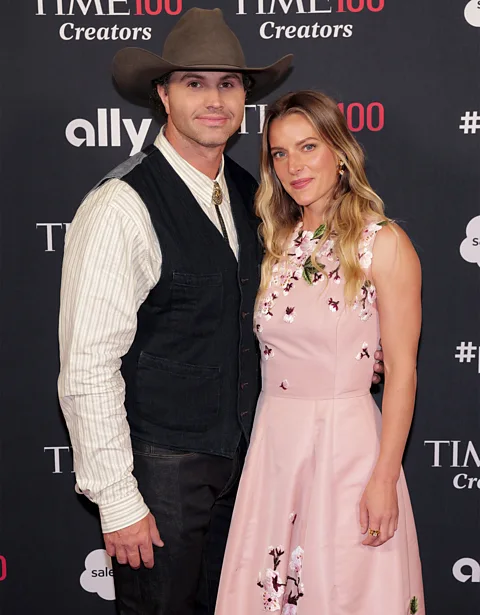
Readers and critics have pointed to Hannah Neeleman, otherwise known as Ballerina Farm as a real-life inspiration for Yesteryear. Mother of nine, Neeleman, a Mormon, shares dispatches from her life on a Utah farm with more than 10 million Instagram followers. Both Neeleman and Natalie attended a prestigious college (Neeleman studied dance at New York's Juilliard, Natalie is a Harvard dropout). Each marry into money and start a family in their early 20s. Ultimately, both women build a social media empire and successful product line that trades off their domestic life.
Neeleman, who doesn't call herself a tradwife, seems unfazed by the Yesteryear hype, telling Vulture: "I've had an online presence for enough time to know that people like to be entertained… I'm surprised it didn't come sooner."
This self-awareness is also shared with Natalie, who states in the book: "The goal of the influencer is not to be lovable, and it is not to be unbearable. The goal is to be both at once. In other words: addicting."
What the book gets right
Stein thinks the book smartly reflects our complicated relationship with social media. "Something I think [the author] did really well is capture the symbiotic relationship between an influencer and her haters. The haters can't look away and the influencer needs their engagement."
The Yesteryear author is a former journalist who has reported on the tradwife movement, and dissected it on TikTok. "I think there's something about the tradwife discourse that seems to intersect with every imaginable conversation about modern womanhood," she said in an interview with Literary Hub. "What you choose to do with your career, when you decide to have kids (if at all), who you marry, what a marriage looks like…"
 Getty Images
Joanna Mackenzie, a literary agent from Chicago, thinks the novel succeeds. "It had me from the first line," she says. "The author masterfully takes us all the way from childhood into menopause with this character, and shows us all parts of womanhood in contemporary culture, the choices that women have to make and what's thrust upon them."
'Deeply flawed 'characters
Natalie is an unlikeable, unreliable and yet compelling narrator. "For me she is super-complicated and deeply flawed," says Mackenzie. "But there were also so many times when I felt sympathy for her, because she was just trying to make her way in a world that hates women, and do the best with the beliefs that she was indoctrinated with."
Natalie is swift to judge everyone she encounters, from her too-passive husband to the "angry women" who comment on her Instagram posts.
The book also takes broad swipes at judgemental liberal feminists. "Tradwives are quite an easy target, which I think she does capture in the novel," says Sykes.
Why readers are divided
In Yesteryear, the tradwife is a Trojan horse for a laundry-list of cultural obsessions: the influencer economy, the facade of social media, "girl boss" feminism, the manosphere, religion, marriage, motherhood. But does it have anything substantial to say about them? That's where readers disagree.
Sykes wishes the author had explored her characters' motivations more. "I felt like it was a very unsympathetic portrayal of everyone. I'm all for unlikable protagonists, but when it's a tradwife figure, if you make them too dislikable it's harder to get an insight into that psychology."
She also feels the book could have dug deeper into its politics. "It's very good about the labour of a tradwife, how much help they have," says Sykes. "I wish there had been more of a reckoning with what it means not just to be invested in that idea of womanhood in the present, but to be selling it to other women."
More like this:
Despite its great premise, Stein also felt the book ultimately had little of substance to say. "I am perplexed by the people who feel like this book is saying something smart about what it's like to be a woman in America," she says. "I didn't find it to be a coherent critique of anything. Ultimately, I felt like the novel was just saying all women are unhappy. That is so bleak and depressing."
Perhaps less important than what the book itself has to say about the topics it raises, is that it's getting people debating those very issues. "I haven't heard anyone having passive conversations about it," says Sykes. "It is good for book culture to have something that people want to talk about so much."
Yesteryear is out in hardback now.
--
If you liked this story, sign up for The Essential List newsletter – a handpicked selection of features, videos and can't-miss news, delivered to your inbox twice a week.
