How US tech helped create modern Italian gelato

 Getty Images
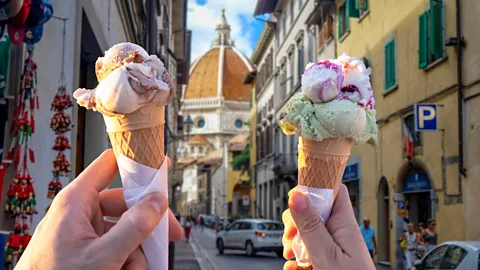
Gelato is synonymous with Italy, but its modern origins go back to a humble dairy shop in Tuscany and a couple of abandoned American World War Two freezers.
Each summer, tens of millions of international travellers descend on Italy, and many of them will order at least one gelato sometime during their stay. But chances are that very few of these visitors – or even many Italians themselves – realise that one of the most quintessentially Italian treats may never have taken off were it not for American technology.
To understand how that creamy deep-green pistachio, chocolate-striped stracciatella or sun-yellow crema made it onto your cone, you have to venture back to a modest Tuscan dairy shop and a couple of abandoned US military freezers.
The Italian ice age
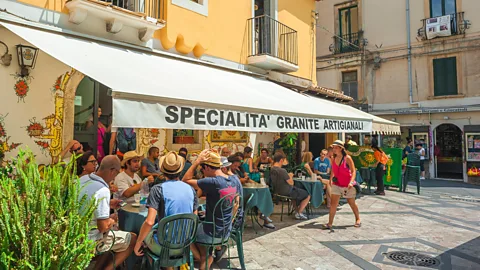
Long before modern Italians were ordering gelato from beachside resorts, their ancient Roman ancestors were chilling honey-sweetened wines and fruit syrups with mountain snow, creating sorbet‑like icy treats. By the 9th Century in Sicily, the island's Arab rulers were blending snow from Mount Etna with sweetened citrus, jasmine and rosewater to make sherbet – a legacy that lives on in Sicilian granita today.
 Alamy
AlamyBy the Renaissance, cooks across northern Italy were experimenting with fruit purées and spiced creams chilled with Alpine snow, which paved the way for Bernardo Buontalenti's 16th-Century breakthrough in Florence. The architect enriched the mixture with eggs and milk, producing a custard-like base that froze into something far silkier than the snow-filled creams that had come before, and creating the template for modern gelato.
Soon after, artisans in Florence, Venice and Sicily began producing frozen creams in micro-batches, using hand-cranked sorbettiere (ice cream makers) and natural ice harvested from snow pits. These early gelato prototypes were dense, custard-forward and unstable, melting quickly and requiring constant attention. Because freezing relied on snow, salt and manual labour, gelato-making was a hyper-local neighbourhood craft. Even when electric refrigeration arrived in the late 1920s, production remained limited due to the high cost.
Gelato simply couldn't travel; it had to be made and eaten close to home. That's where Tuscan creativity met American engineering.
The American difference
Empoli, a Tuscan town west of Florence, was still piecing itself back together in 1946 after the brutal fighting that had led to its World War Two liberation two years earlier.
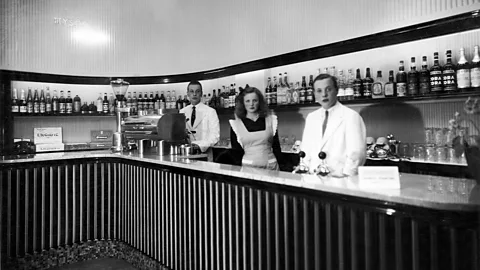
In the calm that followed, Romeo Bagnoli, a railway crossing keeper, took over a modest dairy shop on Via del Giglio. By 1946, his eldest son, Renzo, had turned it into a bar called Sammontana serving coffee, pastries, and, in the summer, small batches of gelato with their one unreliable refrigerator.
 Sammontana
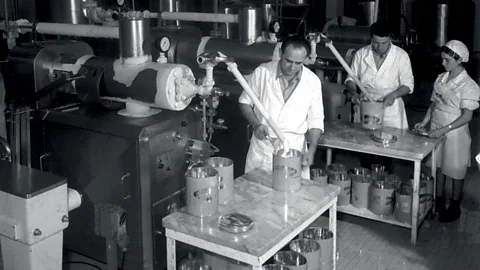
After the war, abandoned Allied machinery was available for everyday Italians to purchase. Renzo and his brothers, Sergio and Loriano, acquired two industrial-grade American military freezers and later salvaged commercial ice cream machinery from a scrapyard, reworking the parts until they could produce continuous batches – allowing them, for the first time, to freeze gelato steadily rather than in tiny stop-and-start portions.
This American addition had huge implications: unlike the fattier ice cream, which had already been popular in the US for nearly a century and can tolerate longer freezing cycles, gelato needs a fast, consistent freeze to maintain its dense texture. The Bagnolis could now produce smooth, stable gelato without ice crystals in large enough batches that they could sell it beyond their neighbourhood, while still preserving the artisanal character that defined Tuscan gelato.
With their freezers humming in the back of the dairy shop, the Bagnoli brothers began tinkering with their early gelato recipe to create a mix that stayed smooth after freezing – a major hurdle before the 1940s.
They adjusted fat ratios; used ingredients like gelatin to keep the formula smooth; and slow-churned their ingredient bases so the resulting mixture was fluffy, not dense. Their repeatable formulas marked the beginnings of a consistent, scalable model of making gelato that later became industry-wide practice across Italy.
 Sammontana
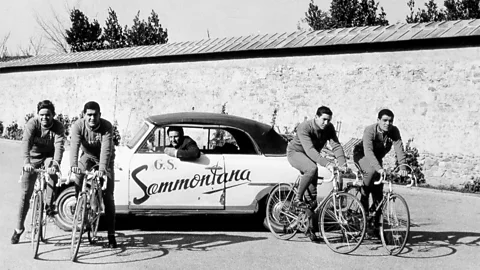
With insulated trucks not yet available, the brothers also built their own temperature‑controlled supply chain: packing metal canisters in ice and salt, lining wooden crates with straw and adapting military supply boxes into makeshift insulated containers. By 1948, they were delivering their Sammontana gelato by bicycle around Empoli and across Tuscany in a small truck.
"[The Bagnoli brothers] devised a six‑litre canister that fit neatly into their improvised supply chain. Bars and cafes could scoop directly from the canister," said Italian food historian Luca Cesari. "When they began lending bar owners their freezer units free of charge, the model was complete."
It was the blueprint for modern Italian gelato distribution: consistent product, standardised containers and a network of bars to serve it – none of which would have been possible without leftover WWII parts.
More like this:
"When [my family] found the equipment left behind from the war years, they were quick and clever enough to see potential where everyone else saw scrap metal," said Leonardo Bagnoli, the third generation of the family to lead Sammonta. "Those pieces became the backbone of… gelato that could travel beyond a single shop, a single city, until it reached all of Italy, and from there, today, the world."
These innovations happened at the start of Italy's post-war "economic miracle" period, which transformed Italian life. Between 1950 and 1963, wages rose, rural families migrated to cities and disposable income increased. The spread of beach resort culture and the rise of the evening passeggiata (post-dinner walk) created a new rhythm of outdoor leisure. Portable, inexpensive and synonymous with pleasure, gelato – now served in convenient cones and tiny to-go cups – fit into the nation's new image perfectly.
 Sammontana
What started as a local, bike-distributed business soon transformed into a nationwide fleet of temperature-controlled trucks bringing the Bagnoli's new, ready-to-scoop gelato to shops from Sicily to the Alps.
How Sammontana shaped Italian gelato
Today, whether you're unwrapping a Sammontana cone at a beach in Liguria, ordering a scoop from an artisanal gelateria in Puglia or visiting one of the thousands of worldwide gelaterie that have popped up outside of Italy in recent years, you're tasting the legacy of this marriage between Italian artistry and US tech.
Adopting this new refrigeration model, other gelato companies like Algida, Motta, Spica and others soon followed. Yet, "industrial‑scale ice cream did not eliminate [early] artisanal gelato," said Eduardo Zucchini, spokesperson at the Gelato Museum Carpigiani in Bologna, the world's only museum dedicated to artisanal gelato. "Industrial gelato forced artisanal gelato to evolve, and ultimately, Italy developed both a strong industrial sector and a large network of independent, artisanal gelaterie. Competition from industrial producers [like Sammontana] encouraged artisanal gelaterie to improve hygiene, technology and professional organisation."
Along the way, Sammontana, and gelato in general, became synonymous with Italian summers.
 Alamy
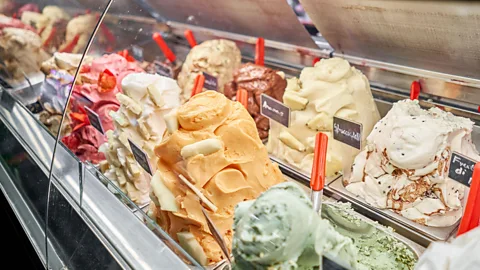
Alamy"For many Italians, Sammontana evokes a ritual: peering into the freezer at a beach kiosk, choosing an ice cream by its wrapper, having a cone after a swim, or a stop at an Autogrill rest stop during a long family drive," said Rome-based cookbook author Katie Parla. "There's as much emotional attachment to the wrapper, the place and the moment as there is to the gelato itself."
These days, Sammontana is Italy's largest gelato and frozen-dessert company. And while their original dairy shop no longer exists, the company remains a family-owned business run by the third generation of the Bagnoli family in Empoli.
Since 1957, the company has used the slogan "Gelati all'italiana" (Gelato the Italian way) – a subtle nod to their product's US origins.
"That slogan is, in my mind, one of the most important slogans in 20th‑Century Italian food history," said Cesari."It [distinguishes] its gelato from the ice cream American soldiers had introduced during and after the war. It defines Italianness by negation [and] simply means 'not American'. And it works because the difference is real and perceptible."
--
If you liked this story, sign up for The Essential List newsletter – a handpicked selection of features, videos and can't-miss news, delivered to your inbox twice a week.
