Retracing the defiant walk that changed Britain

 BBC/ Amy Wright
Seventy-five years after the Peak District became Britain's first national park, visitors can retrace the mass trespass that helped open the countryside to everyone.
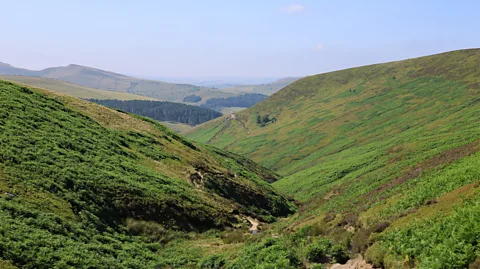
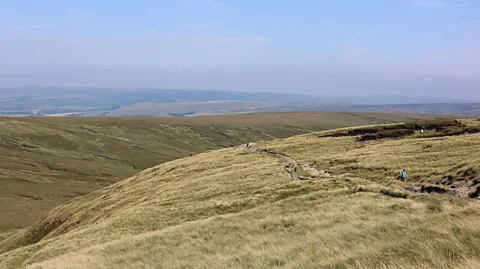
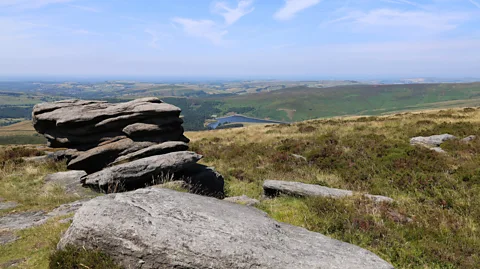
I am 636m (2,087ft) above sea level at the blustery plateau of Kinder Scout, the highest point of England's Peak District. The faint Manchester skyline is hazy in the distance, sitting behind the Dark Peak's stretches of barren moorland and its scattered, tumbling gritstones. This was once the stage of one of the most famous protests in English history.
Seventy-five years ago, the Peak District became England's first national park. Split into two distinct areas – the Dark Peak, with its barren moorlands and gritstone edges, and the White Peak, with limestone gorges, bright green dales and flowing rivers – it covers 550 square miles (1,483km) and attracts more than 13 million hikers, cyclists and climbers each year.
But before the Peak District was established, much of its land was privately owned and off limits to the public until some young, local workers fought for their right to access this sweeping northern stretch – and in doing so paved the way for the creation of the national park system in the UK.
Having grown up on the fringes of the Peak District, I have always delighted in walking across its dramatic landscapes, while being largely unaware of its role in shaping public access to the English countryside. Today, I'm retracing those bold rebels' steps where it all began.
The Kinder mass trespass
During the early 20th Century, England's industrialised northern cities were frequently filled with smog. Many factory and mill workers sought to spend their time off rambling in the fresh air of the rural countryside, but they were often turned away by landowners and gamekeepers.
Organised trespassing and political action against private land ownership at this time was not new, nor was the desire for public access to the countryside. The first freedom to roam bill was introduced to Parliament in 1884, inspired by the establishment of the world's first national park, Yellowstone, 12 years prior in the US. The bill failed, but campaigning continued through the creation of rambling groups across the country, who often organised protests like the Winter Hill mass trespass of 1896 in north-west England.
However, the Kinder mass trespass of 24 April 1932 is often cited as the catalyst that led to the birth of England's own national park system.
Led by 20-year-old Benny Rothman, the protest included some 400 young men and women from Manchester, Sheffield and the surrounding mill towns who defied the law and walked across the privately owned plateau of Kinder Scout, which was then used for grouse shooting. With strength in numbers, they were arguing for their right to roam freely in nature.
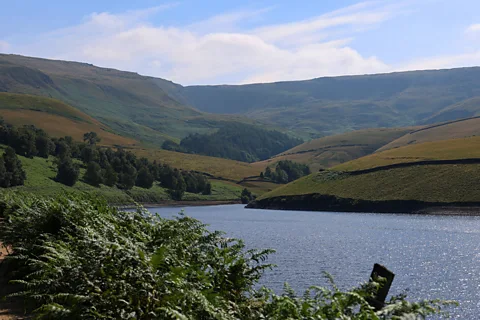
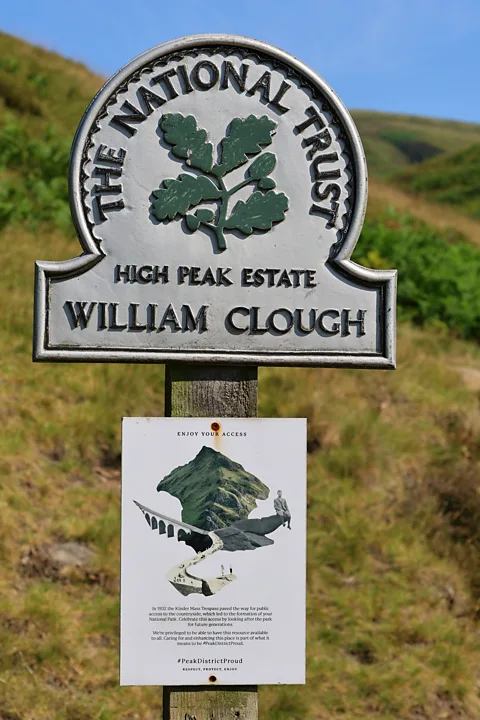
Like me, you can walk in their footsteps in the Kinder Scout mass trespass walk. Beginning at the Bowden Bridge car park (the rallying point for the trespass), the eight-mile (12.8km) path starts with a gradual ascent next to the shimmering Kinder reservoir, until you reach the foot of William Clough valley and join Snake Path – a winding, rocky and at times uneven trail surrounded by flowering purple heather and lush ferns that grow alongside a cascading stream. The ascent begins to steepen here – and it's at this point during the trail where about 200 Kinder Scout trespassers were confronted by gamekeepers and bailiffs. They were staved off, injuring a gamekeeper in the process, until the ramblers made it to the top.
 BBC/ Amy Wright
Despite their victory, five walkers (including Rothman) were arrested sentenced to between two and six months in prison. The trespass was controversial, however their punishment was met with a public outcry.
The mass trespass was "extremely powerful as it drew attention to the unfair countryside access laws and class divisions in Britain," says Hayden Bridgeman, ranger team leader at the Peak District National Park Authority. "[It] helped change environmental history and the attitudes about who the countryside is for – something we continue to think about today."
The ongoing right to roam campaign
The Peak District National Park was opened in April 1951, shortly followed by the Lake District, Snowdonia and Dartmoor. But the crusade for access to England's landscape was far from over.
People in England are still fighting for access to land. In effect, Rothman and the protestors weren't simply advocating for a national park, but the broader right to roam.
 BBC/ Amy Wright
From Sweden to Scotland, a handful of countries allow people to freely wander, explore and even camp on public land. But nearly 90 years after the Kinder mass trespass, only around 8% of the nation's land is designated as "open country", due to persisting private ownership.
Plan your trip:
A host of anniversary events make 2026 the perfect year to visit the Peak District. Go on a guided ranger walk or visit the Unearthed photographic exhibition to see the history of the peaks brought to life.
The Peak District is England's most accessible national park with plenty of public transport options, including buses and train stations from hubs like Manchester, Derby and Sheffield that can take you to the villages of Hathersage, Edale and Grindleford, right in the heart of the Peaks.
However, the campaigning organisation Right to Roam in England and Wales argues that much of this land is in remote areas, unevenly distributed and not accessible as part of people's day-to-day lives. Additionally, it doesn't cover the activities that can be carried out on this land, such as wild swimming or even paddle boarding down rivers, for example.
"We have this idea that England's crowded, England's full. That's not the case, but it may feel like it, because there's very little land that most of us can legally access," says Jon Moses, a campaigner for Right to Roam.
In effort to secure the same rights as Scotland, where you can walk on nearly all land provided you behave responsibly, Right to Roam have reprised the British tradition of the mass trespass.
"We do peaceful trespasses on large bits of land that are excluded from the public," Moses says. "We try and make them joyful occasions as much as anything, rather than just traditional protests, but it's basically to demonstrate that there are large swathes of England that are still off limits to people." For example, in 2024, campaigners found that there are designated parts of open country which are inaccessible by footpaths or roads – referred to as "access islands".
Right to roam has wide range of supporters, Moses says. "Families come trespassing – old people, young people. You feel enriched by the end of an action, rather than angry or drained. It shows you're for connection to the land, not against the landowner."
But mass trespassing isn't just political – it's about health and wellbeing, too. Research shows that being close to nature has innumerable benefits to our physical and mental health – from our cognitive functioning to emotional wellbeing and even self-esteem.
 BBC/ Amy Wright
And for campaigners, it's also about belonging. "We're really trying to propose a kind of more positive idea of what it means to belong, which is about connecting to the land and having the right to connect to that land, but then also to care for it, to act as an environmental guardian," he says.
Conserving and respecting the land which was so vehemently advocated for is crucial in ensuring that everyone can enjoy the beauty of the peaks. In the height of summer, moorland and woodland fires are a major problem – and use of campfires or BBQs are strictly banned. "Something we are passionate about here is empowering people to do their bit for conservation so that the PDNP is here for another 75 years," Bridgeman says.
More like this:
Kinder is now looked after by the National Trust and is a national nature reserve.
Walking around the ridge, I can hear the moorland birds through the wind. And though I chose a blaringly hot day to tackle this walk, it hasn't stopped me, nor the cheerful hikers I've passed, nor the mountain bikers or boulderers. Many of us found relief today from the blistering Sun by sitting in the shade under one of the many huge gritstone rocks that were formed over 320 million years ago.
 BBC/ Amy Wright
As I pass the lower trig point and begin my descent back to Bowden Bridge, I'm greeted by a view of the peaceful Edale Valley, nestled beneath the mighty ridges of Kinder and Mam Tor. Considering that the polished stone path I'm walking on wouldn't have been there all those years ago, I wonder if the ramblers' view was much the same.
Regardless, I'm just grateful to be able to walk here – I owe them great thanks.
--
If you liked this story, sign up for The Essential List newsletter – a handpicked selection of features, videos and can't-miss news, delivered to your inbox twice a week.
