The idyllic island you can drive around in a weekend

 Getty Images
More than a third of visitors to French Polynesia arrive by cruise, but Mo'orea rewards travellers who slow down and explore its coastal ring road at their own pace.
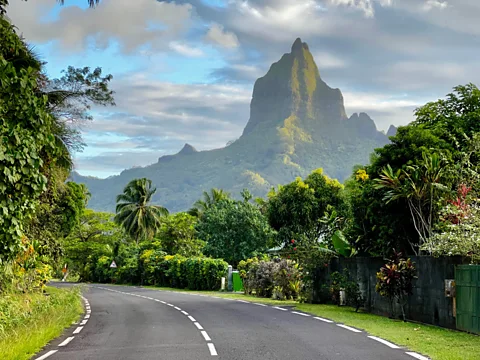
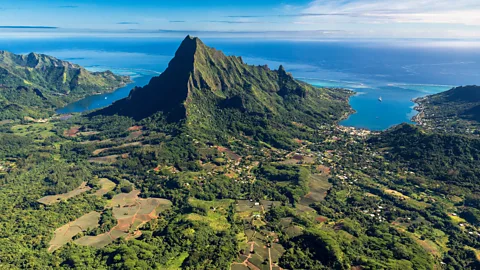
Mo'orea looks made for a road trip. A single 60km (37.3-mile) coastal road rings the mountainous French Polynesian island, slipping between reef-protected lagoons, coconut palms and jagged green peaks. There are no high rises, no traffic lights and no main town, just a string of small villages, roadside snack bars, green spaces and bays that can be explored in a day – or better, stretched into a slower weekend.
Just 30 minutes by ferry from Tahiti, the smaller, quieter island is often seen as a cruise stop or beach escape. But its compact scale makes it one of French Polynesia's easiest islands to independently explore. While e-biking around the 133 sq km isle is increasingly popular, my husband and I opt for a hybrid car, which lets us travel slowly, often in electric-only mode, while following the coast anticlockwise from the port of Vai'are.
"Remember not to park under any coconut trees," warns the hire-car agent as she hands us the keys.
Bays of plenty
We have barely left Vai'are when we reach our first wow moment. Elevated above the coast, the To'atea Lookout offers a sublime view of the electric turquoise lagoon fringing the island. Spindly palms lean over its coral-sand beach and the mountainous silhouette of Tahiti looms across the cobalt channel separating the sister islands.
 Sarah Reid
It's only 15 minutes further to Cook's Bay (also known as Pao Pao Bay), the first of two long fjord-like bays that give Mo'orea's north coast its distinctive "W" shape. Pulling over to admire the view, I spot white terns – revered in Polynesian culture – fluttering high above the calm bay and Picasso triggerfish darting through the gin-clear water beside the road, their bright, brushstroke-like markings easily visible.
Like Tahiti, Mo'orea ("yellow lizard" in Tahitian) was created by the collapse of an ancient shield volcano some 1.5 million years ago. But Polynesian oral traditions attributing its striking topography to a sacred octopus somehow feel more fitting in this fantastical landscape.
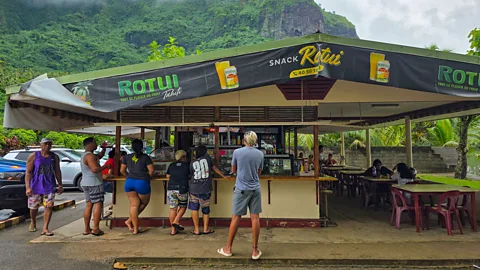
As we continue around Cook's Bay, we stop at unassuming Snack Rotui, run by a third-generation Tahitian Chinese family, for dim sum with French mustard – one of many roadside "snacks" (quick service spots) here. Like much of French Polynesia, Mo'orea's underrated fusion cuisine blends Polynesian ingredients and traditions with strong French and Chinese influences, shaped in part by waves of Chinese migration to Tahiti from the 19th Century onwards. Nearby, at Manutea Tahiti – Rotui Juice Factory & Distillery, we sample locally made libations, including its signature Tahiti Drink, a ready-to-drink rum cocktail sold in recyclable cartons.
The cinematic scenery continues in 'Ōpūnohu Bay, where Captain James Cook anchored the Resolution in 1777 and violently clashed with local Polynesians following a dispute over a goat. At the head of the bay is Te Fare Natura eco-museum, a domed building powered largely by solar panels. Its main exhibit explores the marvels of – and threats to – the region's marine ecosystems, making it a worthwhile stop before heading into the lagoon or joining one of the island's popular whale swimming excursions (20 July-20 November). Regulations for whale tours were tightened in 2025, including capping boat numbers to better balance tourism and conservation.
 David Kirkland
Path of the ancestors
The eco-museum marks the gateway to the 'Ōpūnohu Valley, where pineapple plantations blanket hills once planted with taro introduced by Pacific voyagers around 1000 CE. We follow a side road that snakes up the verdant valley to a magnificent belvédère (lookout) towards Mount Rotui (899m), which rises between Cook's Bay and 'Ōpūnohu Bay.
Hiking on Mo'orea
The 'Ōpūnohu Valley's main archaeological site and hiking trails are freely accessible, but the marae, waterfalls and walking trails in other areas of the island are best visited with a knowledgeable local guide, or at least with the landowner's permission. "Most tourists don't realise that most of these places are on private property," says Yvette Léon, the Marquesan owner-operator of Moorea VIP Tours. "If people go by themselves, they might damage a sacred place without knowing."
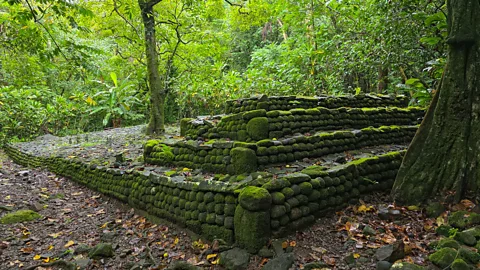
Easily missed along the route is one of the largest archaeological sites in the Society Islands. Tucked into the rainforest just metres from the road lie some 500 structures dating primarily from the mid-15th to mid-17th Centuries, including partially restored, moss-encrusted marae – sacred ceremonial and social spaces linked by muddy forest trails.
Less than 200m uphill from the carpark, I find the well preserved Afare'aito marae flanked by archery platforms oriented towards Mount Tohiē'a (1,207m), the island's highest peak. With limited information available in English, I call on Mark Eddowes, a leading authority on Polynesian anthropology who lives nearby, to explain the significance of this important cultural site.
"Each lunar cycle, the sons of chiefs gathered here to 'start' the new cycle of abundance," Eddowes explains. "The chiefs are related to the gods in the heavens, so their sons' firing an arrow in the direction of the peak was believed to connect the living world (te feua) with that of the benevolence of the gods in the heavens (te reva) and start a new lunar cycle of fertility for the chief and his people."
 Sarah Reid
I wonder how many more marae are hidden in Mo'orea's valleys, reclaimed by the rainforest after Christian missionaries banned Polynesians from practicing "pagan" traditions at their cultural sites from the late 18th Century onwards. Eddowes estimates there could be 100 sites yet to be surveyed.
Make it happen
Best time to visit: The shoulder seasons (May-June and September-October) generally offer the best weather and fewer crowds. Whale season runs from July-November.
Getting around: Mo'orea is a 30-minute ferry ride from Pape'ete, Tahiti, with about 10 ferry services daily. Find car and moto-scooter hire at the port and guesthouses.
What to eat: Try poisson cru, roadside "snacks", tropical fruit and Tahitian-Chinese fusion dishes such as dim sum with French mustard. Casual eateries and small supermarkets dot the island's ring road.
Where to stay: Accommodation ranges from luxury overwater bungalow resorts to traditional family-run fares and guesthouses with lagoon access.
Lagoon blues
While Mo'orea has two overwater bungalow resorts that offer a luxurious, Bora Bora-esque experience at a reduced price, the island can be explored more simply. In Tiahura on the north-west coast, we book a thatched-roof fare with an outdoor kitchen for less than US$140 (£105) per night and use its complimentary kayaks to paddle into the shimmering lagoon, gliding over lavender-hued coral clusters and majestic eagle rays.
We retrace part of the island's famous "W" northern coastline to hike lush trails, browse small art galleries and feast on local specialties including poisson cru (Polynesian ceviche, the national dish) and moreish homemade breadfruit crisps.
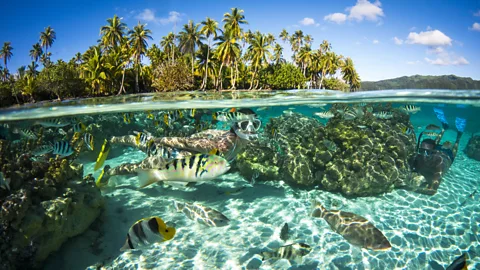
This stretch of the coast is also one of the easiest places to experience Mo'orea's marine life. On the advice of Certified Tahiti Specialist Carl Henderson, we head to Temae Beach where the reef begins about 150m (492ft) from shore. Finning out from the beach, we find ourselves in a natural aquarium surrounded by technicolour parrotfish and pairs of strictly monogamous butterflyfish. Violet-hued boxfish bob around awkwardly, rays glide across the sandy bottom and at one point a reef shark cruises by.
 Stéphane Mailion Photography
Yet the very accessibility that makes Mo'orea so appealing is also placing growing pressure on its coastline and lagoon access. Temae is one of only three public beaches left on the island, and is currently threatened by development that could further limit access for the 18,200 residents and visitors. It's one reason local-born conservationist Temoana Poole, son of renowned marine biologist Dr Micheal Poole, founded Keep Moorea Wild, an NGO inviting the public to "adopt" land by the square metre for conservation.
More like this:
"We meet with landowners looking to sell and promise them if they sell to us, we will protect it," Poole explains. Launched in December 2025, the initiative has already secured 515 sq m of land in Vai'are that will become a public sanctuary. "We already have landowners in other archipelagos asking us for help because they also want to protect their islands."
Deep south
The soft rumble of waves pounding the outer reef provides the soundtrack to our journey's final leg along the wild south coast. As we roll through the Ha'apiti district, the crimson bell turrets of the Eglise de la Sainte Famille (Church of the Holy Family), built in 1897 on the site of the island's first Catholic mission, catch my eye. In the church courtyard, a crucifix rises above a stone altar carved with the face of a Tiki. With Tikis representing the connection between the human and spirit worlds, it is a striking example of the blending of Christian and Polynesian spiritual traditions still visible across the region today.
The winding coast road continues past roadside stalls piled with bananas, papaya, passionfruit and supersized avocados, along with surfing-focused stays and the odd roulette (food truck), an evolution of food carts introduced by Chinese migrants. Before we know it, we're back in Vai'are. Even after driving the equivalent of several laps around the island, our hire car has only burned a few litres of fuel. An extraordinary journey with a minimal footprint; it's a road trip for our time.
--
If you liked this story, sign up for The Essential List newsletter – a handpicked selection of features, videos and can't-miss news, delivered to your inbox twice a week.
