A 1,400km bike ride through Patagonia along the 'End of the World' trail

 Douwe den Held
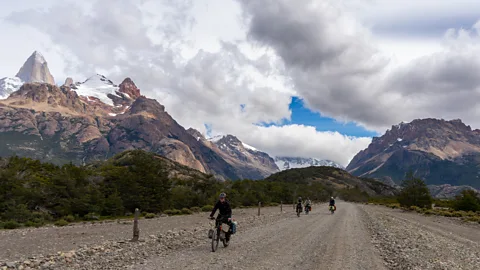
Wild, rugged and breathtakingly beautiful, Patagonia is one of the most stunning places on Earth – and the best way to appreciate this wild frontier is on a bike.
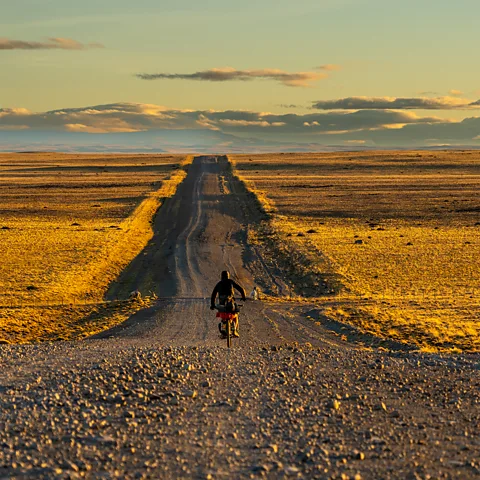
For most of the day, the pampas appeared raw and deserted. The paved highway and tour buses had long vanished from view, and I pedalled a lonely gravel road used by just a handful of Argentine cowboys and cyclists.
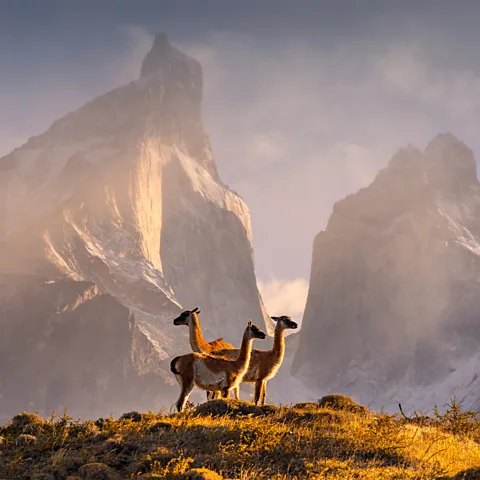
Then, without warning, the wind stilled and the landscape began to stir. A herd of young guanacos – llamas' wild ancestors – leapt over a cattle fence. To the west, the setting sun cast a deep honey hue over the wind-scoured steppe, while a crimson Moon rose behind the clouds to the east. In the day's final light, a flightless Darwin's rhea sprinted across the arid grassland; a burst of quivering tail feathers and gangly legs.
It was March, the end of the Patagonian summer, and my partner and I were at the southern tip of the Americas, cycling more than 1,400km (870 miles) on a variation of the aptly named Fin del Mundo (End of the World) cycling route. The journey, much of it unpaved, starts in the Argentine hamlet of El Chaltén and weaves across the border into Chile before finishing in the world's southernmost city, Ushuaia, Argentina.
Millions of tourists fly into Patagonia to trek its jagged granite peaks, marvel at its electric-blue glaciers and photograph its serrated pinnacles. From the comfort of a rental car or tour bus, you can cover Southern Patagonia in about a week. But cycling offers a different way to experience one of Earth's last vast wildernesses.
 Douwe den Held
As we soon found, this slow, self-directed odyssey also brings you into a world of wildlife that is slowly returning to land where it had all but disappeared, and lets adventurous travellers immerse themselves in some of the world's most striking landscapes.
A fragile landscape
Wild, rugged and breathtakingly beautiful, Patagonia was once dominated by sprawling sheep farms, which degraded the land. When the wool industry collapsed at the end of the 20th Century, many ranchers sold their remote pastures and conservationists saw an opportunity to rewild it.
"Back then, Patagonia was seen as worthless," said Libertad Giliberto, a tour guide who works across Chile. Starting in the 1980s and '90s, environmental groups began purchasing the degraded land, restoring it, turning it into reserves and donating it to Chile and Argentina's governments on the condition that they also protected surrounding land.
Today, this vast expanse of temperate rainforests, towering glaciers and treeless steppes contains some of the largest protected areas on Earth. Chile alone has a 28-million-acre conservation network encompassing 17 national parks.
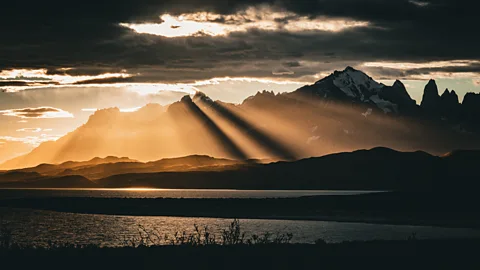
A week into our trip, we approached one of Patagonia's most iconic parks – Torres del Paine and wild-camped at a viewing platform overlooking the three granite spires that give the territory its name. As the late summer sunset threw golden shafts of light between its peaks, the last of the tourist buses pulled away and we now had the view to ourselves.
 Getty Images
A day earlier, I had met Ciro and Carlos Barría, two retired park rangers who grew up nearby, back when large parts of the park were still ranchland. By the late 1980s, ranching had largely ceased and authorities began building tourism infrastructure.
Ride the route
Southern Patagonia's cycling season typically runs from mid-November to early April. Most cyclists travel north to south to avoid getting caught in Patagonia's infamous headwinds and sleep at wild camping spots, vialidades (road maintenance huts) or estancias (ranches). You can find crowd-sourced, up-to-date resupply points, official and wild camping spots and hotel recommendations on the iOverlander app. Towns and small settlements are frequent enough that you rarely need to carry more than a day's worth of food. You can download the full route here and shorter segments with more details from Bikepacking.com here and here.
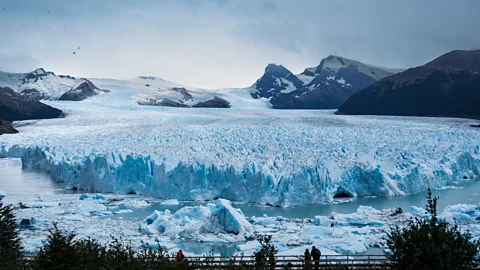
For years, few people visited. "We were like a side-trip from Perito Moreno [one of Patagonia's most famous glaciers]," Carlos said. In 1986, the park received less than 8,000 visitors. In 2024, crowds surpassed 305,000.
But as the park drew bigger crowds, its infrastructure buckled – thousands of hikers jostled for the same viewpoints, eroding trails, trampling fragile plants and overwhelming campsite waste systems. Illegal wildfires by tourists have burned nearly 30,000 hectares of the park since 2005. To keep crowds moving within the park, Carlos said, authorities have recently scrapped the once-mandatory orientation videos, leaving visitors unclear on the rules and the park prone to further damage.
"It only takes one person to cause a catastrophe," Carlos said.
For the Barrías, the solution is to spread tourism beyond the hotspots. "There are so many other areas that are as interesting as [Torres del] Paine," Ciro said. "Why not go there?"
 Douwe den Held
The road less travelled
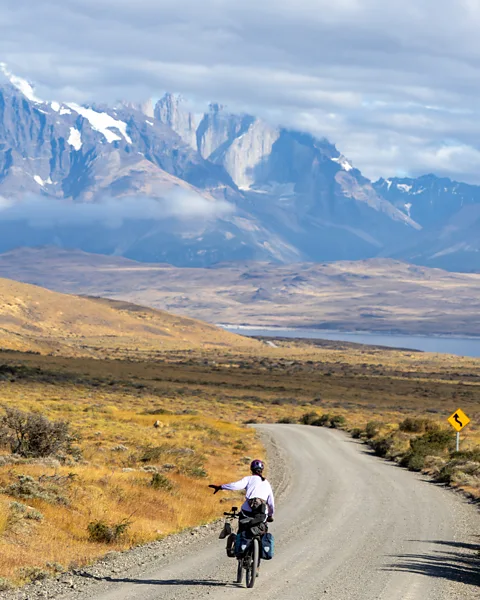
Ciro's advice echoed through my mind when I woke up and peered out of my tent at a fresh wave of tourists heading into the park. Instead of following them, we turned and pedalled in the opposite direction.
Where to rent bikes
Patagonia Travellers' Hostel in El Chaltén, La Patota Bike Rental in Punta Arenas and Ushuaia Extreme in Ushuaia all rent bikes by the hour and day, with supported tours available. Patagonia Zero Emissions in Puerto Natales offers multi-day rentals of mountain and electric bikes with racks and panniers. You can end your trip and drop off the bike anywhere in the Magallanes Region of Chile.
Miles of dirt trails near Torres del Paine remain largely unexplored because they lie outside the park's official borders. Venturing along one such path, we were rewarded with views of the area's peaks, framed by an endless beach along a glacial lake, crystal-clear water lapping its shores.
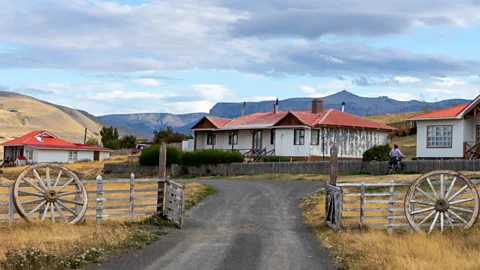
Here too, guanacos, caracaras, armadillos and long-tailed meadowlarks abound, but we didn't see another human until late that afternoon. Following a dusty road, we stopped at the gates of a sprawling ranch. "Are you guys lost?" called a woman from her veranda.
The woman, Monica, the 74-year-old matriarch of a four-generation ranching family, insisted we come inside and pressed homemade pan amasado (Chilean kneaded bread) into my hands. Over tea, she told us about growing up on the plains, building community when the nearest neighbour is 32km away and the fragile truce between ranchers and the landscape's now-thriving pumas.
 Douwe den Held
"They attack the livestock," she said. "Mother cats come down with their cubs to teach them to hunt. They can kill up to 15 sheep at a time."
In the late evening sun, we pedalled back into the wild with Monica's hound following, and sending flocks of startled kelp geese flapping into the sky.
Nature unscripted
After two weeks of cycling, we hopped a ferry from Punta Arenas across the Strait of Magellan to the town of Porvenir, Chile. We had arrived on the legendary island of Tierra del Fuego, the southern fringe of the Americas.
The main road out of Porvenir heads north to the paved highway that cuts through the island's centre. We turned south onto another lonely, washboard gravel track; rough enough to deter most buses and many cars, but ideal for bicycles. The horizon soon opened to Bahía Inútil, or Useless Bay; a dark, stormy sweep of sea. Early explorers dismissed it as a dead end, but its harsh conditions have created an unlikely refuge for penguins.
 Douwe den Held
Penguins are one of the biggest draws for visitors to this part of Patagonia, but in order to protect colonies, most visitors may only see them on organised tours. We were nowhere near one of those when a local man ran towards us, waving both hands. "Come here," he urged. "I want to show you something."
He pointed to a bedraggled Magellanic penguin huddled on the pebble-strewn beach. Separated from its colony and chased from the water by sea lions, it sat frozen on the shore while the predators circled. The penguin craned his neck, looking towards the sea lions. It felt like we were watching a wildlife documentary unfold in front of us.
More like this:
As we stared, the man searched for phone service to call the coast guard. "They'll escort the penguin home," he said, assuring us he would keep watch until they did.
End of the world
A month after setting out and now in the first days of autumn, we approached the "end of the world" in Ushuaia. Plains swelled into towering mountains and ancient forests burned with vibrant oranges and reds. We spent our final night camping at a spot legendary among cyclists: Hosteria Petrel, an abandoned lakeside hotel at the end of a gravel road deep in the subantarctic Nothofagus forest.
 Douwe den Held
Generations of cyclists have claimed one of the abandoned hotel's lakeside cabins for themselves. When we arrived, we found that someone had dragged in a scavenged wood stove and a broom. Inside, the cabin's bay windows frame Lago Escondido, (Hidden Lake), which is surrounded by towering beech trees and the rugged folds of the Fuegian Andes.
Some of the scribbled graffiti on the wall left by fellow cyclists is instructive: "Don't make the fire too big!" "Don't take the broom with you!" Other messages are more reflective: "To cycle is to embrace the uncertain, the simple, the real."
No cars come here, and no itinerary lists this place. You earn it mile by mile, joining those who travel slowly through Patagonia, and those who leave it better than they found it.
--
If you liked this story, sign up for The Essential List newsletter – a handpicked selection of features, videos and can't-miss news, delivered to your inbox twice a week.
