Sleep tracking and longevity claims: The new era of wellness retreats

 Courtesy of Ananda in the Himalayas
The new generation of hotel spas is selling treatments that promise better sleep, lower stress and longer, healthier lives.
Wellness travel once meant switching off at a hotel spa or a relaxing mud facial. But today, a growing number of retreat-goers are less interested in passive relaxation techniques and instead embracing fitness assessments, sleep tracking and longevity programmes.
The rising demand has hotels and resorts around the world adapting quickly. They are converting their spas from oases of relaxation into destinations offering programmes they claim can improve sleep, reduce stress and support longer, healthier lives. These programmes are now found worldwide, from Ayurvedic clinics in the Himalayan foothills to spas on Lake Como.
That desire to take greater control over his own wellness was what traveller San Priy was looking for when he booked Canyon Ridge's new Longevity8 programme in Tucson, Arizona – a four-day retreat built around diagnostic tests, consultations and activities such as hikes, walks and bike rides.
"I was feeling run down and wanted to take a more intentional approach to my long-term health instead of just reacting to stress," he said.
He's not alone – McKinsey's 2025 Future of Wellness survey found that six out of 10 people rank healthy ageing as a top priority, while the Global Wellness Institute describes wellness tourism as one of the fastest-growing segments in a $6.8tn (£5.5tn) industry.
The promise of "longevity" is tantalising, but it is also largely a wellness industry framework rather than a proven medical outcome. Even with little evidence that these treatments can actually increase lifespan, wellness travellers seem more than willing to fly across the world to find out.
 Nicholas Koenig
The promise – and limits – of longevity travel
Travelling for one's health is nothing new. Victorian-era physicians prescribed jaunts to the coast for wealthy patients, believing seawater and sea air had restorative qualities. Today, however, the goal has shifted from relaxation or recovery to "healthspan" – the idea of living not just longer, but healthier for longer.
Ari Lightman, professor of digital media and marketing at Carnegie Mellon University's Heinz College, says the trend emerged after Covid-19, amid growing awareness of health and a flood of information – and misinformation – on supplements, vitamins and healthy aging. At the same time, influencers and high-profile longevity entrepreneurs have helped popularise the language of "de-aging", blurring the lines between medicine, lifestyle optimisation and luxury travel.
"Travellers are looking not just to relax during a vacation or have an adventure," Lightman said. "Many are looking for a transformative experience."
These experiences can also come at premium prices. A multi-night stay at specialised clinics can cost several thousands of pounds, while ultra-luxurymedical retreats can run into the tens of thousands, excluding flights.
Kamal Wagle, a geriatric specialist at Hackensack University Medical Center's Center for Memory Loss and Brain Health in New Jersey, says "scientific evidence is scant" regarding a direct correlation between longevity and a wellness retreat. But he notes that many retreats do encourage habits with proven benefits, from healthier eating and regular movement to meditation and stress reduction.
 Courtesy of Ananda in the Himalayas
Modern wellness
One emerging type of longevity retreat borrows lifestyle hallmarks from the "Blue Zones", places where people are said to live exceptionally long lives. In lush facilities in stunning locations, wellness travellers can choose from spa menus offering practices adopted – and adapted – from places like Sardinia, Okinawa and Costa Rica.
The Blue Zones concept is contested. Researchers have questioned the reliability of the age records used to identify some Blue Zones, and the concept's creator Dan Buettner has faced scrutiny over the commercial partnerships built around the idea.
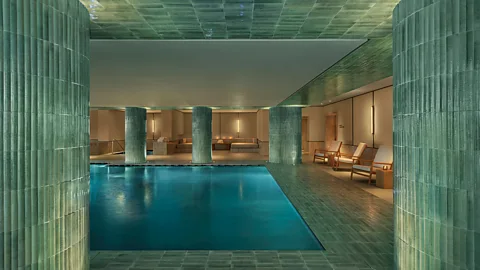
However, that has not stopped resorts from embracing the idea. In Italy, Lake Como Edition Hotel's new Longevity Spa opened this March inside a restored 19th-Century palazzo. Its Blue Zones-themed treatments inspired by each region, from cocoa bean scrubs inspired by Costa Rica's Nicoya Peninsula to Sardinian-inspired scalp therapy using seawater.
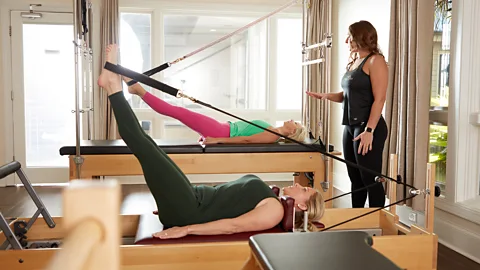
Meanwhile, Hilton Head Health, a wellness resort on South Carolina's coast, offers a seven-day Blue Zones programme that has become its most requested since launching late last year. The programme includes workshops on nutrition, natural movement and stress reduction, with walkable trails, bike paths and a coastal setting that encourages guests to get outdoors.
According to programme director David Chesworth, one of the favourite sessions centres on ikigai, the Japanese concept of life purpose, often associated with the Okinawan Blue Zone: "It's one thing to just have experiences together, and it's another to have deep conversations about your purpose with other folks."
 Hilton Head Health
Sucheta Rawal, who attended the Blue Zones retreat earlier this year, said the ideas gave her greater awareness of her daily choices. "The purpose workshop stood out to me because it's something we rarely address in health and wellness retreats," she said. "I learned that when you show up each day with meaning, whether through a life purpose, a goal, a responsibility, or someone to care for, you're naturally more inclined to take care of yourself and value your own well-being."
Ancient principles, modern approaches
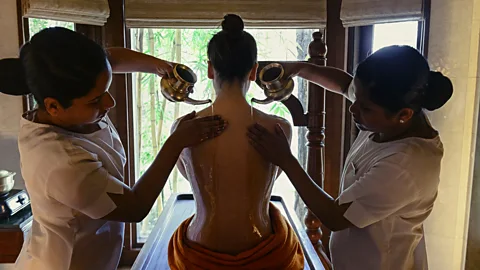
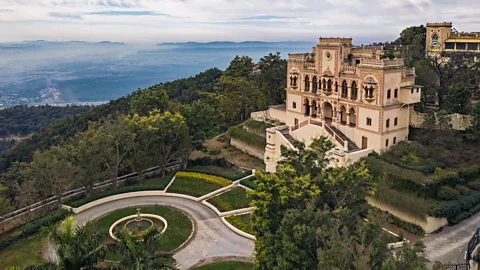
For other resorts, longevity is less a new trend than an old idea newly marketed. At Ananda in the Himalayas, set on a 100-acre (40-hectare) palace estate overlooking India's Ganges Valley, Ayurvedic health programmes have been offered for decades. But chief operating officer Mahesh Natarajan says demand has changed markedly in the past four to five years.
"The conversation moved from short-term relief to sustained vitality, resilience and how [guests] wanted to live and age well," he said. "Several clients in their early 40s now complain of fatigue, tired joints and limbs and low immunity. They're now focusing on preventing premature ageing due to lifestyle and environmental impact."
More like this:
Ayurveda, a holistic system of medicine that originated in India more than 3,000 years ago, emphasises balance between body, mind, diet and environment. Ananda's Ayurvedic Rejuvenation programme incorporates rasayana (a classical practice aimed at sustaining vitality) along with clinical assessment, personalised nutrition and yoga. They recommend a 21-day stay for the Panchakarma programme, and 10-28 days for immunity and rejuvenation treatments.
While the evidence for longevity outcomes remains difficult to measure, Ananda's programme incorporates nature, routine and quiet into the experience, with research linking access to green space with improvements in mental health and lower blood pressure.
"Nature, silence, and a sense of rhythm help recalibrate the body and mind in ways that are difficult to achieve within daily life," said Natarajan. "This disconnection from constant external demand allows guests to begin thinking differently about how they live, age and care for their health."
Futuristic approaches
Other modern wellness resorts are exploring emerging technology. In March, the Koenigshof Hotel in Central Munich opened its MitoSphere Longevity Spa, designed for busy guests who want modern wellness treatments on the go. Typical appointments pair advanced diagnostics with high-tech treatments like vitamin IV drips and red light therapy. MitoSphere's core circuit, called the "Longevity-Circle", takes guests through a tailored sequence involving breathing protocol that alternates low- and high-oxygen air, red light therapy, cryotherapy and hyperbaric oxygen therapy.
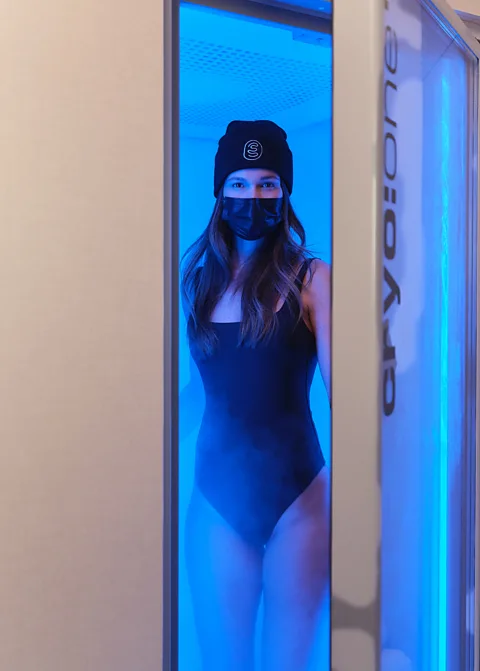 Courtesy of Koenigshof Hotel
But evidence behind many of these modern treatments remains thin, particularly when it comes to lasting effects. For Priy, the Canyon Ranch retreat provided a behavioural reset. "The biggest takeaway for me was around sleep and recovery. I became more consistent with my routine and more aware of how daily habits affect energy and focus," he said. "I'll be honest, it's harder to stay consistent without the structure of the retreat. It wasn't a dramatic transformation. But it did shift how I think about maintaining my health long term."
Whether the approach is ancient or clinical, that may be the true test of a longevity retreat: not whether it can extend a guest's life, but whether the habits last once they return home.
"The key to lasting benefit is to turn what we are taught in quality spas and retreats into a lifestyle," said Wagle.
--
If you liked this story, sign up for The Essential List newsletter – a handpicked selection of features, videos and can't-miss news, delivered to your inbox twice a week.
