What to know about visiting Rio's favelas

 Alamy
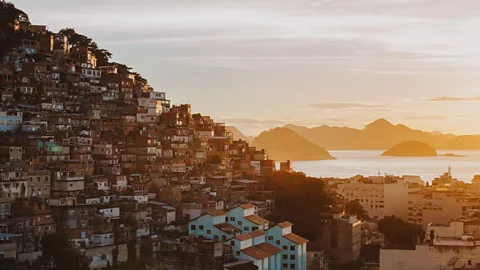
AlamyOnce notorious no-go areas, Rio's sprawling favelas are now drawing more tourists than some of its most famous monuments. But is visiting safe and ethical?
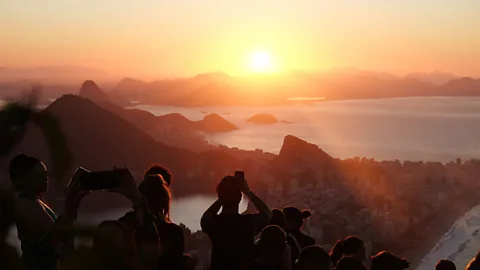
It's 05:47 on a Wednesday morning in May, and orange rays are stretching into the sky like fingertips, ushering in a new day in Rio de Janeiro. I watch as the sun slowly rises above the Atlantic Ocean from atop the city's iconic Two Brothers mountain. "We're in the VIP," says my guide, Ana Lima, as we sit on a small patch of grass.
But this VIP is far from exclusive. Nearby, hundreds of tourists from England, France, the US, Germany, Argentina and elsewhere in Brazil are crowded together to catch the same spectacle, with one new arrival shouting: "Man, there are more people here than in the club!"
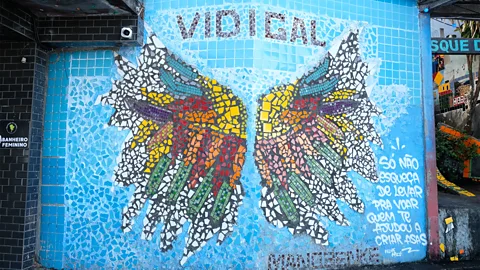
To get here, I awoke at 03:30 to join the hundreds of other visitors already thronging Vidigal – one of Rio's best-known low-income favela neighbourhoods – all waiting to hop aboard motorcycle taxis to the top of the mountain. I rode mine helmet-less up a winding street lined with houses seemingly stacked on top of each other before hiking roughly an hour up a trail through the thick Atlantic Forest.
 Joel Balsam
In recent years, this hike – and Rio's favelas in general – have become some of the city's hottest and least-expected tourism attractions. For decades, these densely packed communities were long avoided by outsiders because of their dangerous reputations. A police push to "pacify" Rio's favelas began ahead of the 2014 World Cup and 2016 Olympics, and by 2024, official data showed that more international travellers visited Vidigal and Rocinha (the country's largest favela) than Rio's famous Christ the Redeemer statue and the Selarón Steps.
In an age when many travellers are seeking immersive, meaningful cultural experiences, walking up and down favela staircases to see where locals hang out, play with their kids and view the city from the hilltops can reveal a side of Rio that you can't get by sticking to its main beaches and monuments – and it's not just ordinary sightseers seeking these experiences out.
In the last few months alone, Spanish superstar Rosália and English footballer Jesse Lingard have been spotted exploring Rio's favelas, and people are now queuing for hours to make their way onto a Rocinha rooftop to experience one of the city's most viral trends: a drone zooming out to record you amidst the favela's undulating landscape.
"I wanted to visit because I enjoy getting to know realities beyond the surface," said Isabel Fernandes, a Portuguese visitor who recently explored Vidigal on Lima's tour and lear. "Not out of 'tourist' curiosity, but because I believe that each place has its own stories, people, strength, difficulties and beauty."
But following a recent shootout in Vidigal, some travellers are now reconsidering whether they should visit these neighbourhoods at all.
Is favela tourism safe?
Angel Njoku from Edmonton, Canada, had been excited to embark on the sunrise hike to the Two Brothers Mountain with her friends during her weeklong trip to Rio. But the week before her visit in April, about 200 hikers were stuck on the mountaintop when gunfire broke out in Vidigal during a police operation against alleged members of the Comando Vermelho cartel. "People in my group didn't want to come because they were worried about the risk with the favelas and the danger and the crime," Njoku said.
Daria Kurpiewska of Poland did the hike in March and said she was surprised when she heard about the shootout, especially because she was told Vidigal was one of Rio's safest favelas. "It could have been my friend group," she said. "[Visiting a favala] can go really smoothly, and you can be safe and have fun, but [as the shooting showed], you're just millimetres from something bad happening."
As Kurpiewska came down the mountain in the dark, she passed a playground with children playing next to a group of men carrying guns. "That was a bit unsettling for me," she said.
According to Mariana Cavalcanti, an urban studies professor at the State University of Rio de Janeiro, fear of favela violence is nothing new and an ongoing reality for residents. "These shootouts in the favelas have been going on every day for almost as long as I have lived," she said.
 Joel Balsam
However, Cavalcanti says there are far fewer bullets flying around the South Zone favelas than there used to be, especially in favelas like Rocinha and Vidigal, thanks in part to the presence of tourists. In fact, Cavalcanti says that while the violence in favelas may pose dangers for local residents, ironically, favelas might actually be safer areas for tourists than popular places like Copacabana, where she lives, since cartels prohibit crime against tourists.
"You won't get mugged and you won't get raped and nothing bad like that's ever gonna happen to you," Cavalcanti said.
During her tour through Vidigal, Fernandes learned about the neighbourhood's various social programmes and toured a community vegetable garden. "I felt safe and welcomed, contrasting with the various stigmas that are unfortunately still transmitted about what a favela is," she said.
Is visiting favelas ethical?
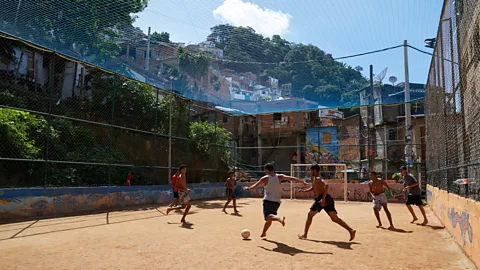
As the sun blazed over Two Brothers Mountain, Lima led us down into Vidigal for a pão com ovo (French bread and an egg) breakfast and a walk through the favela's maze of graffiti-painted alleyways and staircases. This immersive walk through the favela was an optional add-on following the sunrise hike, and Njoku decided to skip this part of her tour when she visited. "Going to the favelas to take pictures and gawk at the people that live there, I think that is a little problematic," she said.
 Getty Images
Kurpiewska was just as worried during her first visit to Vidigal for an electronic party called Rave in Rio. "There are so many people living here – is it okay for them that we come?" she asked. "Are we annoying them?"
Favela tips
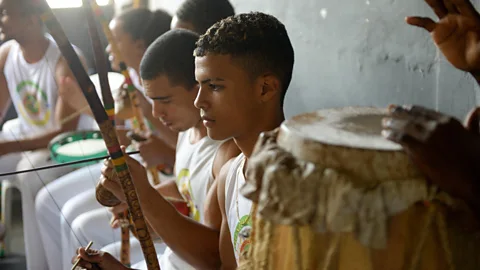
The best way to visit a favela is with a guide from that favela. Na Favela is a recently launched app with tours from local guides. It's also generally safe to go for organised events, including capoeira classes and concerts, like jazz shows at The Maze in the Tavares Bastos favela. Ask a local guide where it's safe to take photos, and avoid taking pictures of locals' faces.
Questions about whether or not travellers should visit favelas have been percolating for years. During the 2014 World Cup and 2016 Olympics, heavy police presence in the favelas made favelas safe enough to explore, but many did so in safari-style 4x4s that were accused of being "poverty tours".
"When all this started, there really wasn't that much of a choice of a way in. Now there are so many options that go into the favelas," said Cavalcanti, referring to the guided walking tours, drone photo experiences, viewpoints travellers pay to enter, and capoeira and music events. "You don't have to be, you know, the white gringo [in] the Jeep."
Cavalcanti used to have concerns about favela tours, but changed her perspective during fieldwork in Rio's Cantagalo favela when she realised that locals didn't seem bothered by the gawking visitors. Rather, many of them want tourists, since their money has become an important source of income for motorcycle taxi drivers, tour guides, souvenir sellers and popular favela restaurants like Bar do David."I really believe that favela residents are able interlocutors, they know what they're doing," Cavalcanti said.
 Alamy
AlamyThe appeal of favelas
For Hugo Oliveira, researcher, guide and director of an education centre in Morro da Providência, visiting a favela isn't just ethical, it's critical to understanding the country and city's history. "If you want to talk about Brazil without knowing the favela, you can't," he said.
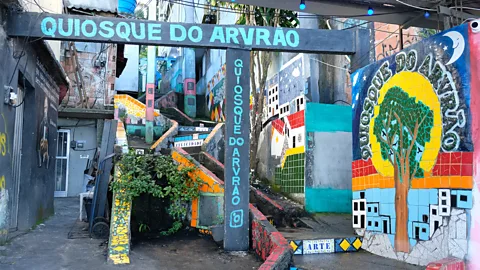
Oliveira's neighbourhood, Morro da Providência, located downtown in Rio's "Little Africa" district, was established in 1888 as Brazil's first favela – where formerly enslaved and impoverished people could settle without owning land. In the following decades, favelas suffered from a lack of municipal services like electricity or sewage, and by the 1960s and 70s, dozens of favelas were destroyed, and hundreds of thousands of residents were displaced.
More like this:
Oliveira says the rise of favela tourism proves that these communities have a place in the city like any other neighbourhood. "To not promote a tourist activity is to acknowledge that we are not connected to the city," he said.
A visit to a favela can also demonstrate the many ways in which favela residents have influenced Brazilian culture.
From samba to baile funk music and capoeira, favelas have both birthed and served as incubators of some of Brazil's most recognisable cultural exports. And visiting the places where many of these art forms originated helps travellers better understand them, or – in the case of Rosália, who experienced an improvised passinho dance lesson during her favela visit – learn them themselves.
 Alamy
Alamy"Life in the favelas and the outskirts of cities today shapes the codes of aesthetics, language and fashion," said Oliveira. "If you want to be a cool person, the way cool people are in Brazil, [you should visit a favela]."
How to visit a favela
"The big question is not… whether or not one should go up to the favela, but how does one go into the favela," says Cavalcanti.
The professor says to look for guides or community associations from the favela you're visiting, and to treat it like it's your own neighbourhood back home. "If people were taking pictures right outside your door, I bet you wouldn't really like it, so why would you do that?"
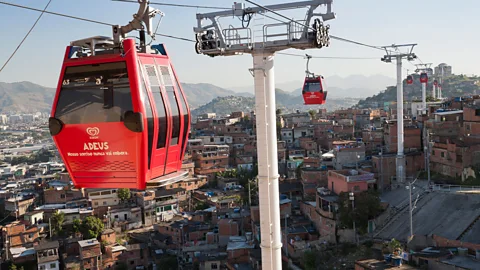
It's also a good idea to stick to the favelas that openly welcome tourists – like Vidigal, Rocinha, Morro da Providência and Chapéu Mangueira – but that doesn't mean you need to do a walking history tour. Oliveira encourages visitors to ride up on Morro da Providéncia's free cable car, to come for a pagode concert or for a Carnaval bloco parade that marches through the favela.
Kurpiewska says that she plans to come back to Rio, and if she were to visit a favela again she'd do so by going with someone who lives there. "I think that's the best way, because it's not performative and it's the closest to the real experience that you get," she said.
 Joel Balsam
For Kurpiewska, visiting the favela was a great way to understand the city's culture better than sticking to its traditional tourist sites, even if some moments caused her heart to race. "Isn't that what travel is really all about – going out and experiencing things?" she asks. "If it wasn't valuable to have this real experience, then I might as well just sit at home and never go to Rio."
--
If you liked this story, sign up for The Essential List newsletter – a handpicked selection of features, videos and can't-miss news, delivered to your inbox twice a week.
