Trees to be cut as city faces 'serious' ash dieback

 The Parks Trust
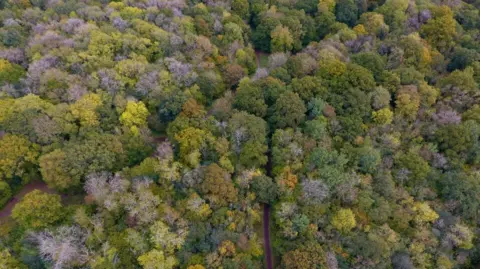
A charitable trust responsible for more than 6,000 acres of public parks says it is facing a "serious challenge" from a fungal disease that is killing trees in the UK.
Milton Keynes Parks Trust will remove affected trees this autumn after they were infected by ash dieback, which makes them prone to collapse.
The trust says the high volume of ash in the city's parks means "we are having to start removing some of the trees before the disease fully takes hold".
"The Parks Trust recognises that removing a large number of trees may look drastic, but the work is necessary to keep people safe and to protect the long-term health of the woodlands," a spokesperson said.
 The Parks Trust
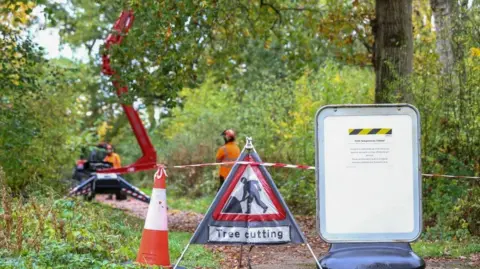
The works will take place at Howe Park Wood, Shenley Wood and Linford Wood during September and early October.
The trust said affected trees could become brittle, unstable and more likely to shed branches or collapse - risking the safety of visitors.
It has identified priority sites for removing trees, such as those close to paths, road and properties.
"Clear signage and diversions will be in place on site, and the woodlands will remain accessible where it is safe to do so.
"Visitors are asked to follow all signs and avoid entering closed areas while the forestry teams are working," the trust said.
After removing the diseased trees, the charity plans to plant replacements using "a diverse mix of species" that are more resilient to the changing climate.
It hopes that by developing a greater variety of tree species, this will protect sites from pests and diseases that can wipe out entire areas of woodland.
Do you have a story suggestion for Beds, Herts or Bucks? Contact us below.
Follow Beds, Herts and Bucks news on BBC Sounds, Facebook, Instagram and X.
