Headlines: Rescued pine marten and dumped asbestos

 Vale Wildlife Hospital and Rehabilitation Centre
Here's our weekly roundup of stories from across local websites in the West of England.
We have a daily round up as well. Make sure you look out for it on the website and the local section of the BBC News app.
What have been the big stories in the West this week?
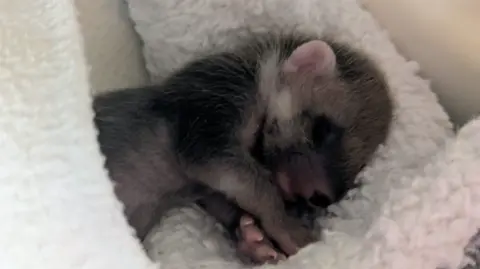
A baby pine marten is being cared for by the Vale Wildlife and Rehabilitation Centre in Gloucestershire after being discovered in a rubbish bin and mistaken for a fox cub. Two of its siblings found alongside the animal in the bin had sadly already died.
A police inspector has won an award for making Gloucestershire Constabulary's custody suite more inclusive for detainees. Insp Andy Miller commissioned a calming mural for those in custody with neurodiverse conditions and has now been in contact with other police forces interested in adopting his ideas.
A "very large" quantity of asbestos has been fly-tipped alongside the River Banwell, near Banwell, according to North Somerset Council. The post said it posed a "serious risk" to public health, particularly if disturbed.
Bristol Live reported on protestors who blocked contractors from starting work for the second time on the Avonvale Road bus gate. Labour councillors are calling for the gate - part of the East Bristol's Liveable Neighbourhood - to be paused.
There were lots of heroic stories from participants in the London Marathon on Sunday - one Somerset pensioner completed her 14th - aged 80. Sue Nicholls, from Burnham-on-Sea, even beat last year's time by 15 minutes. According to Burnham-on-Sea.com, she was "very pleased" with her performance.
This week Salisbury Cathedral celebrated 806 years to the day of the laying of the building's foundation stones. When work started in 1220, the ceremony was watched by "a great crowd of people who shouted and wept for joy".
Top five local stories for the BBC in the West
Something longer to read
The Swindon Advertiser has published a feature on how the design of buses has changed over the last 150 years. A late 19th Century horse-drawn station bus, used to transport passengers before the introduction of motor vehicles, is one of the items on display at the Science and Innovation Park in Wroughton, Wiltshire.
