Protests and profits: 25 years of Manchester's second runway

 Manchester Airport
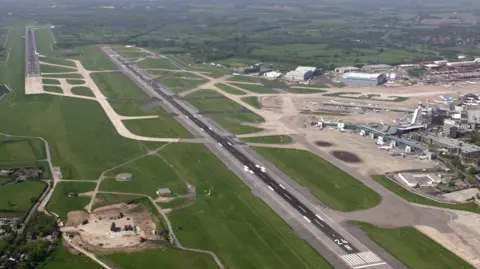
When Manchester Airport was given permission to build a second runway in 1997 it prompted one of the country's most high-profile environmental protests of the time.
Activists from across the country set up camp, built tree houses and a complex network of tunnels in a bid to stop the bulldozers, but after a stand off lasting months they were ultimately evicted and the runway was built.
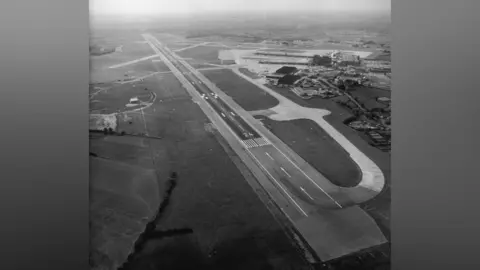
It became operational in 2001 and became the only airport outside of London with two full length runways.
Now 25 years on, we look back at the controversy of the project, the impact it has had on the region and its plans for the future.
 Manchester Airport
What were the protests about?
Large areas of woodland near to the airport would be need to be removed for the runway to be built.
After the plans were approved environmental protesters arrived at the site and set up multiple camps.
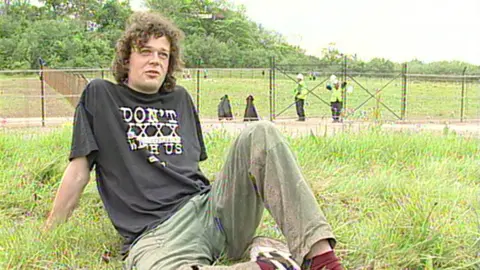
One of the protestors, Martin Porter who was 27 at the time, was among those that dug tunnels at the site.
The protesters were soon joined by a environmental activist named Swampy, real name Dan Hooper.
"All the time we were there we had the media, we had Swampy, we were able to give our message that this is a terrible idea, 400 acres of green belt disappearing," Porter said.
After six months the group were finally evicted.
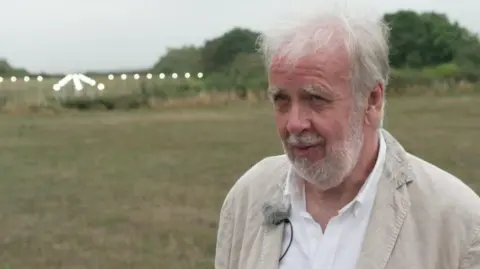
Local resident, Jeff Gazzard, who was also among the protesters, said the national media attention helped to bring environmental issues into the mainstream.
"Climate change began to be an issue then, but it wasn't the headlines it is today," he said.
"A lot of things have changed in terms of our understanding of the environmental impact of a major airport."
What benefits has the second runway brought?
Supporters at the time argued the airport expansion would bring much needed jobs, attract investment, increase tourism, and strengthen Manchester's position internationally.
Fast forward 25 years and a report published this week by the Manchester Airports Group (MAG) claims it has done just that.
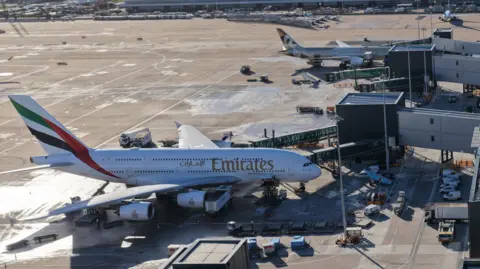
The airport now serves 32m people a year with connections to more than 200 destinations and the report estimated the airport's economic impact reached approximately £9.5bn in 2026 - in tourism and business impact - and also supports 117,530 jobs.
It says further growth could generate more economic benefits andit has the potential to nearly double passenger numbers.
"Airports are not just buildings people pass through as they travel for work or leisure – they are a route to growth for regional economies - economic catalysts integral to our success as an island trading nation," MAG CEO Ken O'Toole said.
What is the environmental impact?
In 2025, flights from Manchester Airport produced about 3m tonnes of CO2, the equivalent of around 1.5m cars a year and 1.7 times more CO2 than the entire city of Manchester.
Manchester Airport says it is "committed to making air travel sustainable for all and working towards national and international decarbonisation targets".
"We also safeguard the natural environment and promote the efficient use of resources like water, waste, and energy to increase efficiency and avoid waste."
Mayor of Greater Manchester Bev Craig said she was "pushing" the aviation industry "around reducing their carbon footprint".
"Similarly we have to make it easier for people to be better connected into jobs and opportunities and as mayor I'm committing to do both," she said.
Martin Porter said: "We are going to struggle to meet our net zero contributions and our commitments with existing air travel."
 Manchester Airport
What are the future plans?
Airport bosses are now urging the government to deliver better rail links as a priority to maximise potential.
In January the government announced £45bn of funding for the Northern Powerhouse Rail project with plans to improve links between Liverpool, Manchester, Warrington, Manchester Airport, and Yorkshire.
"Manchester Airport is Greater Manchester's gateway to the world and one of the North's great success stories," Craig said.
"For 25 years, its second runway has helped connect our businesses, universities and communities to global markets, and has played a major role in our city-region's reinvention.
"Now we need to make sure more people and places share in that success.
"Northern Powerhouse Rail, including a high-speed station at the airport, would cut journey times, open up access to jobs and opportunities, and help unlock the North's full potential. That is the investment our region needs - and the case we will keep making."
A report by the Commons' Public Accounts Committee (PAC) in July said the scheme cannot be delivered within its funding cap.
The government confirmed this week it was still committed to delivering the project.

Listen to the best of BBC Radio Manchester on Sounds and follow BBC Manchester on Facebook, X, and Instagram. You can also send story ideas via Whatsapp to 0808 100 2230.
