Prisoners trained in roadwork skills to improve job prospects

 BBC
BBCPrisoners in Scotland are to be trained in roadwork skills in an attempt to improve their job prospects after release from jail.
The Unlocking Future Connections scheme is being expanded to 15 jails around Scotland by the Scottish Prison Service (SPS) and road maintenance company Amey.
It's hoped the training programme could help inmates into work and reduce re-offending.
Justice Secretary Neil Gray said reducing re-offending was a key government priority and that stable work was one of the best ways to stop prisoners returning to jail.
Those behind the scheme also hope it could help address a labour shortage in the roads and construction sectors.
Those hoping to find a job through the scheme include John Gilchrist, an inmate at HMP Barlinnie in Glasgow, who is due for release early next year.
"It's not just about the skills, it's about the confidence to be able to go and achieve something," he said.
"It's hope that there is a different life out there for you.
"My hope for the future is to move onto the next part of my life, that I can be able to go out and get employment and enjoy life outside with my friends and family - rather than just being a revolving door and coming back to prison."
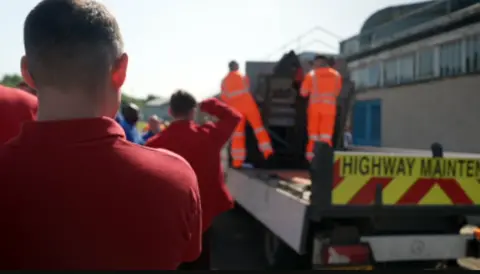
We spoke to the 44-year-old after watching part of the training, which involved setting up a temporary traffic light and road system.
Those on the course had to follow a plan and were assessed as they laid out traffic cones, warning signs, part-time signals and roadworks as part of a team.
The scheme, which is also supported by Speedy Hire, Hatton Traffic Management and Breedon, was recently piloted at HMP Inverness.

Katy Bald, senior social value manager at Amey, said two inmates had gone on to secure full-time employment after completing the programme.
She said they wanted to give inmates the best chance to apply for traffic management or construction-related jobs after their release.
"The aim is to encourage people into the roads and infrastructure business," she added.
"That could be traffic management, maintenance operatives or just to help keep the networks going.
"We're looking to tailor the individual's experience, work ethics and match them with something which ends up in retained employment."
Bald said the skills gap had been caused by an ageing workforce and a lack of people with the right skills or qualifications to apply for jobs.
"It is difficult to recruit. People have to be competent and have the correct and qualified tickets in order to apply for those positions.
"So if we can offer that in the establishments, it should give them a greater success in applying for jobs that they need to be competent in doing."
Scotland's prison population is at an all-time high, despite the emergency early release of more than 600 convicted criminals over the last six months.
Last week, a total of 8,587 inmates were being held in a system designed to accommodate 7,805.
It's hoped that providing targeted work opportunities could help reduce the likelihood of former prisoners ending up behind bars.

Lynsey Weston, learning skills and employability manager at the SPS, said the main aim was to get people into jobs and for them not to return to custody.
"If we can invest in them whilst they are in custody and make that time purposeful and give them access to greater opportunities, then it will hopefully then make them better citizens when they go out into the community," she added.
It is hoped that opportunity - rather than punishment alone - can help stop the cycle of re-offending and build a new road forward for inmates.
Justice Secretary Neil Gray said the government welcomed the training programme.
"By giving people in custody the tools they need to build a better future, we can help break the cycle of reoffending and support safer communities," he said.
