Sickle cell patient died after complications

 Norfolk and Norwich University Hospital
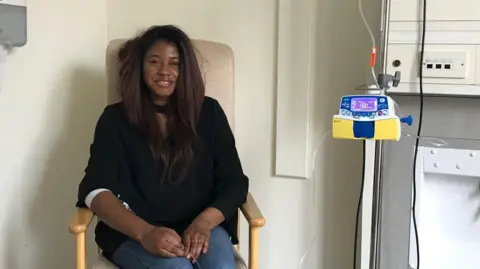
A woman who was the first patient in Norfolk to receive a new treatment for sickle cell disease died after medical complications, an inquest heard.
Veronique Mwembo, 32, died at the Norfolk and Norwich University Hospital on 23 January.
Norfolk Coroner's Court heard Mwembo had been diagnosed as a child with sickle cell disease, an inherited condition, and had received regular treatment from the age of three.
The mother-of-one died three years after becoming the first patient in the county to receive what was the first new treatment for the condition in 20 years - an intravenous antibody therapy called crizanlizumab.
Area coroner Johanna Thompson said a provisional cause of death had been given as "acute cardiac failure due to foreign material pulmonary embolism and intravascular foreign body reaction".
Further details about the circumstances of Mwembo's death will be heard at a full hearing in August.
Sickle cell disease was also named as a "contributing condition" in her death.

When the hospital trust announced the new sickle cell treatment almost four years ago, Mwembo hoped it would improve her quality of life and keep the disease stable.
Mwembo, who was from Norwich and worked as a childminder, said: "There are times when sickle cell takes away your identity and looking on the bright side, we can do all the things that normal people can do and the treatment is not a big risk.
"It will not take sickle cell away, but it will keep it stable and hopefully I will not need to depend on painkillers."
A fundraising page was set up by Mwembo's family and friends to help raise money for funeral costs and to support her son.
Sickle cell disease is the name for a group of inherited health conditions that affect the haemoglobin molecules in red blood cells, causing red cells to become stiff and stuck in the smallest blood vessels.
It can bring severe pain and other complications to its patients. These include shortness of breath, strokes and vision problems.
The disease mainly affects people of African, Caribbean, Middle Eastern, eastern Mediterranean and Asian origin.
It is one of the fastest-growing genetic diseases in the UK, but most cases are in sub-Saharan Africa.
Do you have a story suggestion for Norfolk? Contact us below.
Follow Norfolk news on BBC Sounds, Facebook, Instagram and X.
