Beach closed again after asbestos found in sand

 Grace Stickland
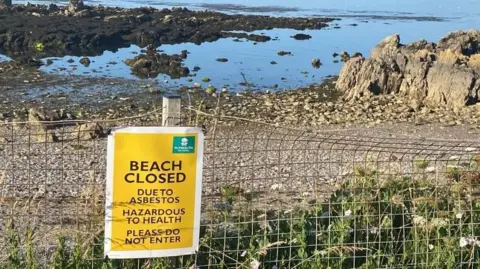
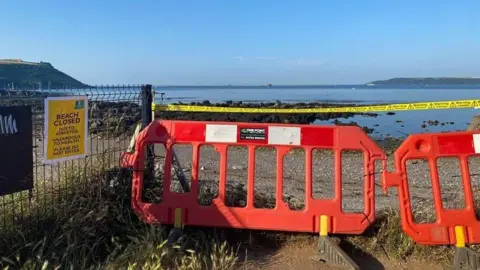
A beach has been closed after asbestos was discovered for a second time.
Plymouth City Council said "high levels of asbestos fibres" were found in the sand at Mount Batten beach, Plymouth, which could pose a risk to health.
The authority said asbestos fibres were found in 14 of 16 sand samples taken, so the beach would remain closed "until further notice" while investigations and tests were carried out.
Prof Steve Maddern, Plymouth's director of public health, said the "latest sand samples are concerning and we must prioritise the safety of the public".
 Grace Stickland
A small amount of asbestos was first found at the site in April 2019.
The council said it was found in one of 16 sand samples.
It said a total of 500kg of asbestos containing material, such as small pebbles or rocks was collected from the beach in 2019 and had continued to be collected every two months.
It said due to the low levels of asbestos fibres found seven years ago, the beach was felt safe as long as signage remained in place to warn beachgoers.
However, it said: "A recent review of the risk assessment showed that since 2019, the volume of asbestos material being collected from the beach has not reduced over time."
'Risk to health'
Plymouth City Council said: "Repeat sampling of the sand in recent weeks has found asbestos fibres in 14 of 16 sand samples, with two asbestos types present and at levels deemed 'hazardous waste' by the contactor.
"These fibres represent a risk to health if inhaled."
It said asbestos was previously used in building construction and was only hazardous to health if it broke down and fibres were released into the air.
The UK Health Security Agency said "all forms of asbestos fibres are hazardous as they can induce cancer following inhalation exposure".
Maddern said the risk of airborne fibres would be accessed and urged people to stay off the areas marked by signs and fencing.
Follow BBC Devon on X, Facebook and Instagram. Send your story ideas to spotlight@bbc.co.uk.
