Who won the local elections in Hounslow?

 Getty Images
What happened in Hounslow in the 2026 council election, and who won?
Labour retained control of Hounslow on 7 May but with a reduced majority.
The results were:
Labour: 32 seats (-20)
Conservative: 17 seats (+7)
Reform UK: 8 seats (+8)
Green: 3 seats (+3)
Independents and others: 1 seat (+1)
Liberal Democrat: 1 seat (+1)
When were the 2026 local elections in London?
More than six million Londoners were eligible to vote in the council elections on Thursday 7 May 2026.
All 32 London boroughs were up for election.
There were also elections for the mayor in five boroughs: Croydon, Hackney, Lewisham, Newham and Tower Hamlets.
 Getty Images
Where is Hounslow and who lives there?
The London Borough of Hounslow is in south-west London and borders Hillingdon, Ealing, Hammersmith and Fulham and Richmond upon Thames.
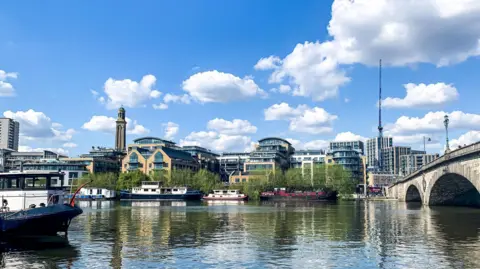
What's it like? It is one of the westernmost boroughs in the capital, and in part straddles the north bank of the Thames. It stretches from Chiswick in the east to the border with Surrey to the west, with dense urban pockets as well as leafy riverside spots.
Neighbourhoods: Major towns include Hounslow, Chiswick, Brentford, Isleworth, Feltham, and leafy neighbourhoods of Osterley, Bedfont, Cranford, Hanworth, Heston and Gunnersbury.
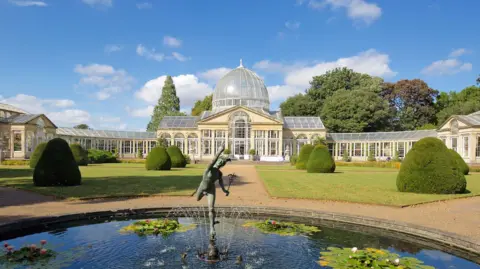
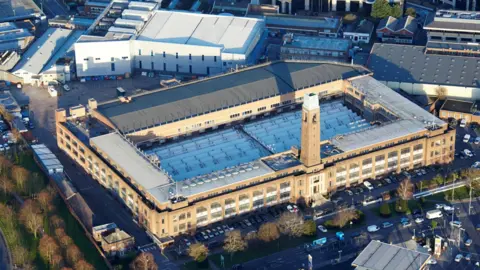
Places of interest: Hounslow is home to several historic country estates, such as the Georgian Osterley Park and House, Syon House, Boston Manor House, Chiswick House and Gardens, as well as Gunnersbury Park and Museum, Hounslow Heath, the London Museum of Steam and Water and Fuller's Griffin Brewery.
Pub quiz fact: The first flight from the UK to Australia departed from Hounslow Heath Aerodrome in November 1919. The journey took 27 days and 20 hours.
Population: (2024 estimate): 299,424, according to official data.
Demographics: According to the 2021 census, 44% identify as white, 37% as Asian, 7% as black, 5% as mixed race and 2% as another ethnic group.
Average property price: According to the Office for National Statistics (ONS), the average house price in Hounslow was £513,000 in December 2025.
Average monthly rent: The ONS reported that the average monthly rent in January 2026 in Hounslow was £1,902.
Council tax: Band D council tax in the borough for 2026/27 is £2,185.
Transport: Chiswick is served by the District line, while Osterley and Hounslow are on the Piccadilly line. Other parts of the borough, such as Brentford and Isleworth have rail services into London Waterloo.
Transport for London operates eight Tube stations, one London Overground station and around 680 bus stops in the borough.
 Getty Images
What is Hounslow's local history?
Originally part of Middlesex, the area was largely agricultural for centuries, with small villages such as Hounslow recorded as early as the Domesday Book of 1086. Brentford became an important medieval market town after a bridge was built over the River Brent in the late 13th Century, strengthening local trade.
Hounslow Heath was still a forested expanse in the 19th Century, where highwaymen targeted travellers heading into London. But the introduction of the railways catalysed gradual suburban growth, which eventually transformed the area.
From the 1970s onwards, Hounslow underwent various regeneration schemes.
Improved transport links, including upgrades across the borough, have further shaped modern Hounslow, reinforcing its role as a key gateway between London and Heathrow Airport.
Listen to the best of BBC Radio London on Sounds and follow BBC London on Facebook, X and Instagram. Send your story ideas to hello.bbclondon@bbc.co.uk
