How AI is making life easier for social workers

 Jamie Niblock/BBC
Social workers in adult social care in Suffolk will be using Artificial Intelligence (AI) tools in their case work, following a successful pilot.
Training for the technology, which records and transcribes social workers' assessments, will be rolled out to all practitioners over the coming months, according to Suffolk County Council.
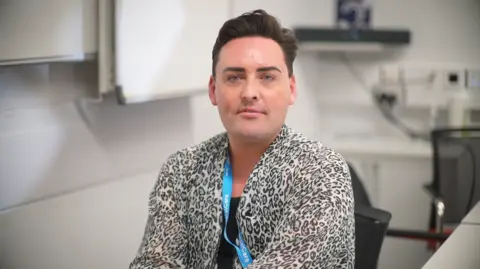
Jamie Stewart, transformation manager for practice and culture at the council said: "Practitioners still review the information gathered and then use their professional judgement to record their decision. "
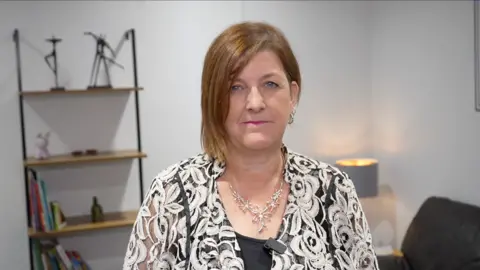
But Jo Finch, professor of social work at University of Suffolk, has cautioned that AI tools must not lead to "cutting corners" or using AI to do analysis.
A BBC investigation into the savings target for councils across England published today says 146 out of 148 councils had approved savings in their 26/27 budgets to a combined total of £2.86bn.
Many of the councils had indicated AI would be used to create some of those savings.
 Jamie Niblock/BBC
Stewart, who trained as a social worker, said: "We undertook a rigorous pilot to make sure our practitioners were effectively trained and understood how to use it."
He added: "In terms of the ethical implications, we made it really clear, if people don't wish to partake in it, it's not a necessity."
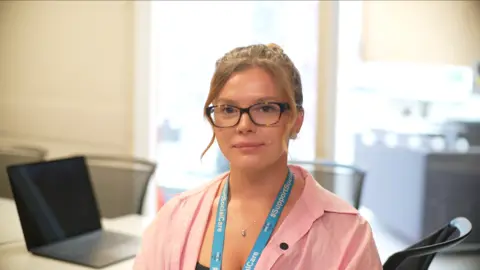
Alice Harvey, a senior social worker in the Lowestoft Neighbourhood Team, has been using the technology for the last 18 months.
She said: "The biggest change for me has been I can go out on a visit and know that the weight of the admin side of it isn't there anymore."
Harvey added: "When you're a social worker, you really want to build a relationship. "A lot of your work is built upon that. You need to find their voice, and sitting there with a notepad and scribbling away is a massive barrier to that."
Harvey, who has been a social worker for five years, said the tool saves time and knowing the assessment is being recorded means observations are enhanced.
She hasn't come across much resistance to the use of the tool. She said: "People respond really well to it. I think they understand that it's helping us in their situation and helping me."
 Jamie Niblock/BBC
The British Association of Social Workers (BASW) has raised concerns about the use of AI for care assessments. It said the system is already under significant pressure with many not able to complete their work.
Andrew Reece, strategic lead for BASW, said: "The savings will come from shedding social work jobs, which will just put more pressure on the system.
"The worry here is that the AI is simply being used to paper over the cracks of a system that's on the point of collapse and shore up a system that's under huge amounts of pressure.
"And if the introduction of AI is all about efficiencies, we risk continuing to fail people and not being able to provide the support (they) need in order to be able to live full lives."
Jo Finch can see some benefits. She said: "Anything that can be done to ease the administrative burden of social workers is a good thing.
"There's been research over the years that says that social workers spend less and less time actually interacting with people."
But Finch, like the BASW, also has concerns. She said: "What we wouldn't want to see is social workers cutting corners with their assessment reports, or using AI to generate those assessment reports, or using AI to do the much needed analysis and developing the subsequent care plan."
Whether the new AI tool does save time is still up for evaluation.
Stewart said: "It's still really early days, and we've done it with a very small control group at the moment. But what we certainly have seen is the time it takes to write up an assessment has reduced significantly from three hours to around 45 minutes."
He added: "Over the coming months, we'll have every practitioner trained up on it, and then that's when we'll hope to start to see the benefit and the impact on caseloads and waiting lists."
Do you have a story suggestion for Suffolk? Contact us below.
Follow Suffolk news on BBC Sounds, Facebook, Instagram and X.
