US revokes Brazil ambassador's visa as diplomatic tensions escalate
 AFP via Getty Images
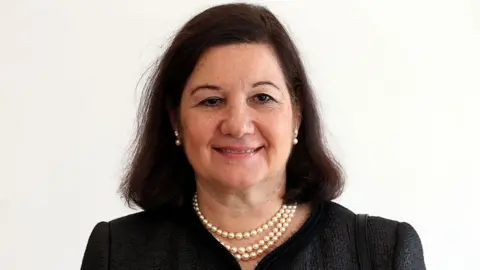
The US has revoked the visa of Brazil's ambassador to Washington, according to a state department official, marking another escalation in diplomatic tensions between the two countries ahead of Brazil's elections.
Maria Luiza Ribeiro Viotti's visa cancellation comes after the Brazilian government denied visas to two US state department officials who wanted to visit Brazil last month.
Brazil's President Luiz Inácio Lula da Silva accused the officials of wanting to "meddle" in Brazil's elections, an allegation the US called "baseless".
The US official said the decision did not mean Brazil's ambassador was being expelled from the US. A state department spokesperson called it a "reciprocal action".
"We communicated continually with the Brazilian government for weeks and have given the Brazilian government every opportunity to do the right thing, yet they have continually delayed and obfuscated," the state department spokesperson said.
The department said while this action didn't mean Viotti was banned from the US, "additional diplomatic options remain on the table".
The BBC has contacted the Brazilian government and Brazilian embassy for comment.
It is the latest in a series of disputes between the US and Brazilian government, which have flared up in recent months after the US reimposed tariffs on Brazil and designated Brazilian gangs as terrorist organisations.
Two state department officials were due in Brazil in late July for what they said was a visit about freedom of expression and religion and election integrity.
They were also expected to meet the right-wing candidate Flávio Bolsonaro, son of the former right-wing president Jair Bolsonaro.
The elder Bolsonaro is serving a 27-year prison sentence for plotting a coup after losing the last election.
A few weeks ago, Flávio Bolsonaro, who has received endorsements from Argentina's President Javier Milei and Israeli Prime Minister Benjamin Netanyahu, told a roomful of diplomats that Brazil's machines had the same origin as Venezuela's, and cited a CIA report about electoral fraud in that country.
Flávio Bolsonaro later denied he was questioning the integrity of the electoral system, saying he instead wanted as many international observers as possible.
But following the meeting, the Brazilian government blocked visas for a US delegation, citing concerns they would try to cast unfounded doubts on the election.
That included two senior state department officials, who have been identified as Riley M Barnes, an assistant secretary of state for democracy, human rights, and labour, and Samuel Samson, a deputy assistant secretary in the same section.
Flávio Bolsonaro's claims about the country's electronic voting machines have been rejected by Brazil's Superior Electoral Court. Brazil's election system has been praised by experts as one of the most secure in the world.
The Brazilian government has also withheld approval for US President Donald Trump's pick to be the next US ambassador to Brazil.
Trump nominated Daniel Perez, a state representative from Florida, who is a close ally of US Secretary of State Marco Rubio, on 1 June without seeking Brazil's approval beforehand - a common diplomatic step.
President Lula has been critical publicly of the state department under Rubio and its increasing intervention in Latin American politics, including endorsing conservative candidates in some elections.
