CalMac's dual-fuel ferry has run solely on diesel since July

 PA Media
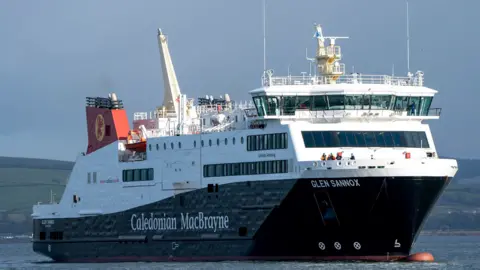
CalMac's "eco-friendly" dual-fuel ferry Glen Sannox - which is capable of running on gas - has been operating solely on diesel since last July, it has emerged.
The operator initially suspended use of the ship's liquefied natural gas (LNG) last summer after concern that some gas could enter the engine spaces.
An extra safety feature was fitted during the vessel's annual overhaul to address the issue but CalMac then decided not to "re-gas" the ship when it returned in February.
A spokesperson said re-gassing would take at least a week and the priority had been to get Glen Sannox back into service as soon as possible given the shortage of available vessels on its west coast network.
The initial decision to suspend the use of LNG for the main engines followed concern that gases from a vent pipe could enter the engine spaces via an air intake, according to the Daily Express which first reported the story.
Venting into the atmosphere is a standard feature of LNG ships to control pressure and to get rid of "boil off" gas - where the gas deliquefies - as well as gases released when the ship switches between fuels.
The ship's refrigerated LNG tank then had to be emptied for safety reasons before it went for an extended overhaul in Merseyside in November.
CalMac said refilling the LNG tank was a lengthy process because the engine had to cool down for a week before the refuelling operation could commence.
Given the shortage of serviceable vessels it was facing, the operator decided instead to continue operating the ship solely on marine gas oil, a form of diesel.
CalMac said it planned to resume using LNG once the current network pressures had eased and a suitable opportunity arose to take Glen Sannox out of service for re-gassing.
The spokesperson added: "She was designed to run on either LNG or diesel and has not operated on LNG since July 2025.
"The vessel has been a welcome addition to the CalMac fleet since she joined the service in January 2025."
The ferry, which normally serves Arran, is currently redeployed to the Ullapool- Stornoway route because of vessel shortages.
Why was LNG chosen for the ship?
Ferries procurement agency CMAL, which owns the ships operated by CalMac, first started looking at LNG as a possible fuel as long ago as 2012.
Two years later, when the procurement for two new ships began, CalMac agreed that the new vessels should be dual-fuel, capable of running on LNG as well as traditional marine gas oil.
The attraction was that gas burns more cleanly, meaning the ferries would easily comply with new regulations on pollutants and sooty emissions which were soon to come into force.
The Finnish manufacturer of the dual-fuel engines also claimed they would emit up to 25% less carbon dioxide when running on gas.
But the global warming benefits of the LNG engines have been questioned because they also emit methane, itself a powerful greenhouse gas.
A report for CalMac has estimated that the carbon equivalent savings when running the ship on gas are less than 9% - and that figure does not include the methane vented every time it switches between fuel types.
There is no local supply of LNG, so the gas has to be imported from countries like the US, Norway, Algeria and Qatar and then driven 540 miles by road tanker to Scotland from an import terminal in Kent.
Gas prices have also jumped sharply since the US-Israel war with Iran, which led to the closure of the Strait of Hormuz, affecting supplies of LNG.
 BB
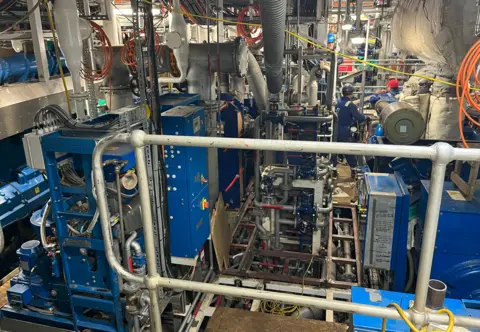
BBGlen Sannox and Glen Rosa are the first LNG ships of their type constructed in the UK, and the choice of an LNG propulsion system increased the design challenge for the Ferguson shipyard which built them.
One of the problems the shipyard faced was that the LNG tank and cryogenic pipework added significant weight to the ship and took up a lot of space.
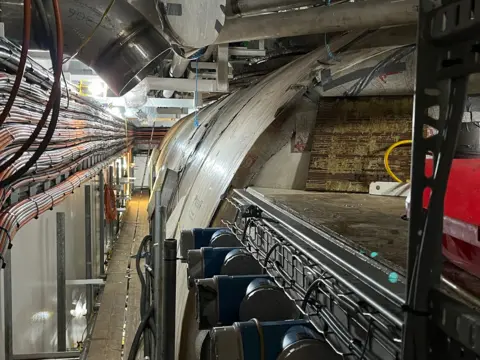
The engine room on Glen Sannox has ended up quite congested, and has been dubbed the "snake pit" by the Ferguson workforce due to the amount of pipework.
The two ships remain the only LNG vessels in the CalMac fleet, as CMAL has opted for traditional diesel engines for the new Islay-class ferries, the first of which entered service at the end of March.
Two new freight vessels recently ordered by CMAL for the Northern Isles will also use traditional diesel engines to generate electricity for their propulsion units, although there may be some scope to retrofit them to greener fuels in future.
UPDATE: This article was amended after publication to clarify that liquefied natural gas is not imported solely from Qatar, with imports from some other countries increasing in recent years.
