Council votes to undeclare climate emergency

 Getty Images
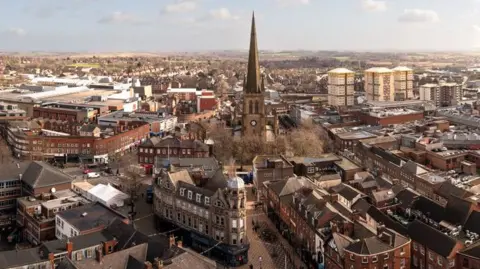
Wakefield Council has voted to rescind its climate and biodiversity emergency declaration from May 2019.
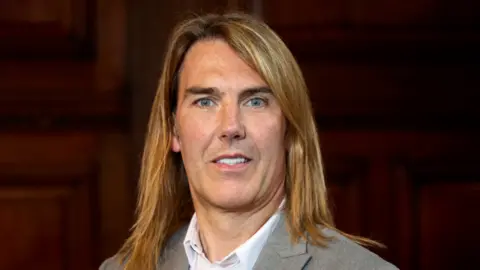
The motion to become carbon neutral by 2030 and help the district achieve this goal by 2038 was unanimously backed by councillors seven years ago, but, on Wednesday, new council leader Karl Johnson tabled a motion to axe the declaration.
Setting out his plan the Reform UK councillor said the focus would instead be on energy efficiency and cost of living interventions that "provide practical help to residents".
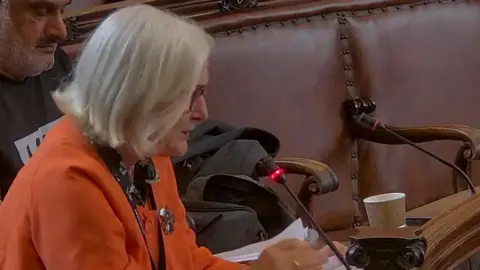
Green Party councillor Kate Dodd, who opposed the motion, said: "To suggest this is not an emergency and not something that urgently needs to be tackled is frankly irresponsible."
Through the Climate Change Act the UK is obliged by law to reach net zero, nationally, by 2050.
Net zero means balancing the amount of planet-warming "greenhouse" gases produced by human activities with the amount being actively removed from the atmosphere.
Reaching net zero CO2 emissions is essential to limit global warming, according to the United Nation's climate body.
 Wakefield Council
Johnson told councillors that too much time was spent on "virtue signalling and gesture politics" and not enough time was spent on improving residents' lives.
He emphasised this was "not about denying climate or the science" and that a significant international effort would be required to respond to the changing climate.
"With council tax set this year at another 4.99% we need to put our residents first," he said.
"We've got roads, potholes, housing - we could name countless."
The motion argued that while the council would continue supporting current energy efficiency programmes, improvements to green spaces and flood protection, it had "limited influence" over national climate policy.
 Wakefield Council
Dodd described the motion as "a classic example of gesture politics", pointing out that Johnson was among several councillors who had voted for the climate emergency declaration in 2019.
She argued that, contrary to his motion, which claimed it was unrealistic to expect local councils to make significant contributions towards achieving net zero emissions, local councils already had legal duties that enabled them to influence climate action.
Conservative councillor Nadeem Ahmed also opposed the motion, saying it was not right to go against his previous vote in favour of declaring a climate emergency in 2019.
But he added: "I believe there is a climate issue in the world, but it's not going to get resolved by Wakefield Council."
 Wakefield Council
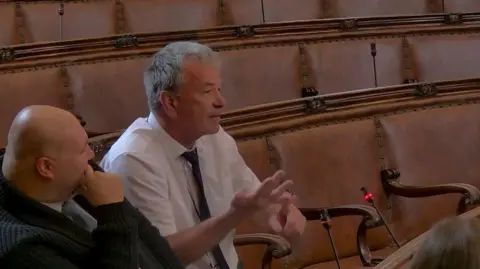
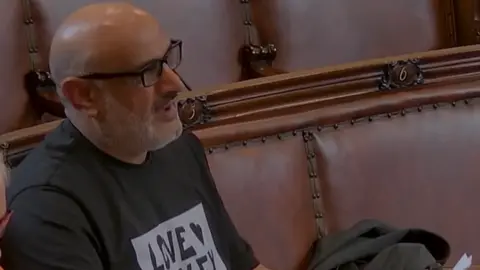
Independent councillor Nick Farmer said he supported the motion, despite voting in favour of the declaration in 2019.
He said: "Why should our residents pay so much money when other countries don't give a monkey's?"
Farmer told the meeting his own house flooded in 2020, which he said was due to pumps and drainage "not being sorted out" by the then-Labour council.
Labour councillor Mohammed Ayub, who opposed the motion, said he had not seen any evidence of what financial savings Johnson's proposal would deliver.
He said many of the actions taken by the previous council had reduced costs as well as emissions, citing improvements in energy efficiency, improving council buildings, and reducing fuel consumption.
He also highlighted the planting of 45,000 trees and the installation of solar panels in schools, which helped schools cut their operating expenses.
The motion was passed, with a more detailed report on how the council will undeclare the climate emergency to be discussed at the next cabinet meeting.
 Wakefield Council
Former deputy Labour leader of the council Jack Hemingway told the BBC Reform's decision to undeclare the council's climate emergency was "a regressive step".
Hemingway lead the council's climate and environment portfolio from 2020 to 2025.
Writing on social media, he said: "To tear all this up as part of some culture war is a grave mistake and won't even save money given that many of these schemes are funded by grants and the work of a small core enabling team.
"Many of these projects even save the council money by making buildings more energy efficient as well as their other benefits."
Listen to highlights from West Yorkshire on BBC Sounds, catch up with the latest episode of Look North.
