Why we can't look away from hoarder home clean-ups

 Pocket Rockets
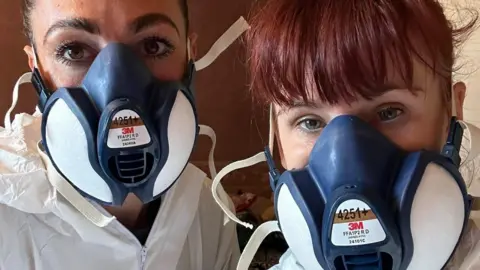
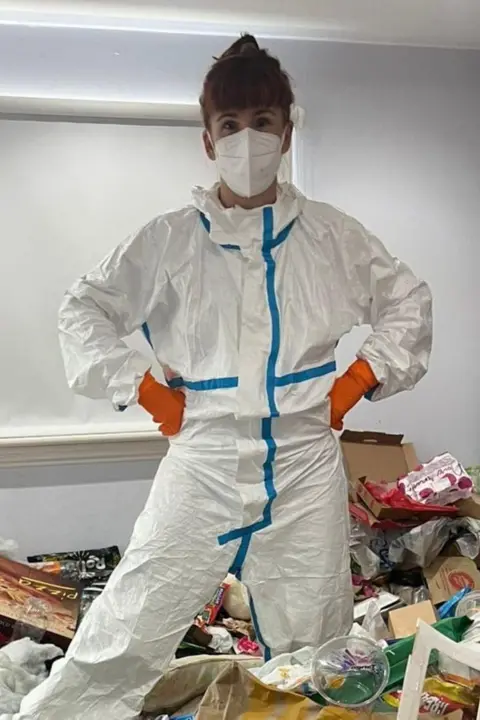
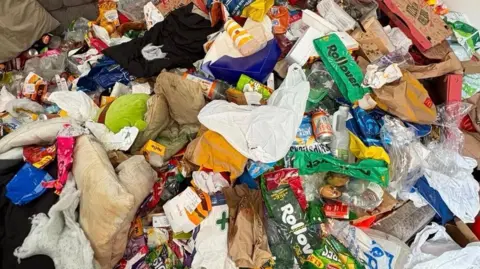
When Victoria Gordon arrives at a client's house, she can be met with huge piles of clothes, stacks of unwashed dishes and badly blocked toilets.
The 44-year-old is not your average cleaner. She specialises in hoarder clearances, crime scene work and other extreme clean-up projects.
She loves her job as an extreme cleaner, but since starting to document her cleaning adventures online, she has found it fascinating how interested other people are in what she does.
The popularity of cleaning videos has grown rapidly in recent years. In 2023, Unilever partnered with TikTok to launch a dedicated CleanTok community after the genre had amassed 78 billion views on the social media platform.
So why are people so captivated by videos of hoarded homes, crime scene cleans and other extreme clear-outs?
 Victoria Gordon
Gordon, from Lincoln, believes videos on her account have racked up thousands of views because people are "naturally inquisitive" and "nosey".
"We like to have a little delve into other people's lives – in particular where there's a shocking 'before and after', or they're able to watch the process," she says.
"People find it really interesting and actually quite satisfying."
Dr Wasim Ahmed, a senior lecturer in marketing at the University of Hull, says it comes down to people craving a sense of control, curiosity and relatability.
"You're seeing something in the short-form video where it's creating tension, showing you a lot of mess, and there's a process and resolution that can be quite reassuring," Ahmed says.
"It's quite satisfying seeing a clear problem and a clear ending in just under a minute."
Long before this sort of content became a social media phenomenon, programmes such as Britain's Biggest Hoarders, The Hoarder Next Door and Hoarder SOS were attracting audiences on television.
 Victoria Gordon
TikTok said the CleanTok community had transformed the mundane task of cleaning into "one of the most-loved and entertaining genres" on its platform.
The trend has been driven by "cleanfluencers" – content creators who share cleaning routines, home organisation tips and everyday resets with their followers.
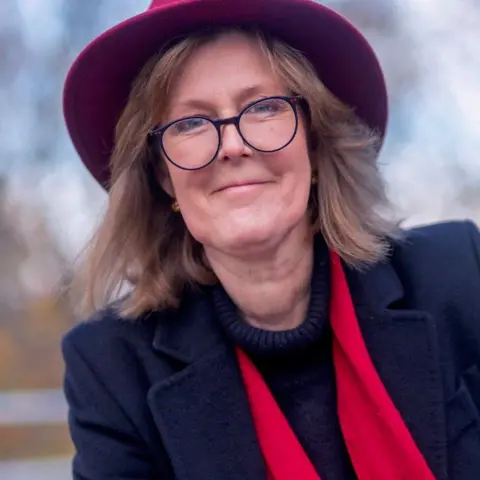
Ann Russell, a cleaner from Hampshire, amassed a global following of three million people on TikTok after she began posting videos of her day job online.
Speaking to the BBC previously, she said: "I still don't like cleaning my own house but cleaning someone else's house – you can go into absolute chaos, you can tidy it, clean it, you can render it beautiful and then you can leave and somebody says 'Thank you'.
"When it is your own house, just when you are getting to the end of it, somebody drops a bottle of squash and throws a pair of socks on the floor. It's disheartening and it's never-ending."
 Ann Russell
Gordon is one of the more niche creators, showing "all the gory stuff that not many other people want to do".
"I obviously have to be really careful what I post," she says. "I don't post anything without permission and there are loads of clean-ups where I wouldn't even ask."
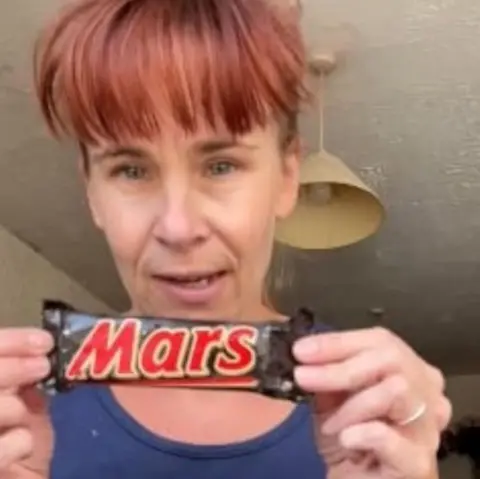
Earlier this month, she posted a video of a 35-year-old Mars bar that she had found while cleaning a hoarder's home.
"It's so fascinating what people find so interesting. I almost put it in the skip [but now] I might do a UK tour with it," she says.
 Victoria Gordon
Ahmed says the videos are going viral because social media platforms are "actively rewarding" this type of content.
His current research focuses on social media virality, including why people are so captivated by short-form video.
"A lot of these algorithms learn from how long users are staying on these videos," he explains. "All it knows is that the person hasn't scrolled past."
He adds: "So when there's a really filthy room and it's holding people's attention or it's a really shocking crime scene, the algorithm is reading that as a quality metric.
"It starts finding the user worse rooms, worse crime scenes, [and] allowing the content to be served up in greater numbers as well."
Ahmed says another reason the videos perform so well is the level of engagement they generate through likes, comments and shares.
"People are quite drawn to the comments section, to have a scan [of] other people's views," he says.
"There is this concept of relation. There could also be a sense of comparison as well."
 Victoria Gordon
Gordon says the main reason she posts online is to raise awareness, particularly about hoarding disorder and mental health.
According to the NHS, hoarding disorder is a mental health condition in which someone collects a lot of things and finds it difficult to get rid of them, even when they negatively affect their daily life.
"I think it's really easy to be quite judgmental," she says.
"People see footage of these homes online and in documentaries, and it's really easy to judge and think the person's lazy.
"There's a lot of stigma behind it and a lot of misunderstanding."
She says the stigma of being a hoarder can stop people from seeking help.
"This is real life. It's mental health. It's people who are finding themselves living in really unsafe, unsanitary conditions through no fault of their own.
"The more we can talk about it, the better. The less we judge, the more we can understand, [and that] is only going to be a good thing."
Gordon says many of her followers are hoarders themselves.
"I get a lot of messages in my inbox saying, 'Thank you so much for your content. That house that you did last week, mine's not dissimilar to that and you're making me feel like I'm not the only one that lives like this'.
"A lot of people have messaged me and said that, because they've seen my videos, they found the courage to ask for help or maybe hire a cleaner.
"So it is having a really positive effect."
Listen to highlights fromLincolnshire on BBC Sounds and Hull and East Yorkshire on BBC Sounds, and watch thelatest episode of Look North.
Download the BBC News app from the App Storefor iPhone and iPad orGoogle Play for Android devices
