Grazing pigs introduced to transform nature reserve

 Derbyshire Wildlife Trust
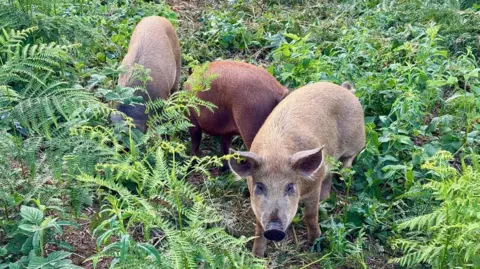
Wild pigs are being used in a bid to improve biodiversity at a nature reserve in Derbyshire.
Conservationists hope the three animals' rooting and snuffling at Lea Wood, near Cromford, will turn over soil and break down dense patches of bracken and grasses.
Experts at Derbyshire Wildlife Trust, which owns the site, said this should create a patchwork of microhabitats that supported a wider range of plants and wildlife.
More delicate or dormant plant species would then be given the sunlight and space needed to thrive, which attracts pollinators such as butterflies and bees and creates habitats for a variety of insects, which in turn attract birds and small mammals.
The pigs have been introduced to a 1.4-acre (0.5-hectare) fenced area of the meadow at the reserve, where both slow worms and grass snakes have been recorded.
They will act as a "proxy" for missing native species such as wild boar, the trust said.
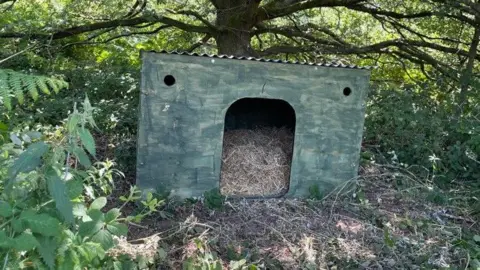
The trust has designed the fenced area to ensure there is no impact on existing footpaths and visitors will be allowed to observe the pigs at work.
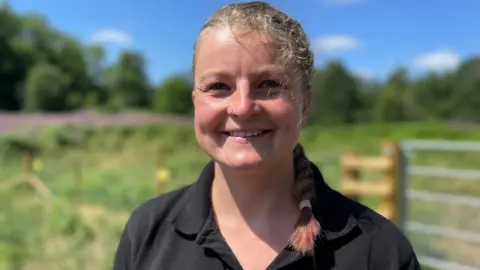
Amy Bennett, from the trust, hopes the pigs will act as ecosystem engineers.
"They are here to mimic the natural processes that are now lost within our landscape," she said.
"Pigs exhibit behaviours that we would ordinarily see in the wild, so it's really giving nature an opportunity to play a part in its own recovery."
Volunteers will play a central role in the project, supporting the trust's team with regular welfare checks, fence inspections and day-to-day monitoring of the pigs.
Training will be provided in pig management, ecological monitoring and interpretation, helping volunteers share the story of how grazing animals are helping restore natural processes, the trust added.
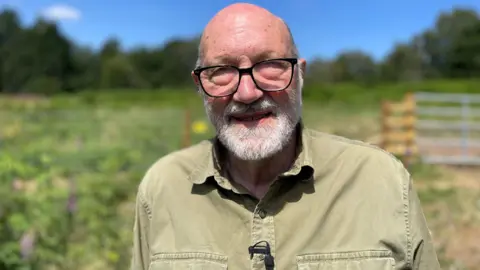
Volunteer Ian Hooker is part of a group that will check on the pigs each day.
"They're a breed that's a cross between Tamworth and something called a Mangalitza," he said.
"The Tamworths are a hardy native breed and should have the instinct to root up the plants that are growing all over the meadow.
"The Mangalitzas, meanwhile, are an unusual pig because they grow wool on their backs. We're hoping that our pigs will inherit the placid nature they are renowned for."
Monitoring will focus on habitat change, biodiversity and vegetation structure, combining specialist ecological surveys with citizen science.
The aim is to build a robust evidence base to understand how pigs contribute to landscape-scale grazing systems and how they might be integrated more widely in the future.
Listen to BBC Radio Derby on Sounds and follow BBC Derby on Facebook, on X, or on Instagram. Send your story ideas to eastmidsnews@bbc.co.uk or via WhatsApp on 0808 100 2210.
