Malala's brother Khushal on fleeing the Taliban and facing the manosphere

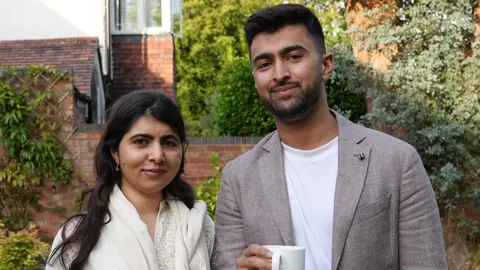 Khushal Yousafzai
"I wanted to see the world burn," says Khushal Yousafzai.
He was just 12 years old when his sister, Malala, was shot in the head in 2012 as she sat on a school bus in Pakistan.
The bullet fired by a gunman from the Pakistani Taliban couldn't stop her, and she's gone on to win a Nobel Peace Prize and advocate for girls' education worldwide
It was a day that changed not only Malala's life - but her brother Khushal's too.
The 25-year-old has been opening up to BBC Asian Network's Amber Haque about the lingering trauma of that incident, his mental health struggles and being drawn to the manosphere.
'I didn't see a point in my existence'
Malala was 15 years old when she was targeted for speaking up for the rights of girls to be educated – and the day remains etched in Khushal's memory.
He was playing video games when his cousin told him Malala had been hurt, and then later the family were told she had been shot in the head.
"I remember going into my sister's room where you can see all the trophies. I felt like I was going to pass out.
"Seconds felt like minutes, minutes were hours and hours were days," he says.
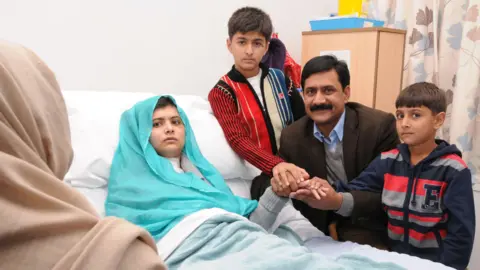
Malala was later flown to the UK for treatment, with Khushal eventually joining his sister in the country.
The incident, he says, left him with "so much hate and anger" in his heart.
"When I was in the UK, my life mission was like: 'I'm going to build myself, go back and take revenge'."
 Getty Images
Khushal admits to "feeling like a burden" at the time.
"Everyone around me is helping my sister. What am I doing? I didn't see a point in my existence."
Through the years, Khushal has been surrounded by people he says were helping to "bring positive change" into the world.
But it's only as recently as a few months ago, he came to the realisation he had been "in denial about the pressure" he felt and its effect on him.
"I pretended my [own] expectations are bigger than what the world expects of me."
While insisting he didn't feel like he's been in Malala's "shadow", he looked at his sister and father who are celebrated for making "something useful" of their pain.
"I just thought, if I'm not bringing positive change into the world, then I'm not doing enough."
Finding - and leaving - the manosphere
The dangers of not "feeling enough" left him "vulnerable to falling for spaces like the manosphere".
The manosphere refers to a network of websites, forums and influencers who promote what they describe as "traditional" masculinity - where men hold a dominant role in a relationship and women are subservient.
It's something that was explored in Louis Theroux's latest documentary on Netflix.
Khushal says the initial appeal of some manosphere influencers was the "self-improvement" message they were spreading, at a time he really needed it.
"Go to the gym, work on yourself. So that message really drew me in."
But it became problematic, he says, when "they would sell these life lessons" that would make "you feel so bad about yourself".
Khushal reveals he's struggled with PTSD, depression and having issues "with weed addiction" over the years.
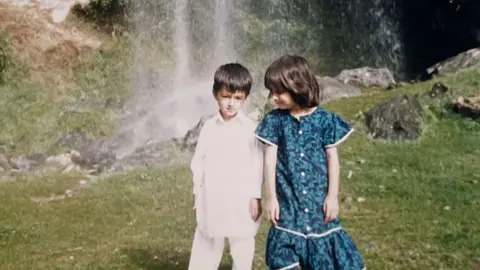 Khushal Yousafzai
Rather than help, the message Khushal took from manosphere influencers was that those issues made him "a loser".
"What happens is that you get into a shame cycle. So you feel like you're a horrible human.
"Whenever I smoked weed, I felt like a horrible human being.
"You want to escape that feeling, so you fall back to that bad habit. It becomes a loop."
He says the way he "snapped out" of the situation was to show himself "grace".
"That does not exist in that space....but my father showed me grace."
Khushal says he withdrew further from that influence after hearing about their attitudes towards women.
"My sister took a bullet for education," he says.
"They might as well be speaking about my mother and my sister.
"And when I started putting [things] into perspective, I started to draw myself away from those spaces."
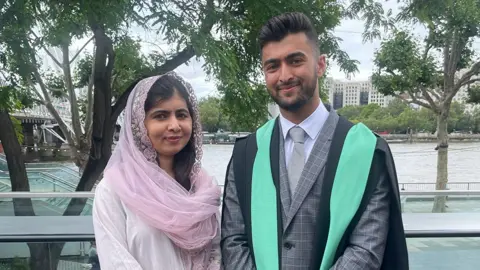 Khushal Yousafzai
While the manosphere discourages vulnerability, Khushal credits a "strong support system" and a focus on "empathy" for his own healing.
He also says he's found gratitude for a family who believe in equal rights.
"If I was born in another household where my parents were poor, couldn't afford my education, I could have also become easily radicalised and indoctrinated by the Taliban," he says.
And to help others, Khushal emphasises the need "to remove the shame".
"Approach all of this from a position of empathy, because all of these people have a story.
"When I hit rock bottom, when it was really tough and I'd taken pride that I hadn't cried for six months – then I broke down.
"I had the best cry of my life. I felt so healed and relieved after," he says.
Having friends and family with whom he can have "a real serious conversation" is what helps him now.
"I think that's a source of strength.
"We need to change the narrative that if you are vulnerable about your struggles, it's a sign of weakness," he says.
- If you are affected by any of the issues raised in this story, help and support is available via BBC Action Line.
You can listen to the full interview with Khushal on BBC Asian Network Trending.

