'I disguised myself as a boy so I could go to school'

 Tom Williams/BBC
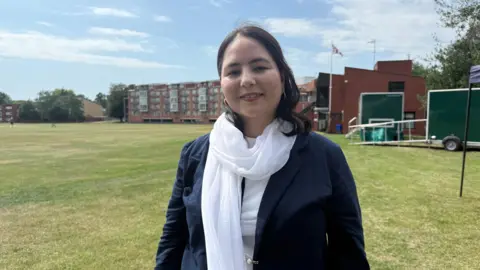
Zahra Joya was only five years old when a huge door closed to her – and to all girls in her home country of Afghanistan. The Taliban had seized power in 1996 and banned females from attending school. But with her father out of the country, Zahra's mother came up with a daring workaround: presenting her daughter as a little boy.
"It was my mother's idea to give me this chance, but I was passionate about learning. I always said, 'I need to go to school, I need to play outside with boys'. I had the chance to become a self-made boy," recalls Zahra, who now lives in the UK and is a bye-fellow at the University of Cambridge's Hughes Hall.
She fled Afghanistan in 2021 after the Taliban regained control, and now runs a news agency that highlights the oppression of women.
Zahra, 33, says her passion for female equality is firmly rooted in the childhood days she spent playing the role of a boy called Mohammed: an experience that "shifted the course of my life".
 supplied
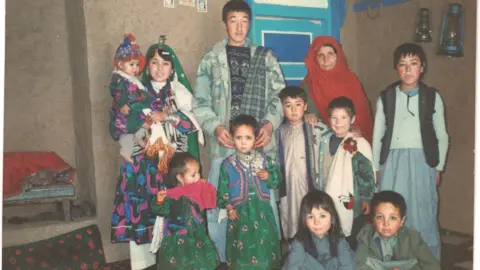
As a child living in a remote mountain village, Zahra swapped her headscarf for a button-up shirt and woollen blazer and made a two-hour walk to school.
The distance from her home meant people at school did not know her true identity, but she was still "very nervous" about being discovered.
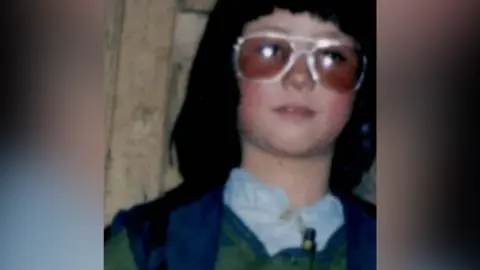
"My hair was very, very long, and in my village boys didn't have long hair. When I first met the headmaster, he asked me to cut my hair short," she says.
"I really didn't want to hide myself, my identity, but I had to because there was no choice for me otherwise."
One of her relatives helped by teaching her how to play football and go into the mountains –"things boys would do, not girls".
"Other girls were playing dolls but I never had a doll," she says.
 Zahra Joya
'Act of bravery'
Only later did it dawn on Zahra what a risk her family had taken.
"My mum and grandad were very concerned about if people found out I was a girl, not a boy.
"I really didn't understand the risk. It was an act of bravery from my family, and by me.
"I'm grateful to everyone who knew about me but respected and accepted me as someone who was passionate about education."
The risk had been weighed up against another threat.
"The Taliban wanted to get married with young girls in my village," Zahra says.
"[My family was] afraid they would come to our house and force us to get married with them.
"From that perspective, I was a little safer than other girls in my village."
 Supplied
At home, her family still called her Zahra, but she wanted to keep the privileges afforded to boys in a culture where girls rarely left their homes.
"It gave me the chance to be in the circle of male power," she says.
"I could go anywhere I wanted: for shopping, to some ceremony in the village."
In the house, she "felt I had the right to be a boss" while her father was working away.
"It was the man's responsibility to turn on the TV. I had the opportunity to run the house, to serve and welcome guests."
Even when girls were finally allowed to go to school again, after Western forces invaded Afghanistan in 2001, Zahra did not fully reverse her role .
"I had to change my clothes for school as my grandfather insisted. I dressed in my uniform, but when I returned home I put on my boy's clothes.
"The whole family asked why, and I said, 'I love it, it's my world'."
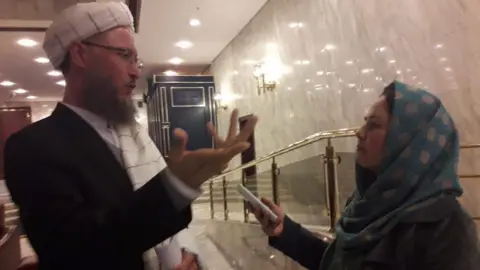 Amie Ferris-Rotman
Zahra says going to school "really changed my life".
"It gave me a wider perspective on the world – the chance to discuss about human rights.
"It helped me understand what it means to be a girl in a difficult position."
She says masquerading as Mohammed taught her as much as any formal studies.
"It helped me to understand culturally about this society – that Afghanistan is deeply misogynistic and conservative about women," she explains.
"This understanding really pushed me to fight for equality and human rights. I became a feminist.
"I realise now it was never just about going to school; it was about preserving my identity and dignity and my right to exist.
"I didn't fully understand at the time, but that experience shifted the course of my life."
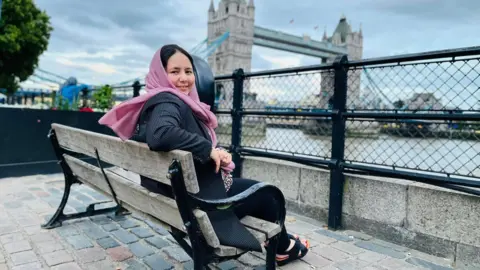 Zahra Joya
Millions of girls joined Zahra in receiving an education when the Taliban were ousted from government.
But in 2021, Western forces withdrew from the country and the fundamentalist group quickly regained control.
"The day the Taliban returned to power, things collapsed in our lives," Zahra says.
"It was about the collapse of freedom of women, of hopes for the future."
In her book, The Vanishing Girl of Kabul, Zahra recounts the palpable fear she felt as the Taliban took one city after another.
"It was the most difficult moment of my life, [making] a decision in a minute to leave behind everything that we built – even my parents, not knowing if I would see them again.
"Thanks to God, the UK government gave us this chance to be safe, but I still feel like fleeing the country is not a solution. Freedom has a cost."
She is now rebuilding her life in the UK with her parents and siblings, and hopes to "find a sense of home".
"I will continue telling the stories of Afghan women until they reclaim their rights," she says.
"The Taliban is a gender war. Hundreds of women are banned from public space and public life.
"It is really heartbreaking that history is repeating around us."
Girls over the age of 12 have been barred from attending school since the Taliban returned to power.
Zahra says: "I'm sure women and girls are still trying to change their identity – but it's not a solution."
Do you have a story suggestion for Cambridgeshire? Contact us below.
Follow Cambridgeshire news on BBC Sounds, Facebook, Instagram and X.
