Could the UK's driest region run out of water?

 Getty Images
A company providing water to seven million customers in the UK's driest region is under huge pressure following the driest July on record.
Anglian Water supplies large swathes of the east of England and has imposed a hosepipe ban on residential users.
With a drought declared and rivers running exceptionally low, we asked you to get in touch via BBC Your Voice with your questions on how water supplies could be affected.
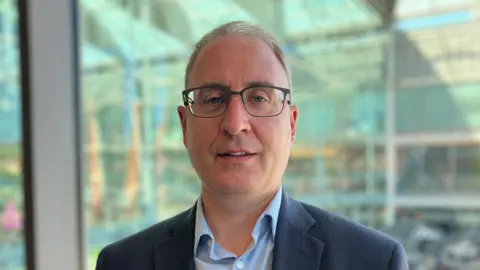
We then put the questions to Dr Geoff Darch, head of strategic asset planning at Anglian Water, who said a "challenging situation is emerging" with people being asked to cut their use further.
Why are water supplies struggling?
The area Anglian Water serves spans from as far north as Grimsby in Lincolnshire to Southend-on-Sea, Essex and from Northampton and Milton Keynes in the west to Lowestoft and Great Yarmouth in the east.
It is the largest water company, geographically, serving what is the driest region in the UK.
Currently, water supplies are under severe pressure following successive heatwaves and prolonged dry weather.
In some areas, particularly Norwich and its county, Norfolk, Anglian Water is particularly concerned as the rivers used to extract drinking water from are running exceptionally low, such as the River Wensum.
People are being told to cut the amount of water they use in their everyday lives, so is there a chance we could run out of water?
 Alex Dunlop/BBC
Darch said the situation is "pressured" following dry periods in previous summers in 2022 and 2025.
"We do have a challenging situation emerging right now, both in terms of the level of demand on our system, but also in Norfolk, we've got rivers running at very low levels.
"So what we really now are looking for customers to help us with is to be as efficient as possible, to only use water for essential tasks.
"We would include businesses in that as well as domestic customers."
Why are we not keeping more water during wet winters?
Recent winters have been very wet but currently, the region does not store enough of this water.
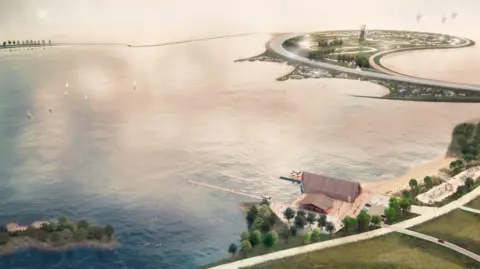
Darch said Anglian Water wants to be better at this and is investing in two new reservoirs to capture winter rainfall to help in summer.
One is in Lincolnshire and the other is in the Cambridgeshire Fens.
"We are told climate change means we are going to get these wetter winters and hotter, drier summers and that is exactly what we are seeing.
"These kinds of investments take a long time to develop and construct. So in the meantime, our own actions are what is going to help keep taps running."
 Anglian Water
Why is Anglian Water slow to respond to leaks?
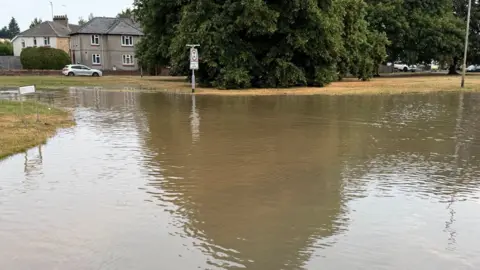
At the same time as customers are told to cut their water usage, the number of leaks reported to Anglian Water is increasing.
Darch said the hot weather is causing more problems in the company's network.
"The same weather that's causing the reduction in resources, such as very low flows, is causing an outbreak of leaks," he said.
"We have a very high number of bursts from our largest mains. We also have smaller trickles."
The biggest leaks are being targeted first. Darch assured customers smaller leaks will be dealt with - but admitted this "may take a little bit of time".
 Cambridgeshire Police
Could seawater from our coasts help?
A number of people asked if Anglian Water could use seawater to boost supplies in the region.
Darch said the firm is exploring the construction of two desalination plants, similar to those used in countries such as Australia and Spain.
He said two sites are in the early stages, in Lincolnshire and Norfolk, which could become a reality in the 2030s.
How will Anglian Water cope with tens of thousands more homes?
The east of England is often cited as the fastest growing region in the UK but can Anglian Water keep up with demand for water?
People asked if the firm could stop new developments until it can guarantee it can provide enough supply.
Another person queried whether water supplies could cope with major projects like the Universal theme park in Bedfordshire or new data centres.
Darch said Anglian Water is adding 70,000 new customers every year.
He said historically, increased usage from new customers had been met through "demand management" but admitted this would not be sufficient in the future.
"That is why we're looking at things like new resources," he said.
"We've got a new strategic pipeline which is going to bring water from wetter parts of the region to drier parts of the region so that we can cope with that."
Is the hosepipe ban actually helping?
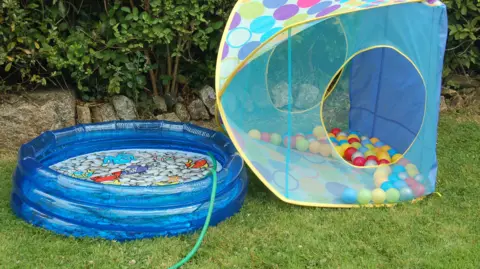
Since the hosepipe ban was introduced in July, Anglian Water saw a 9% reduction in demand at its peak but this has fallen to about 5%.
"We are really pleased with how customers are helping," Darch said.
He was asked if restrictions should be extended to businesses, such as car washes.
Darch said it is something Anglian Water is starting to consider and plan for but would require permission from the Department for the Environment and Rural Affairs (Defra) to be implemented.
 Laurence Coss/BBC
What about the future?
With hotter, drier summers becoming the norm, Darch said we all will have to adjust the way we use water in the future.
He said: "We will have to understand that we have a direct impact on the water environment and that our actions can help with wildlife and ensure that we've got the water that we want to have."
In the east of England, half of the water supply comes from groundwater aquifers.
Finding ways to recharge these sources is being explored by the firm.
Reducing the amount of water abstracted from rivers is also needed to help protect the environment, Darch said.

Do you have a story suggestion? Contact us below.
Follow Norfolk news on BBC Sounds, Facebook, Instagram and X.
