Call to honour journalists who resisted occupation

 BBC
BBCA memorial is planned to Channel Islands journalists who resisted Nazi occupation during World War Two.
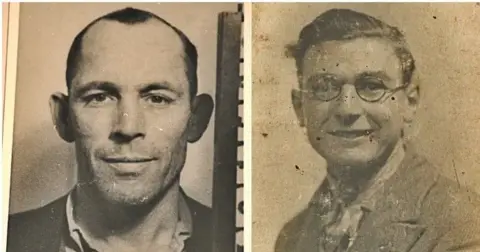
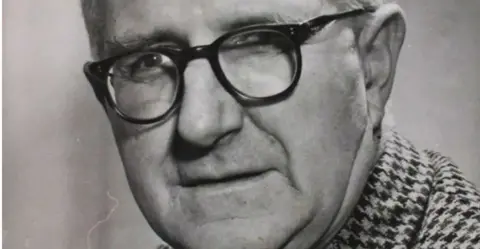
The journalists included Joseph Gillingham and Joseph Tierney who were arrested, deported and died in prison for sharing news heard on banned radios and Frank Falla, who survived imprisonment and whose book The Silent War tells how islanders outmanoeuvred censorship.
The appeal by the Chartered Institute of Journalists for a plaque, in the journalists' church St Bride's in Fleet Street, London, has been led by historian Timothy Crook and has already reached its £1,000 target.
Crook said a "memorial can contribute to the restoration of a missing chapter of British journalistic history".
German armed forces occupied the Channel Islands from June 1940 until May 1945. While the islands' civil governments remained in place under German oversight, laws were introduced to confiscate and ban radios, enforce curfews and made everyone carry ID cards.
Crook said: "The memorial plaque intends to pay tribute to the people who spread news during the occupation by illegally listening to the BBC news having retained their radio sets after the order for their confiscation in June 1942.
"They distributed the BBC news they heard verbally or through clandestine news sheets.
"Many were not journalists before the occupation, but they certainly became courageous journalists during the occupation by disseminating the BBC news in these ways."
Institute president Gerald Bowey said donations received meant there could be a commemoration "to acknowledge the outstanding efforts and bravery of Channel Islands residents and journalists to resist censorship and keep the news flowing".
The appeal follows a talk to the institute by Cambridge University academic Gilly Carr, who spent a decade searching archives around the world to uncover information about the fate of Joe Gillingham from Guernsey and Joe Tierney from Jersey.
Gillingham was one of five members of the Guernsey Underground News Service (GUNS) who were deported and imprisoned for wireless offences and secretly spreading news.
GUNS was a loose collection of people who secretly listened to the BBC news, wrote it down and shared it with other islanders.
Often the news would contradict that put out through island newspapers, which were only allowed to carry war news provided and approved by the German authorities.
 Frank Falla Archive
Carr's research resulted in the 2016 BBC documentary Finding Our Fathers, which followed the discovery of where Gillingham and Tierney had been buried in Europe.
Both men were crammed into cattle trucks and sent to prisons in the heart of Nazi Germany but their fates remained a mystery for 70 years.
Carr took the daughters of Gillingham and Tierney to Europe to retrace their fathers' steps in the hope of finding clues and eventually found their graves.
The St Bride's memorial could help extend Frank Falla's own campaign for recognitionl which involved writing letters to ministries and newspapers long after the war ended.
Falla fought for compensation for his fellow former political prisoners in the Channel Islands and, in 2010, his daughter gave Carr her father's extensive archives.
Carr, who described the files as "the single most important resistance archive ever to emerge from the Channel Islands" ensured it became available online.
The fundraisers said they hoped the memorial plaque would be placed in the south aisle of the church.
Follow BBC Guernsey on X and Facebook. Follow BBC Jersey on X and Facebook. Send your story ideas to channel.islands@bbc.co.uk.
