What is changing with your bin collection?

 BBC
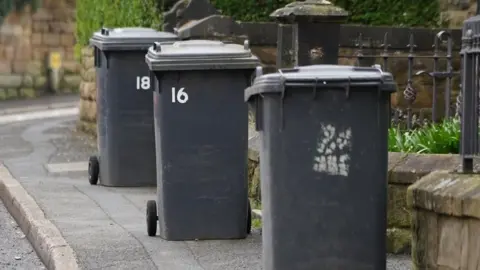
BBCThree-weekly black bin collections are due to go ahead next year across the whole of West Northamptonshire.
West Northamptonshire Council, run by Reform UK, voted to end collections of general waste every two weeks in the Northampton and South Northants areas, bringing them into line with the system already in place in the Daventry area since 2018.
The Conservatives have said it was "not appropriate" for Northampton.
More than 2,700 people had signed a petition calling for the town to keep its fortnightly bin collections.
So what will change and which households will be affected?
'The biggest shake-up in 20 years'
 Getty Images
New rules requiring weekly food waste collections for all homes in England, came into force on 31 March.
Wrap, a non-governmental climate action organisation, called the Simpler Recycling rules "the biggest shake-up in recycling policy in England in 20 years".
When recycled separately, food waste can be used to produce electricity. This reduces the amount of waste rotting in landfill and releasing greenhouse gases.
It is also hoped that making food waste collections available to all homes will encourage people to reduce how much food they waste in the first place.
West Northamptonshire introduced a separate food collection system several years ago but, until recently, it was not possible for some properties such as flats to participate.
All such properties do now have access to food recycling, the council confirmed.
1, 2, 3 +
 Getty Images
Instead, the council agreed that a "1, 2, 3 +" system would extend to homes in Northampton and South Northants from next spring.
It is called 1, 2, 3 + because:
- The food waste bin is collected weekly
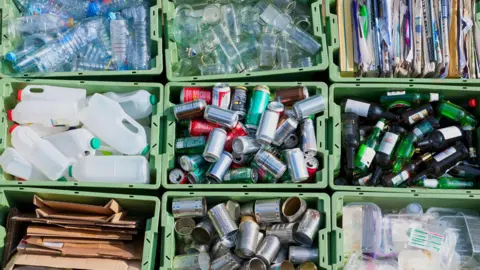
- The blue-lidded recycling bin is collected every two weeks
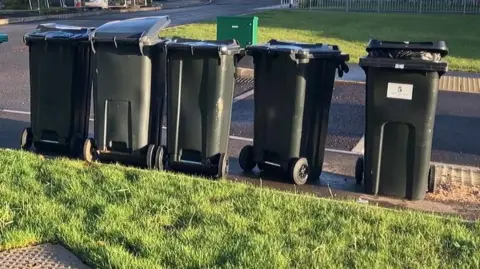
- General waste in a black wheelie bin is collected every three weeks
The council said the change was being introduced to harmonise collections across the district, so that all residents who live in similar property types would receive an equivalent waste collection service.
Residents who subscribed to green waste collection would continue to have that collected every two weeks, with a break over the Christmas period, it added.
Which households are exempt?
 Sharon Edwards/BBC
Weekly collections will continue for:
- Residents in flats and other households with communal bins
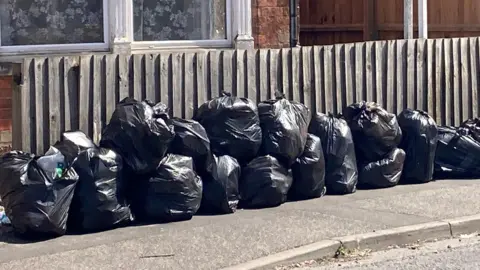
- People in terraced homes who use black sacks for general waste and recycling
This is because these properties have a black sack collection instead of individual wheelie bins.
They will also continue to have their recycling collected weekly, the council added.
What's new?
 Getty Images
Currently, flexible plastics such as carrier bags, crisp packets, food wrappings, bubble wrap, cling film, fruit and vegetable plastic wrappers and net bags, sweets, biscuits and chocolate wrappers are not collected as part of the council's dry recycling.
Instead, keen recyclers can choose to take such waste to supermarkets.
From 1 April, this will be put in households' blue-lidded dry recycling bins, alongside plastic bottles, pots and trays, glass bottles and jars, food and drink cartons, foil and foil trays, empty aerosols, paper, card and cardboard, and tins and cans.
And all food waste, whether cooked or not, will go in the food caddy.
What about disposable nappies or clinical waste?
 Getty Images
The extra-large bin policy remains the same, the council said.
Households can have one if:
- They have two or more children in nappies
- There is a medical need not covered by clinical collection, such as incontinence pads
- There are six or more in the household
Why has there been opposition?
The petitioners argued the "single approach" ignored the needs of residents of the "large, densely populated urban town" of Northampton.
Conservative group leader Daniel Lister raised a number of issues, including concerns around odours and littering.
"High-density housing and terraced streets face entirely different challenges regarding waste storage, side-waste and vermin," he said.
A motion put forward by Lister, and supported by the Labour group leader Sally Keeble, to take the decision back to cabinet was rejected by an extraordinary meeting of the council's scrutiny and overview committee on Tuesday.
Nigel Stansfield, Reform's cabinet member for environment, recycling and waste, said he recognised there were worries about the three-weekly collections.
"During the coming months, before we implement the changes, we want to hear from anyone who has concerns because they may raise something we aren't aware of following our experience in Daventry, and we can consider solutions," he added.
Do you have a story suggestion for Northamptonshire? Contact us below.
Follow Northamptonshire news on BBC Sounds, Facebook, Instagram and X.
