Family 'tormented' by death after cancer op delay

 Family
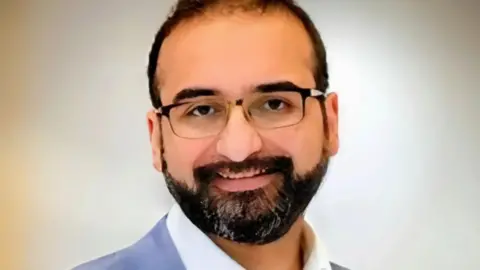
The family of a man who died after his cancer progressed during delays in his treatment have said they are "tormented" by what happened.
Ravinder Lally, from Sutton Coldfield, died on 2 January at the town's Good Hope Hospital.
An NHS patient safety incident investigation report, seen by the BBC, identified failings in the 39-year-old's care, including an inappropriate initial operation and delays in removing precancerous tissue.
On Thursday at Birmingham Coroner's Court at his inquest, assistant coroner Simon Brenchley recorded a verdict of death by natural causes, due to rectal cancer and ulcerative colitis. The hospital trust said they would keep listening to families to improve care.
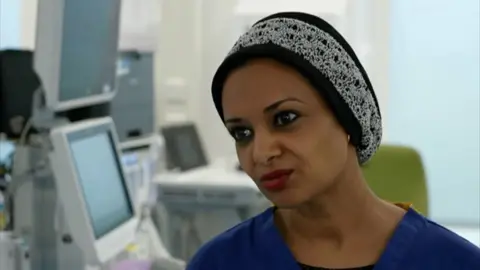
The surgeon who cared for him, Nuha Yassin, gave evidence to the inquest last month and said: "My decision-making was the best for him at that time."
She said the type of operation undertaken was a "shared decision" with her patient.
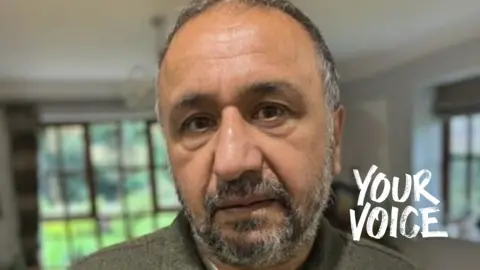
Ravinder's father, Satnam Lally, said the family continued to struggle with what had happened.
"You replay everything in your head. You ask yourself why it happened and whether it could have been prevented. As a family, we've had to live with that every day," he said.
Ravinder, who was a global technology procurement director, had lived with ulcerative colitis for about 20 years before precancerous changes, known as dysplasia, were identified in his rectum in 2023.
He was referred for surgery and seen by Yassin, a consultant colorectal surgeon.
In October 2023, he had an operation which removed part of his bowel but left the rectum in place.
Speaking to the BBC after making contact through Your Voice, Satnam said the family wanted answers about the decisions made during his son's treatment.
While the NHS investigation did not conclude that delays directly caused Ravinder's death, it found his condition progressed during the period before further surgery took place.
It also found the decision to operate on the colon while leaving the rectum in place "was not the correct choice", and removal "would normally be expected" in the circumstances.
Delivering his findings, the coroner said that, while it was possible delays in removing Ravinder's rectum contributed to his death, he could not conclude that "it was more likely than not".
Yassin, who was appointed a vice-president of the Royal College of Surgeons of England in July, told the inquest she "explained the risks of leaving the rectum in place very clearly", but concluded with the patient that a three-stage operation was preferable.
She accepted her documentation could have been improved, but said her "clinical decision-making reflected the complexity of the consultation".
Following the first operation, there was a delay before further treatment.
The NHS investigation found there was "no robust contingency plan" for when Yassin was absent from the hospital trust between February and April 2024.
Another colorectal surgeon, Mr Tirumalaraju, told the inquest he reviewed the patient in April, apologised for the delay and recommended removal of his rectum.
He said he could not see any detail of the discussions about the initial operation in Yassin's notes, but later, knowing her reasoning for a three-stage operation, felt the decisions had been "feasible".
However, earlier rectal removal was likely to have been beneficial, he added, and he recorded on the death certificate that delays in treatment contributed to Ravinder's death.
Dr Sarah Addison, who carried out the NHS review, told the inquest: "A much better clinic letter explaining the three surgical options was needed".
The coroner said it was important that clinic letters clearly set out the risks, benefits and rationale behind treatment options to avoid misunderstanding.
In delivering his verdict, he made no direct criticism of the hospital trust over the three-stage decision.
He said Yassin had apologised to the family for the quality of her clinic letter.
The BBC has contacted Yassin directly to ask for her comment on the inquest and Ravinder's care.
Addison said, since her report, the trust which runs Good Hope, University Hospitals Birmingham (UHB), had issued new guidance on correct clinic letters and introduced other improvements.
"I think it has changed the practice of the colorectal department across the sites and I am very confident that lessons have been learned," she said.
The coroner said that UHB were also looking at changes to memberships of multidisciplinary team meetings and shared learning on governance on cases, after what he described as "a missed opportunity for more detailed shared decision-making in this case".
Campaigning for patients
Ravinder had more surgery in May 2024, when cancer was confirmed.
The NHS investigation concluded his condition progressed from precancerous dysplasia to advanced cancer during the period between the operations.
The report said earlier treatment would likely have resulted in a less advanced stage of disease, but it did not determine that the delays directly caused his death.
Following his diagnosis Ravinder had chemotherapy, radiotherapy and major surgery in London, but despite this, his cancer spread.
Satnam said the family was "disappointed with the outcome" of the inquest.
"We believe that the risks of surgery weren't pointed out to our son. He wasn't given sufficient information," he said.
Satnam said the family was disappointed the coroner had not recommended wider changes around note making and clinical letters nationally, but was reassured that some changes have already been introduced at UHB.
"We have comfort in hearing that Ravi's legacy will live on in the significant changes applied to the colorectal cancer processes to ensure the failures identified will not reoccur," he said.
Desire for positives
Satnam described his son as having been determined and optimistic, despite the challenges he faced.
"He never felt sorry for himself," he added. "He just said: 'I'll fight it. What do I need to do?"
The father added his son had remained focused on fighting the disease and planned to leave work to campaign for patients before his condition worsened.
"He wanted to make sure people were listened to.
"If it's happened to him, what about people who can't speak up for themselves?
"Something positive has to come out of this."
The hospital trust was saddened at Ravinder's death and staff extended their condolences to his family and friends, a UHB spokesperson said.
"We recognise that Ravinder's family feel we let him down, and we are sorry for their loss and for the distress they have experienced," they added.
"We take their concerns seriously and will continue to involve patients and their families in helping to inform and improve the care we provide."
Follow BBC Birmingham on BBC Sounds, Facebook, X and Instagram.
