Dragonflies in distress: Scientists sound alarm in India's ecological hotspot

 Chatur Ullu Lab
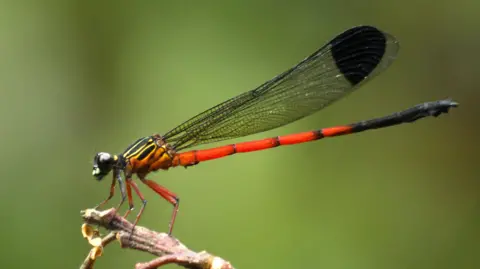
A first-of-its-kind study of dragonfly and damselfly species in India's Western Ghats - one of the world's most important biodiversity hotspots - has revealed findings that are both fascinating and worrying.
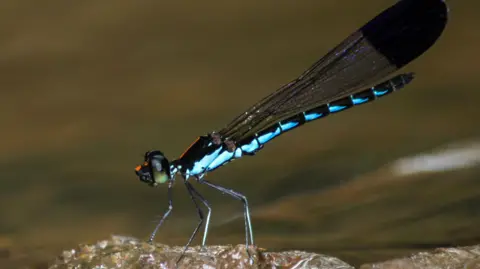
The study, which was funded by the Indian government's Department of Science and Technology and held across two years (2021-2023) and five Indian states, found that 143 different species of dragonflies and damselflies inhabit the Western Ghats, with at least 40 of them being endemic to the region, meaning they are found nowhere else in the world.
But the researchers also discovered something troubling - at least 79 additional species that were previously reported in the region were not found, an almost 35% decline in the number of dragonfly and damselfly species in the Western Ghats.
Pankaj Koparde, an evolutionary ecologist who led the study, says that this could be because some of these species are extremely rare or active only in certain seasons, and were missed by the researchers. But he also says that the decline could be due to a potential loss of species, meaning some of them have become extinct.
 Chatur Ullu Lab
"Dragonflies and damselflies are good indicators of the health of a region. Consequently, when their numbers drop, it could signal the potential degradation of an ecosystem," Koparde says.
The Western Ghats - a Unesco World Heritage Site - is a 1,600km-long mountain range that stretches along India's western coast. It is one of India's most important wetlands and home to at least 325 globally-threatened species and more than 30% of India's plant and animal species.
It is also especially rich in endemic or local species. These species have a unique evolutionary journey and play important roles in their habitats. For example, they might help regulate the climate of an area or maintain biodiversity through pollination.
Unfortunately, the Western Ghats is also under threat. In its 2025 report, the International Union for Conservation of Nature (IUCN) rated the region as being of "significant concern".
"Urbanisation together with agricultural expansion, livestock grazing, infrastructure development (such as windmills and dams), invasive species and mining continue to pose serious threats [to the region]," the report noted.
An alarming study published in 2025 found that a population of rare galaxy frogs disappeared from the Western Ghats after photographers trampled over their delicate forest floor habitat.
A 2024 study found that farming practices in the Western Ghats were threatening frog species in the area while a 2023 survey of birds in the region noted a 75% decline in 12 bird species that were endemic to the Western Ghats.
 Chatur Ullu Lab
Koparde says that this is why it's crucial to keep track of the species that live in the Western Ghats. But up until now, the populations of dragonflies and damselflies in the region haven't been properly documented, he says.
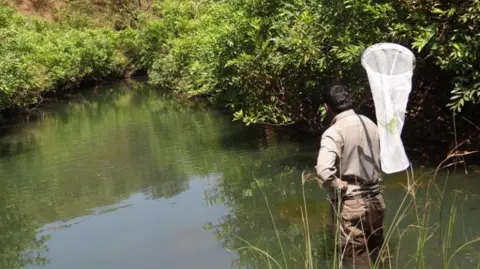
To conduct the study, Koparde and his team had to hike to remote locations and through difficult terrain, like moss-covered riverbanks and mangrove swamps. They would head to these areas early in the morning and spend several hours spotting, documenting and collecting the insects.
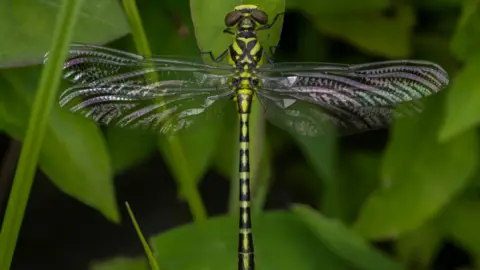
They discovered seven new species of dragonflies and damselflies, Koparde says. They named one of these protosticta armageddonia, a nod to the term "ecological armageddon", which is used to describe the catastrophic decline of insect populations around the world.
Koparde and his team are currently in the process of creating a genetic library of all the species they have documented in the area. He says that this can help identify which part of the world a particular species might have evolved in.
 Chatur Ullu Lab
Koparde says that the evolutionary biology of dragonflies and damselflies in the Western Ghats is particularly interesting because of the manner in which the region was formed.
The Western Ghats were formed when Gondwana - a supercontinent that combined present-day South America, Africa, Arabia, Madagascar, India, Australia, and Antarctica - split up during the Jurassic Period.
When India separated from the African continent, fractures along its western edge triggered the formation of the mountain range now called the Western Ghats.
"The Western Ghats are about 150 million years old, older than the Himalayas. The species that exist there could have evolutionary roots in the Gondwana supercontinent," Koparde says.
