We turned down corporate cash to keep festival in the family

 Getty Images
In 2001, Paul Gregory was sitting in a pub with some friends bemoaning the fact he could not watch all of his favourite heavy metal artists in one place.
The Monsters of Rock Festival had ended in 1996 after struggling to attract headliners and its successor, Download, was yet to be established.
Paul, an artist by trade, and friend Vince Brotheridge decided it was time to start their own festival. They had no experience of hosting live music, no venue and no bands - just a burning passion for the metal genre.
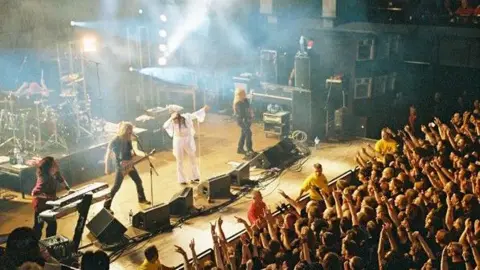
From there, the idea of Bloodstock was born. The pair booked the Assembly Rooms in Derby and about 700 hardcore fans turned out for the inaugural one-day festival.
After years of running at a loss, fending off corporate interest and overcoming challenges like the Covid-19 pandemic, Bloodstock is a staple in the metal and hard rock calendar and is welcoming 20,000 adoring fans for its 25th anniversary.
 Supplied
Paul's daughter Rachael Greenfield has been involved from the beginning alongside her brother and sister.
She said working with immediate family had positives and negatives, but had helped Bloodstock become the festival it was today.
"If we had a hidden camera over the years filming us, it would have been insane - it would have knocked the Osbournes out the window," she said.
"When the chips are down and when things are really difficult, that's when as a family you kind of pull together and we lift each other.
"Being a family has proven invaluable in the longevity of Bloodstock."
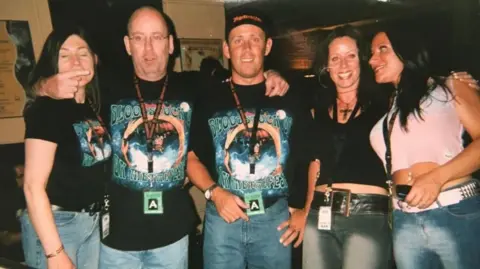
Back in 2001, she was initially roped in to help sell merchandise with her sister Vicky. Like their brother Adam, both were also juggling full-time jobs.
Now one of the festival directors, Rachael said the first festival and the run-up to it had been a "complete unknown".
"We had to book the bands and hope that they'd come," she said.
"Back then, you didn't have social media like you do now so you know when it came to marketing, Vicky, Adam and I were out flyering everywhere, which was hard work."
 Supplied
To make the first event really stand out, they needed a big name to headline - but with no prior reputation in the live music scene, they had to be creative.
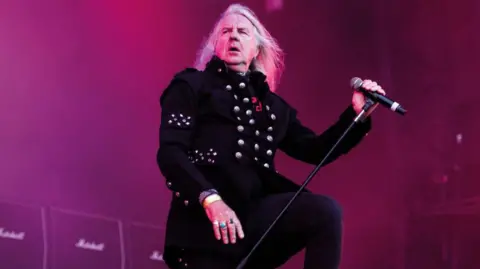
Paul managed to call in a favour. As an artist, he had made album covers for many bands, including the Barnsley rockers Saxon, one of Britain's most influential heavy metal bands.
Rachael said: "He asked Biff, the lead singer, if he would grace the main stage as the headliner for our first indoor festival and he said yes. From there, it all started.
"We had about 700 through the door, which was great but by no means covered the costs.
"We didn't take anything from the bars because the Assembly Rooms did. We had to pay for lighting, security etc.
"It was decided, we're in now so we're just going to do it again and go bigger."
 Getty Images
Rachael, 52, said the first three years had been "really tough" as the festival lost a lot of money.
But the reviews of the opening event were good and 1,500 attended in its second year. The following year, it was a sell-out with 2,500 people.
This was down to Saxon again. The band had introduced Paul and Vince to Finnish metal band Nightwish the previous year and the pair convinced them to travel to Derby and make Bloodstock their UK debut.
"You're in so deep at that point, so you either keep going forward or you stop," Rachael said.
"It was the fun that kept us going on early doors, but there was so much that happened, it was an emotional rollercoaster."
Move to open air
 Getty Images
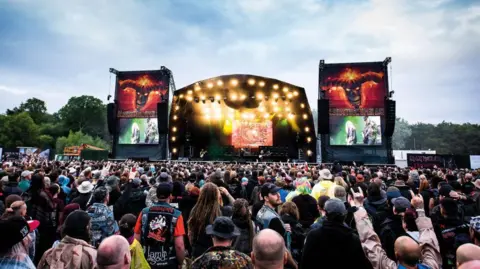
A decision was made to move the festival outdoors in 2005 when Bloodstock was held at a new venue of Catton Park in Walton-on-Trent, Derbyshire, as well as the Assembly Rooms.
"This nearly broke the festival," Rachael said. "That was a crunch point for us, but we carried on and remortgaged our houses. We threw everything we had at it, we were passionate.
"When you were on site, you got lost in the magic of what we'd created. People loved what they were coming to. The feedback at that time was incredible because there was no other festival like it."
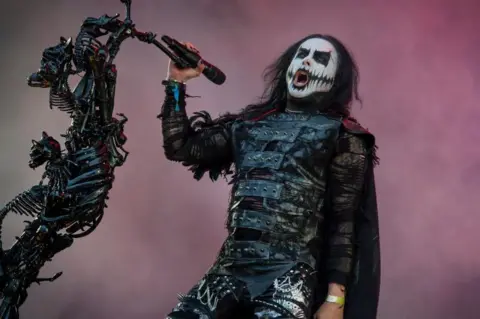
By 2007, the outdoor festival was the sole location and it was at this time record store giant HMV agreed to display their posters as well as selling tickets.
Major broadcasters also took note and started to cover the festival, which brought more exposure.
 Getty Images
The festival continued to grow in size, but its finances were still in the red.
Finally, after 14 years, that changed. Having knocked back interest from big companies along the way, the debts were cleared without any corporate involvement - something the family are very proud of.
"Various companies have shown interest in us, having a piece of the pie but we wouldn't do that because we're an independent and we're strongly wanting to retain our independence," Rachael said.
"If you start getting corporate entities in, for them it's purely about the bottom line.
"They only want the profit where we're far more than that... we're not in a position where we'd ever consider selling the event."
Rachael said actually making a profit in 2014 had been "massive".
"We realised we'd turned a corner... we reinvested more and then you can start to curate a better event," she said.
 Getty Images
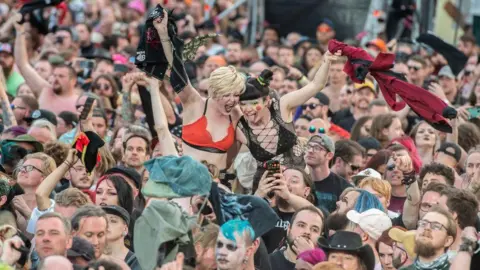
Today's festival draws fans from far and wide. It has attracted major acts such as Alice Cooper, Motorhead and Megadeth, which chose Bloodstock as their exclusive UK performance in 2023.
But booking these big acts was not easy.
"One of the issues was getting agents who represent these big artists to trust in your brand, that you can deliver," Rachael said.
"As an independent festival you have a hell of a lot more to prove than if you are a corporate festival with financial backing.
"Vicky, who books the bands, did an incredible job... and we started to get the trust of big artists and bands so the agents could see that we were actually delivering and looking after the artists.
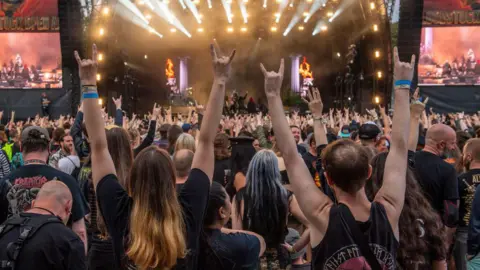
"Now, it doesn't take any persuasion. Bands want to play Bloodstock and that's been a lot of hard work from us to prove as an event, we're worthy of those bands."
 Getty Images
As the festival celebrates its 25th anniversary, original supporters Saxon returned on Thursday night to headline and Birmingham rockers Judas Priest will close the main stage on Sunday.
Even with all that the Bloodstock team have achieved together, Rachael said she still had a "little bit of imposter syndrome".
"I just think, 'how did we do this?' We're just a family from Spondon that love metal," she said.
"We went through the first few years and we didn't know what we were doing and we had to learn on our feet, making mistakes as we went along."
Listen to BBC Radio Derby on Sounds and follow BBC Derby on Facebook, on X, or on Instagram. Send your story ideas to eastmidsnews@bbc.co.uk or via WhatsApp on 0808 100 2210.
