Restoration of historic dockyard house complete

 BBC
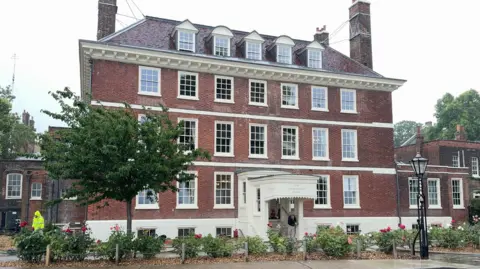
BBCOne of the oldest intact naval buildings in the UK has been brought back to life after major restoration works - which have revealed some fascinating artefacts.
The Commissioner's House in the Historic Dockyard Chatham was built in 1704, but has been largely empty and unused since being left vacant in 1983.
It has, however, been used as a filming location for the the popular BBC television show Call The Midwife.
Now, work is complete and the building, described as "the jewel in the crown" of the dockyard, will be open to visitors once again this summer.
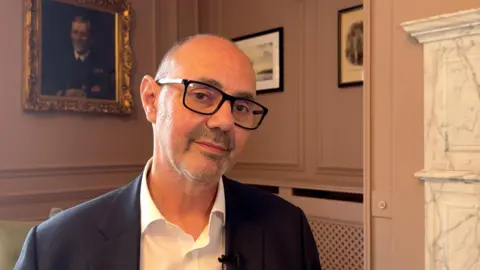
Nigel Howard, assistant director of historic environments and buildings at the dockyard, says he is pleased with the result.
"The outcome is a building that's going to have another 100 years of life, plus," he said.
"We've managed to bring a scheduled ancient monument into the 21st century. It's been given a lease of life into the future.
"It is a jewel in the crown, it is a building that is worthy of this amount of care, love and attention. It always had a level of prestige and mystique about it."
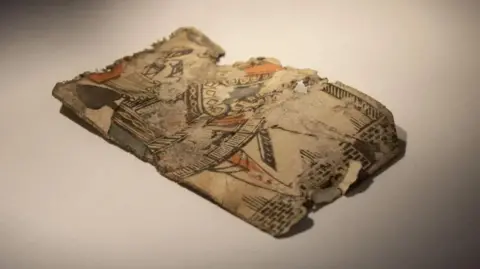
While peeling away centuries of tired building work, the team discovered a treasure trove of historic items. Among them was a single playing card hidden beneath the floorboards.
 Chatham Historic Dockyard Trust
"The playing card turns out to have been from 1725, and it had a historical life all of its own," Howard said.
"You can see the thumb print where someone's held it in their right hand. It's had little serrations cut into the top of it for another reason, we don't know what that is."
The team also found notes from previous workers, saying what they did and when they did it - a tradition that lives on.
"Some of our tradesmen have also left their own little notes behind for people to find in the future," Howard said.
Follow BBC Kent on Facebook, on X, and on Instagram and listen to BBC Radio Kent on Sounds. Send your story ideas to southeasttoday@bbc.co.uk or WhatsApp us on 08081 002250.
