We all get a bit snowflakey, says head who kept his school open in heatwave

 BBC
BBCA head teacher who kept his school open during the record-breaking June heatwave has said people become "a bit snowflakey" in hot weather.
Hundreds of schools across England and Wales closed or changed timetables amid a rare red warning for extreme heat.
Despite his school's attendance falling to 33% on one of the hottest days, Alun Ebenezer, head of Caldicot School in Monmouthshire, criticised the widespread disruption.
Ebenezer acknowledged that other schools faced different challenges, but said "the real world carries on in the heat".
Chris Parry, the head teacher of Lewis School in Pengam which closed for two days during the heatwave, said his decision was made to prioritise pupil safety.
Another heatwave is likely to be declared in the UK within the coming days, with temperatures forecast to reach 30C in places.
The Welsh government has previously advised that schools and childcare settings should remain open in extreme hot weather.
But during the June heatwave, it issued guidance for schools "to keep children and young people safe, indoors and outdoors" including by avoiding vigorous physical activity and allowing pupils to wear light, loose clothing.
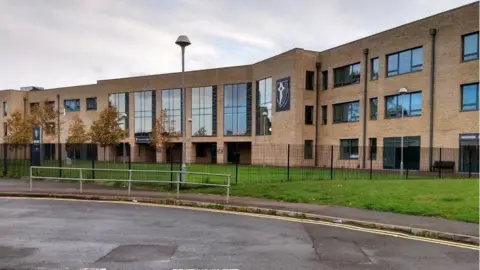 LDRS
LDRSEbenezer, who took over Caldicot School in 2023, previously made headlines after introducing Saturday detentions as part of a tougher discipline policy.
Speaking on The BBC Radio Wales Phone-in, Ebenezer said Monmouthshire County Council had taken a "sensible" approach by letting head teachers decide whether to close their schools during the June heatwave.
He said Caldicot School remained open because it was the right decision for pupils, while acknowledging that other schools faced different challenges, including younger children and less suitable buildings.
He said not every classroom at Caldicot was air conditioned and the top floor became "really hot" but the school made adjustments, including allowing pupils to wear PE kits.
"For me, it was really important to stay open because it's hot in school but it's hot at home - it's just hot," he said.
"Monmouthshire is quite an affluent area.
"But we have young people in our school who are classed as deprived.
"The idea that everyone is at home in air conditioned houses is rubbish.
"Lots of them would be in stuffy cramped conditions where mam and dad have to go to work and they are left to sort themselves out and they are going to go out, run around, get sun-burnt, not going to hydrate, so I think the safest place for our children is in school."
Ebenezer said lessons were also adapted, adding: "The last two days [of the heatwave] in Caldicot, they did not learn much about Macbeth or oxbow lakes.
"What they learned was a hidden curriculum - resilience, getting on with it and pushing through."
He said the school also tried to make the days more enjoyable by bringing in an ice-cream van at lunchtime and allowing water fights.
 OutdoorMonkey / BBC Weather Watchers
'All a bit airy fairy'
Comparing the heatwave to the record-breaking hot summer of 1976, Ebenezer argued that Britain had become less resilient and said young people needed to learn how to cope with difficult conditions.
"This country would never win a war again," he said.
"We try to be empathetic with people in the Middle East, Ukraine and war-torn countries and yet when the temperature rises in this country, we all get a bit snowflakey."
Ebenezer also spoke to Teachers Talk Radio, a teachers' radio station and podcast network, where he said in 1976 "everyone got on with it".
"It's all a bit airy fairy," he added.
He questioned whether schools were preparing pupils for working life, pointing out that professions such as farming, nursing and medicine continued in hot weather.
"We seem to be giving this generation excuses for not being resilient," Ebenezer said, adding: "We are preparing students for life."
 Chris Parry
More than 300 schools across England and Wales either partially or fully closed because of the hot weather on 24 and 25 June.
Chris Parry, the head teacher of Lewis School in Pengam, said he made the decision to close his school on both days based on risk assessments, building conditions and staff judgment, with older parts of the school particularly hot and poorly ventilated.
He said staff had tried to "mitigate" the heat by keeping pupils hydrated, using shade and keeping children indoors where possible.
However, as conditions worsened and warnings escalated, he and governors acted "with caution" and decided closure was the safest option.
Parry said parents were "really supportive" and pupils were given advice to stay safe and comfortable at home.
He said that while resilience was "really important", safety must come first, especially for young children in crowded classrooms during extreme heat.
Parry noted that many businesses also closed during the heatwave and said young people should understand workplace responsibilities.
He said schools needed long-term planning and investment, including better cooling systems, adding that he had already spoken with local air conditioning suppliers.
He added that schools, government and local authorities should work together to adapt buildings designed for colder conditions.
"Our job, really, is to develop that resilience with pupils, but also to create that safe and safe environment for them to work in," he added.
Laura Doel, from National Association of Head Teachers Cymru (NAHT), said school leaders in Wales should "think carefully" about keeping pupils and staff safe during heat, adding that many older school buildings were "ill-equipped to deal with extremes of temperature".
Describing closures as a "last resort", she said the government should "act more urgently" to upgrade buildings, adding: "School buildings need to be conducive to learning all year round."
Claire Armitstead, from the Association of School and College Leaders Cymru (ASCL), said school leaders were "best placed to make decisions around opening and timetabling during periods of extreme weather, based on what is most appropriate in their context".
However, she said many schools had "poor" ventilation and no air conditioning, so more investment was needed to make buildings safe and suitable in hotter conditions.
The Welsh government said it "continues to work closely" with local authorities to ensure funding arrangements "meet their local needs and priorities".
It said it had recently announced £40m of funding for school maintenance.
