Knife attack suspect 'may be from Chad not Sudan', say police

 BBC
BBCThe suspect in a knife attack that sparked serious street disorder in Belfast "may potentially be from Chad and not Sudan", police have said.
Hadi Alodid, 30, of Duncairn Avenue in the north of the city, was charged last month with attempted murder over the violent incident that took place in early June.
The Police Service of Northern Ireland (PSNI) had initially said they believed the 30-year-old asylum seeker was Somali but later said he was Sudanese.
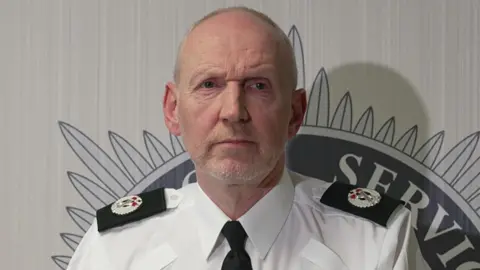
Assistant Chief Constable Davy Beck told a joint Westminster committee police are now investigating whether he may instead be from the neighbouring African nation of Chad.
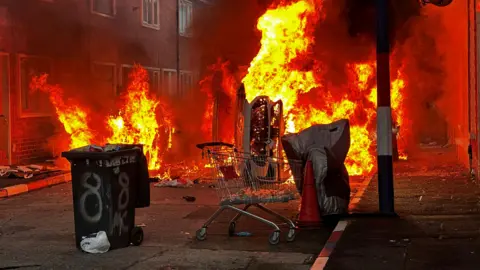
Migrant families were forced to flee their homes and police were targeted during the serious disturbances last month in Belfast and other parts of Northern Ireland.
It came in the wake of footage of a knife attack being widely shared online.
A court heard the victim Stephen Ogilvie, who is in his 40s, suffered significant injuries including the loss of his left eye.
Alodid was remanded in custody after being charged over the attack.
Police previously said the suspect was Sudanese, and was understood to have claimed asylum in Northern Ireland having travelled by bus from Dublin in the Irish Republic.
Beck updated MPs on the suspect on Tuesday during a joint session of the Home Affairs and Northern Ireland committees.
"We do continue to investigate the origins of the male, with one potential line of inquiry indicating that he may potentially be from Chad and not Sudan as was initially indicated," he said.
"And we continue to investigate that line of inquiry with the relevant authorities in Chad."
'Third country'
Labour MP Adam Jogee noted it was the "third country" mentioned "in relation to this particular case".
He acknowledged the "speed and evolving of a situation" but added: "Communication being as accurate as possible is vital to mitigate some of the unintended consequences."
 PA Media
Beck also described how ethnic minority communities in Northern Ireland were "still very much living in fear" following last month's disturbances.
He said the serious disorder was "atrocious violence and racism".
"People are afraid to go about their daily activity, and we have seen racist criminal damage and assaults and threats continuing in parts of the country," he added.
"So clearly tensions remain high at this stage, and we continue to see and remove racist material across a number of locations."
Beck said police were "relentlessly pursuing" those responsible for the violence.
He said there have been 35 arrests and 16 sets of images released to the public as part of their investigations.
