Dambuster 'bouncing bomb' donated to RAF squadron

 BBC
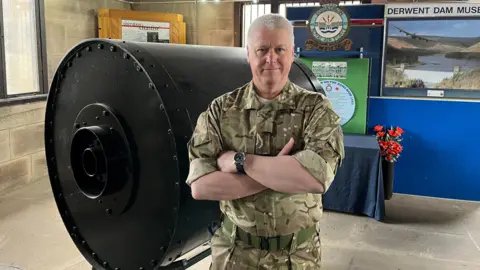
BBCA unique piece of Dambusters memorabilia - a full-size replica of a bouncing bomb - has been handed over to RAF pilots.
The May 1943 mission to strike at reservoirs in the industrial heart of Germany became one of the most famous of World War Two and the subject of a successful 1955 movie.
A small museum was housed in one of the towers of the Derwent Dam in Derbyshire - one of the locations the specially formed 617 squadron used to practise the attack - but it closed in 2016.
Now, the one-tonne steel drum from the museum has been donated to the modern squadron in a ceremony at the dam on the 83rd anniversary of the attack.
 Getty Images
At a time when most bombing raids were highly inaccurate, the Dambusters raid was conceived as a precision attack on vital infrastructure.
Engineer Barnes Wallis developed a 9,250lb (4,200kg) weapon, essentially a type of sea mine, designed to skip across water and detonate at a particular depth against a dam.
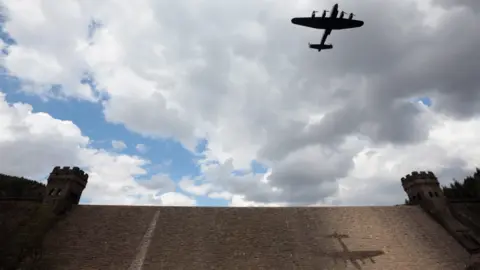
Codenamed Upkeep, it had to be dropped from a specially adapted Lancaster bomber at just 60ft (18m) above the water, at 232mph (373km/h) and 450 yards (410m) from the target - all after a night-time flight across enemy territory.
To hone their skills, the crews - then based at Scampton in Lincolnshire - practised at Derwent, which had a similar design and rural setting to two of the target dams.
 Getty Images/IWM
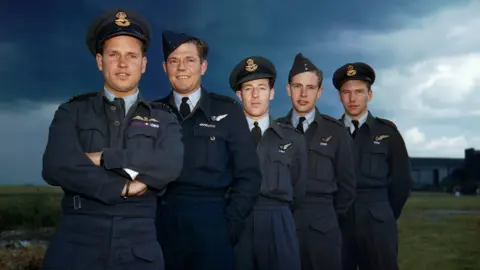
Late on 16 May 1943, 19 Lancasters with 133 aircrew set out on Operation Chastise.
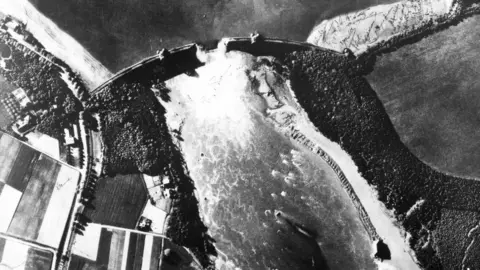
Two of the three target dams were breached, but 53 men on the mission were killed and three became prisoners of war.
On the ground, almost 1,300 people were killed in the resulting flooding.
Although the impact on German industrial production is now believed to have been limited, the raid gave a significant morale boost to the Allies.
Wing Cdr Guy Gibson, who led the mission, was awarded the Victoria Cross.
 MOD
MODFlt Lt Ady, from 617 Squadron - now based at RAF Marham in Norfolk - said: "The history of the squadron is a huge part of its ethos and identity.
"But you can look at all the pictures and read the books but until you are here, walk the ground, see the terrain, see the size of the dam, it takes that to really appreciate what our forebears had to cope with.
"It's fitting we can now host the mine and it will be seen by a significant number of people, most importantly the current members of the squadron."
The museum at Derwent was the work of local enthusiast Vic Hallam and the replica Upkeep was built by a nearby engineering firm.
Doug Clarke, water resources lead at Severn Trent, said: "After Mr Hallam sadly passed away and the museum closed, we have been looking for a home for the replica.
"Working with Mr Hallam's family, we started talking to 617 Squadron and, happily, they have been able to find a place for it at their current base."
Listen to BBC Radio Derby on Sounds and follow BBC Derby on Facebook, on X, or on Instagram. Send your story ideas to eastmidsnews@bbc.co.uk or via WhatsApp on 0808 100 2210.
