How a 19th Century visionary helped shape Sheffield's green spaces today

 BBC
BBC"The amazing thing is, he was the predecessor of Amazon and online sales because he realised you could sell things through a catalogue."
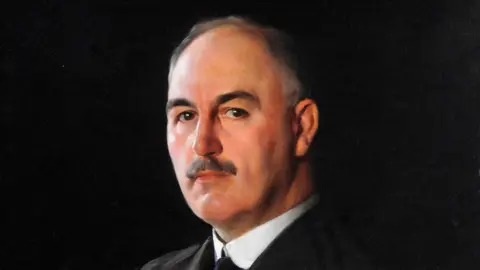
Prof Ian Rotherham is talking about his hero John George Graves - entrepreneur, philanthropist and Sheffield's 19th Century answer to Jeff Bezos.
Known as J.G. Graves, his name lives on throughout the city with art galleries, buildings and a charitable trust.
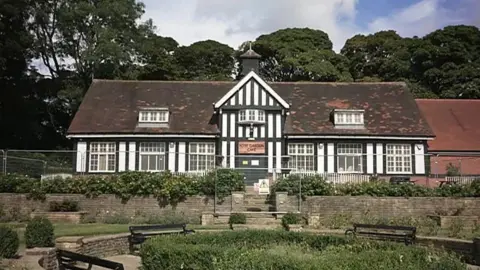
He also made gifts of land which became much-loved parks but one of the largest plots he donated was Graves Park at Norton which celebrates its centenary this weekend.
 David Jagger/the artist's estate
Graves sold goods by mail order and was one of the first entrepreneurs to allow customers to buy with credit. By 1903, he employed 3,000 people and sold his goods nationwide in catalogues.
Prof Rotherham, a biocultural and wildlife academic, says Graves was "incredibly enlightened".
"He was playing on a global stage and was incredibly successful but the thing that really makes him my hero is he put back into the city for the people.
"He wanted to see a green belt around Sheffield before this was ever thought of as a planning policy.
"He worked to protect the green fringes, the golden frame of the dirty industrial city, and he wanted to stop housing and industrial development spoiling the green areas."
By the early 1900s, Norton was still in Derbyshire and was a green rural parish compared to the dirty, industrial town of Woodseats, which had horrendous air pollution and acid rain.
Prof Rotherham says Graves stepped in and bought the land at Graves Park to ensure the hospital at Norton Hall would remain pollution-free.
"New housing was burning slack coal with a huge amount of pollution and he acquired land to stop that, not only in Graves Park but also Ecclesall and Concord Park.
"He put his money where his mouth was. It was very enlightened, very forward thinking and absolutely fantastic. It's hard to comprehend 100 years ago that if he hadn't bought that land, it could have been housing."
Graves grew up in Lincolnshire but fell in love with Sheffield after moving to the city aged 15 to become an apprentice to a watchmaker.
Within five years he started his own business and later expanded to include jewellery, cutlery and silverware.
Mike Firth, editor of Active8, has published a special edition of the magazine which is distributed around the south of the city, to commemorate the park's 100th birthday. He describes Graves as "the forerunner of the Amazon parcel".
"He was the first man in the world to set up a catalogue ordering system. The business grew and grew. He had a massive outlet on the corner of Shoreham Street, St Mary's Street and Margaret Street where thousands of people used to work, packaging items and posting them.
"Over 100 years ago, there were two airports, one at Norton and a little one in Manchester called Ringway.
"There was only room for one big airport in the north of England and Ringway became Manchester International Airport because Graves bought the Norton land and gave it to the people of Sheffield so we ended up with wonderful Graves Park.
"The more I learned about Graves, the more amazing the guy is. He was definitely Sheffield's greatest and most generous philanthropist and benefactor."
Listen to highlights from South Yorkshire on BBC Sounds, catch up with the latest episode of Look North
