Charities advise on avoiding heat stroke in pets

 PA Media
Animal charity bosses and business owners have issued advice to pet owners during warm weather.
Pet owners have been urged to walk their dogs in the morning, keep them cool and look our for symptoms of heat stroke.
Katie Kay, from Jersey animal charity JSPCA, said the heat was a "real risk for all animals" but especially those who were vulnerable or unwell and struggled to regulate their body temperature.
She said: "It is our responsibility to ensure that they are kept safe."
'Harder to regulate'
Kay said: "When you're thinking about small furries, rabbits in particular are really prone to heat stroke."
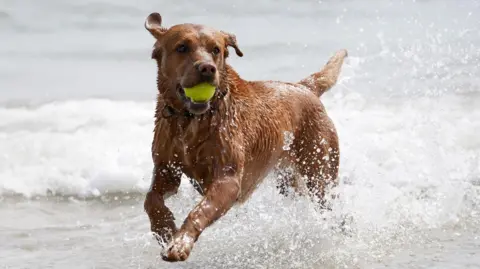
She advised while being in the sea might cool a dog down, it also came with risks.
"When the temperatures are this high travelling to the beach unnecessarily, being out on the hot sand walking, no shade... jumping in and out of the sea, all of these things exerting energy raise the body temperature and make it even harder to regulate," she said.
"Just because your animal looks fine in the moment ... doesn't mean that they're not going to deteriorate or crash as soon as you're home or later on in the evening."
She added she wouldn't advise putting damp towels on animals because it could trap the heat.
 Sam Fernandes
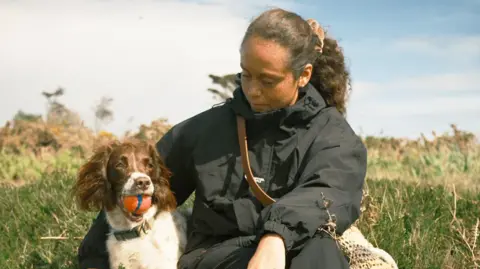
Natalie Hodge, a dog walker from Jersey, said the ideal time to walk pets on hot days was before 09:00 BST and after 18:00.
She advised walking dogs in woodland areas and because it felt cooler for dogs, and suggested hosing the animals down, making ice pack collars and also cooling mats.
"It's just not worth the risk of your dog getting lethargic or getting heat stroke or anything," she said.
Mia Prowse, from Salty Dog Groomers in Pilton near Barnstaple, agreed walking dogs early in the morning was the best piece of advice.
She said one of the factors impacting dogs' ability to regulate themselves in was the shape of their skull.
"There's certain breeds that have what we call brachycephalic skull shapes... they often struggle to regulate their body temperature a bit more because of the way that their skulls are shaped and they can't regulate their breathing so well," she said.
'Look out for them'
Catherine Burke, a vet with PDSA, said it was "really important for us to look out for them (pets) to know the signs if they are struggling with the heat and to know how to keep them cool and prevent any issues."
She said signs of heat stroke in pets included:
- drooling and foaming at the mouth
- panting excessively
- collapsing or not being able to get up
- vomiting and diarrhoea
- being lethargic
- seizures
Burke said: "If you do think that they're having those signs get them cool as quickly as possible.
"Just making sure that you soak their whole body in cold water, but stay away from the face, the nose, so they don't inhale any, and call your vet."
She added anecdotally heat stroke was less common in cats than dogs but they were still prone to it.
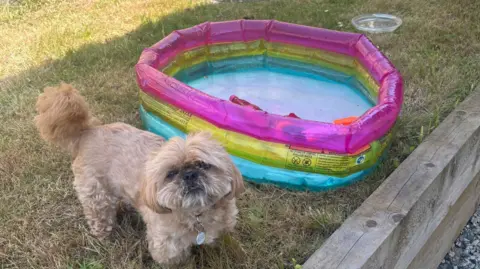
Steve Byrne, GSPCA manager, said as temperatures rose they wanted to remind people of the risks for animals.
He said: "Simple actions like avoiding walking dogs on hot tarmac, ensuring constant access to water, and never leaving animals in cars can save lives."
Seb Goman, GSPCA welfare officer and senior animal care assistant, added: "During warm weather, we often see cases of animals struggling with the heat, particularly dogs, rabbits, and small animals kept outdoors or in enclosed spaces.
"Hutches, sheds, and greenhouses can heat up very quickly, so it's vital owners check regularly and ensure their pets have shade and ventilation."
He added: "We also ask everyone to think about local wildlife—putting out water and providing hedgehogs with wet food can make a huge difference during dry spells."
