New nature reserve formed by order of King Charles

 BBC
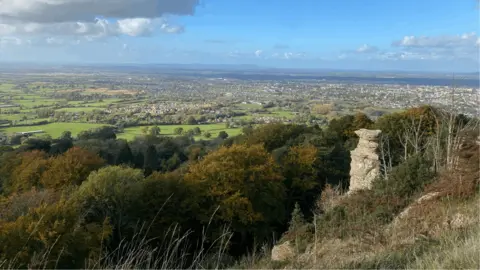
BBCA hill and escarpment near Cheltenham which contains 170-million-year-old Jurassic limestone has become England's latest nature reserve by the order of King Charles.
Leckhampton Hill and Charlton Kings Common will now be known as the Cheltenham Escarpment National Nature Reserve (NNR).
The application was supported by groups including The Friends of Leckhampton Hill (Folk) which said the reserve would ensure the hill is protected for generations to come.
Dr John Harvey from Folk said: "A major motivation for all this work has been to maintain the hill and the common as special places that can be appreciated and enjoyed by both visitors and those who see it from a distance."
Cheltenham Escarpment NNR is the 15th site listed as part of King Charles' Series of National Nature Reserves which were launched to mark his coronation three years ago.
The reserves aim to create and protect "connected spaces for nature" and aid "nature recovery".
Stretching across the equivalent of 84 football pitches, the Cheltenham Escarpment NNR dates back 170 million years when the area lay beneath a warm, shallow, subtropical sea.
It is now one of the best examples of Jurassic limestone in the country.
The site, which is owned and managed by Cheltenham Borough Council, is home to the 'Devil's Chimney' limestone pillar which was built by quarry workers in the late 18th Century.
It is also a thriving habitat for wildflowers and butterflies, and provides a natural highway for animals moving along the western edge of the Cotswolds.
Chair of Natural England Tony Juniper said: "This designation strengthens protection for our unique geological diversity and its precious habitats, creates a bigger and better-connected space for nature recovery, and offers thousands of people the chance to explore it."
The borough council has made significant investment in the hill and escarpment in recent years to open the site to as many visitors as possible, which included creating more than three kilometres of accessible paths.
It hopes the nature reserve will enable further accessibility works to be carried out.
Councillor Steve Harvey, cabinet member for parks, green spaces, waste and recycling, cemeteries and crematoriums, said: "Wheelchair users can now travel through a much larger section of this special landscape, from Crickley Hill through to National Star College and onwards to Leckhampton Hill.
"Improving accessibility is about removing barriers and creating opportunities for more people to connect with nature, exercise outdoors and experience the wellbeing benefits that our countryside provides."
Nature minister Mary Creagh said the new reserve underlines the government's "commitment to protecting and restoring nature across England" while also "connecting people with nature".
"National Nature Reserves are the crown jewels of our natural environment, and with its unique geology, heritage and wildlife, the Cheltenham Escarpment richly deserves its place among them," she added.
Follow BBC Gloucestershire on Facebook, X and Instagram. Send your story ideas to us on email or via WhatsApp on 0800 313 4630.
