Cancer trial offers non-surgical treatment hope

 Getty Images
A major trial has found that patients with rectal cancer may be able to avoid major surgery and the need for a colostomy bag.
Led by the Universities of Leeds and Birmingham, the international trial treated patients with early-stage rectal cancer, with combinations of chemotherapy and radiotherapy instead of surgery.
The findings, published in Lancet Oncology and funded by Cancer Research UK, said the initial results suggested that organ‑preserving treatment may be a realistic option for many people with early rectal cancer.
Cancer Research UK said the findings could be "life-changing for thousands of people".
Up to 14,000 people are diagnosed with rectal cancer in the UK every year and of these, around one in three are at an early stage, according to the University of Leeds.
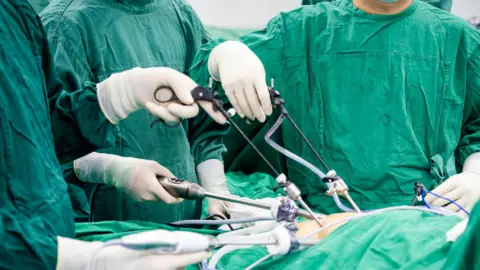
Patients are usually treated with a complex surgical procedure called a Total Mesorectal Excision (TME), which involves the complete removal of the rectum, the surrounding fat, and lymph nodes.
It has a high cure rate, but can have a significant impact and may also require a temporary or permanent colostomy bag.
The trial, named STAR-TREC, set out to discover whether organ-preserving treatments - radiotherapy and chemotherapy - could help patients avoid surgery while keeping the cancer under control.
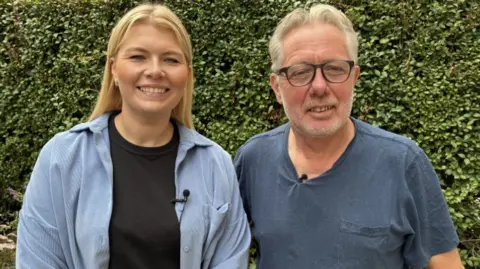
Hugh Chown, 65, from Harrogate, was diagnosed with rectal cancer at Leeds Cancer Centre after contacting his GP after a few months of occasional bleeding.
"I got the diagnosis – it was totally unexpected. I was shocked but accepting of it. I knew worrying wouldn't help, so I just focused on living life."
He said his consultant told him about the clinical trial two weeks later.
"She explained that the usual treatment would be surgery and it was highly likely I'd be left with a permanent colostomy bag."
He said she told him she thought he had a good chance of a positive outcome from the trial and said the decision to participate "wasn't difficult".
Hugh said the "worst-case scenario" was that it would not work and he would still need surgery.
His treatment consisted of taking tablets twice a day and receiving one radiotherapy session a day, five days a week for five weeks.
"For the first two weeks, the side effects were minimal but by the middle of the third week, I started to feel run down and tired and this got worse as the treatment went on.
"The fatigue also continued to get worse for a few weeks after the treatment stopped."
He said the effects took about six months to wear off completely, but it had a minimal impact compared to major surgery and a permanent colostomy bag.
"The consultant said I'd had a perfect result and the cancer was gone, but because it was part of the trial, I had another [colonoscopy] at 16 weeks and all was still clear."
He said after that he moved on to regular checks for the trial and then the standard NHS cancer checks for a further two years.
"My last check was in May this year and everything was fine," he addd.
Hugh's first wife died from bowel cancer at the age of 41 and he was supported through his treatment by his daughter, Rachel.
The 33-year-old is associate director of research and innovation at the Christie NHS Foundation Trust in Manchester, a specialist cancer treatment centre.
"I was nine when my mum died of bowel cancer, but outcomes now are very different," she said.
"I felt fortunate because my work in cancer care and research helped me understand the choices Dad was offered, and what they meant. When I heard about the trial, I felt strongly that it was his best option."
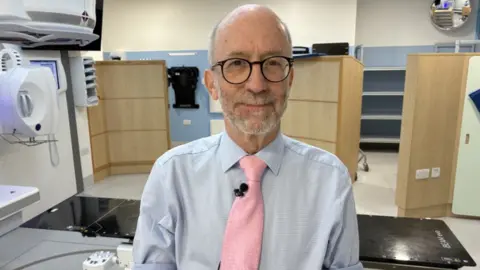
More than 400 patients were recruited at cancer centres across Europe for the trial, which was co-led by Prof David Sebag-Montefiore in Leeds and Prof Simon Bach at UCL, and was co-ordinated by the University of Birmingham,
Prof Sebag-Montefiore said the "exciting results" were an example of how a "smarter, kinder radiotherapy treatment may allow patients to avoid the need for major surgery".
He said: "It is gratifying that patients experienced a relatively low level of severe short-term side effects as a result of the smaller, more targeted radiotherapy approach that we specifically developed for STAR-TREC."
Prof Bach at UCL said "for decades" patients had been asked to accept the loss of their rectum as the "price for curing cancer".
"What these results suggest is that for many people, this price no longer has to be paid," he said.
Patients whose cancer was not completely eradicated by their treatment during the trial had a surgical procedure to remove the remaining areas affected by cancer.
The results showed that for up to 12 months, four out of five patients treated with chemotherapy and radiotherapy avoided major surgery, compared with three out of five treated with radiotherapy alone.
Patients' progress was followed for 30 months. These results are still being analysed, and the longer-term results are expected to be published in 2027.
Michelle Mitchell, Cancer Research UK's chief executive, said: "This breakthrough could be life-changing for thousands of people."
She said thanks to bowel screening, more rectal cancers were being detected at an earlier stage "where people are more likely to survive the disease".
"But that hasn't made treatment any easier - many patients still have to cope with extremely difficult and often life-altering side effects."
Listen to highlights from North Yorkshire on BBC Sounds, catch up with the latest episode of Look North.
