The glass pioneers who helped illuminate the globe

 Getty Images
The global legacy of a Black Country glassmaker whose products were used in landmarks ranging from the Crystal Palace to Big Ben and the White House is being showcased through a new play.
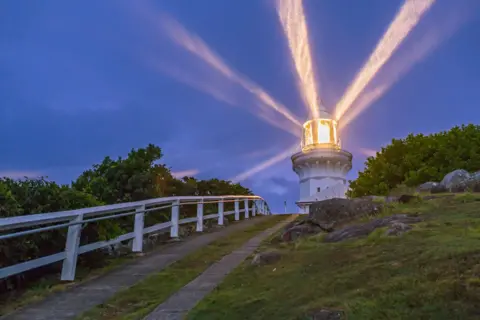
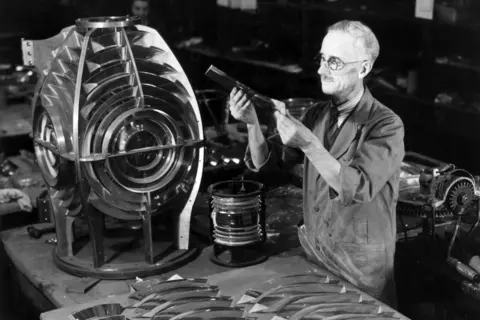
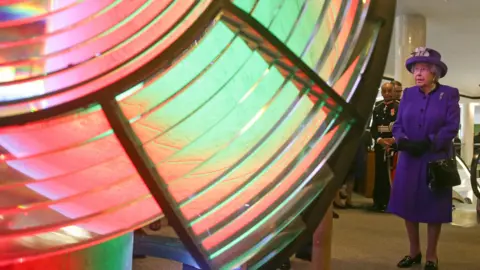
Chance Glassworks, based in Smethwick, not only supplied glass for some of the world's most famous buildings but also developed lighthouse lenses that lit up the world's coastlines, transforming maritime safety.
A mapping project has revealed the scale of the legacy, detailing about 580 sites equipped with Chance lenses, with the play turning the spotlight back on the Black Country's history of innovation, industry and light.
And in particular, the story of one engineer.
 Family handout
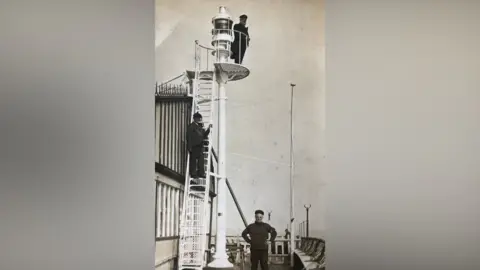
Orlando Stokes was born in 1864 and lived in Smethwick all his life, explained his great, great, grandson Scott Jones.
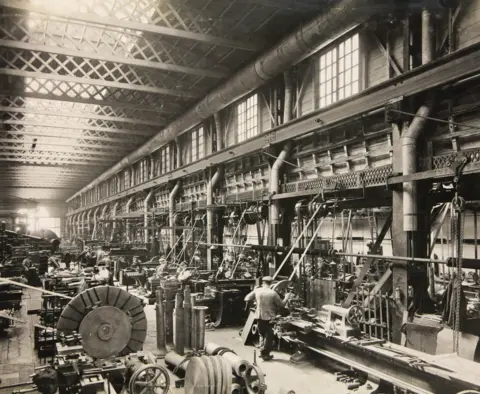
Like his father William, Stokes worked at the factory which at its height employed 3,500 workers, making it then the largest glassmaker in the world.
He worked in a "quite scientific specialist role", Jones said, travelling by ship to countries around the world to install the precious glass, including the use of liquid mercury.
"The best image I can give is someone a bit like [steeplejack] Fred Dibnah, climbing up the sides of lighthouses.
"There was no health and safety, no support, and he was risking his life every few months, so he was quite an interesting character, to say the least."
 Getty Images
Jones describes how relatives told him that Stokes would disappear, leaving his family for months at a time, often returning with "exotic" gifts.
"My mother has still got two oriental prints from about 1920 from one trip, but we have no idea whether he brought them back from some far land, or they came back from Southampton Dock," he said.
"But certainly they would have been exotic for Smethwick at the time, to put them up in the house."
 Getty Images
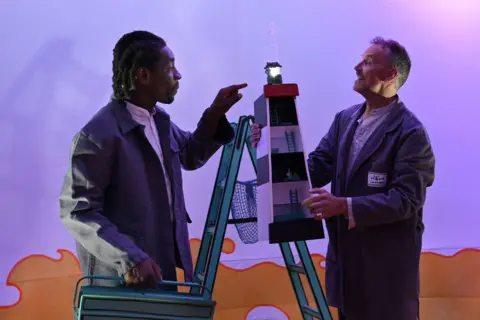
The worker's story has inspired a new family play, Cape Custard - A Lighthouse Adventure. It is touring the West Midlands over the summer and highlights the company's prominent role in British engineering and technology.
Genevieve Say, artistic director of Black Country Touring, said the company had been inspired "not only by the lenses that were being made there at the time, but also... what were the adventures that Orlando must have gone on in those times?"
The optics were so "technologically advanced, the minute details mattered and so they had to send out their best engineers, like William and Orlando Stokes," she said.
"As well as transforming navigation, which obviously had a huge impact on global trade, what's interesting is the impact it had on local heritage and the community," Say explained.
"The philanthropic company really felt they were duty-bound to invest in their workforce, so built houses for people, provided pensions and built a school for their children."
 Getty Images
For more than a century the company dominated glassmaking in Britain, from developing the first cathode ray tubes, to producing laboratory glass as well as novelty ashtrays.
It was said if it was made in glass, Chance made it.
The family originated in Bromsgrove in Worcestershire before setting up business at the Spon Lane works in Smethwick.
Robert "Lucas" Chance established the works on the former British Crown Glass company site in 1824. Later working with brothers Robert and James, the business was renamed Chance Brothers and Company.
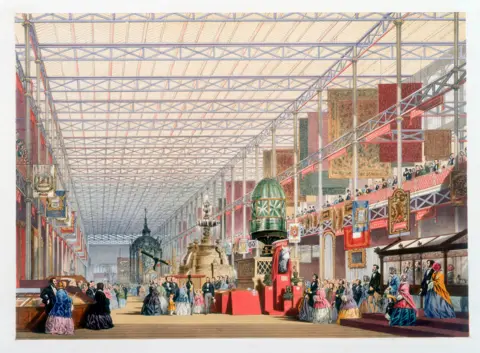
Starting in 1850 the company produced 300,000 panes to glaze the Crystal Palace, with their first lighthouse optics exhibited and demonstrated at the Great Exhibition the year after.
Other projects included the glazing of the Houses of Parliament, and the white glass for the four faces of the Westminster Clock Tower.
 Getty Images
In 1946 the company opened a plant in Malvern, Worcestershire, producing the world's first interchangeable syringe.
But during the company's success, competitor Pilkington Brothers had acquired a 50% shareholding and by 1952 it had taken control of the company.
The production of flat glass ceased at Smethwick in 1976, with the remainder of the works closing in1981 and so ending more than 150 years of glass production.
The factory was closed for the last time by ex-chief engineer Ray Drury, who said: "I drove my car out, I shut the gate behind me and [threw] the key in the canal."
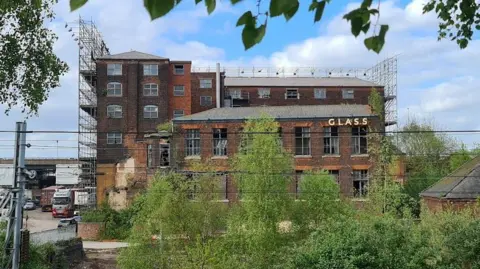
The factory, comprising of nine Grade II listed structures, has been included on the Victorian Society's list of most endangered buildings, after being left derelict.
However, funding from the National Lottery Heritage Fund and Historic England is helping it move forwards with a regeneration project.
The Chance Heritage Trust said it was working to restore and protect the buildings, developing the site into a mixed-use urban village including residential and educational spaces.
The project is currently seeking the funding to "get spades in the ground", the trust said.
 Stephen Hartland
With efforts reaching around the world, the trust has also produced an interactive map showcasing the lighthouses equipped with Chance lenses.
"Volunteers conducted detailed research, uncovering photographs, technical details, and historical insights, which were meticulously compiled to bring this unique story to life," it said.
"We've got a guy in Russia doing a great job building up the technical data on the lighthouses, who's keen to get the quality of information right, so he's been doing a huge amount of work," said Mark Davies, chair of the trust.
His own journey tracking information on the company started at the top of the lighthouse in Cape Leeuwin Bay, Australia.
"I saw one of their lenses for the first time, and I was born about four miles away from the factory on the Rowley hills and I'd never heard of them, so that's where this whole project started," Davies said.
 Black Country Touring
The play will tour small venues including libraries, community centres and village halls across Wolverhampton and the Black Country.
"The company was hugely important and had a real lasting legacy on the area," Say explained.
Jones added: "It's nice to see that legacy that my ancestors, who were sweating in the factories there and worked their fingers to the bone, are still being recognised.
"Not only the industrial, but the cultural significance of these people is something that we can't afford to lose."
Cape Custard, is suitable for ages three and over, and tours various venues until 20 August.
Follow BBC Birmingham on Facebook, X and Instagram. Send your story ideas to: newsonline.westmidlands@bbc.co.uk
