TfL defends pigeon culls 'when other methods fail'

 Getty Images
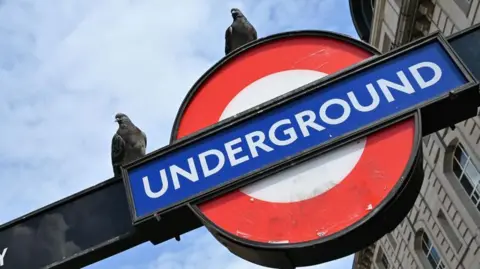
Transport for London (TfL) has defended the practice of shooting pigeons on its stations with air rifles as necessary to "maintain a safe, clean environment for those using or working on our property".
It comes after freedom of information requests revealed that hundreds of the birds had been culled by a TfL contractor in the past two years.
The transport body said its contractors ensured compliance with health and safety standards while avoiding animal cruelty.
Michael Britton, founder of London Bird Rescue, called the culls "an incredibly archaic, barbaric and unintelligent approach to wildlife management".
According to information gathered by wildlife group Manchester Pigeon Rehab, there were more than 120 organised shootings at Tube depots and stations between March 2024 and March 2026, and 655 birds were killed.
TfL said pigeon waste "carries risks of bacteria and insects, while nesting and waste material creates fire hazards and structural damage".
 Getty Images
A TfL spokesperson said: "Our approach is focused on prevention, and the avoidance of animal cruelty is taken very seriously.
"We continue to invest in preventative measures as our primary approach, exhausting all appropriate non-lethal methods, and have significantly increased our mitigations on stations and in depots as part of this work.
"Unfortunately, in a small number of cases, preventative measures are not always successful or effective, creating an unsafe environment.
"When this is the case, we work with our suppliers to ensure that the removal of pigeons, or their nests, is undertaken with consideration and only ever as a last resort when other deterrents have failed."
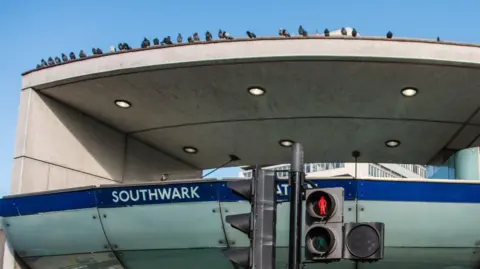
Contractors use air rifles to shoot the pigeons, usually in the early hours when the Tube system is closed to passengers.
 Getty Images
Britton said culling "has been proven to be an ineffective long-term solution, particularly at open-air sites, and, conversely, can actually increase population numbers".
He added: "Many companies and corporations have adopted a far more successful 'no-kill' approach, by making necessary modifications to infrastructure and utilising effective, humane deterrents such as 'anti-perch' slopes.
"In countries with a more proactive and intelligent stance, such as France, Germany and Switzerland, the use of dovecotes has been proven to be a fantastic solution.
"I would strongly urge TfL to immediately revise their wildlife management strategy and adopt a non-lethal policy."
All wild birds in the UK, including pigeons, are protected by legislation that makes it illegal to kill or injure them or damage their nests.
But the government issues licences allowing authorised individuals or pest controllers to control feral pigeons for reasons such as preventing serious disease or protecting public health and safety.
TfL said "humane bird dispatchers are used to make the process as swift as possible without causing unnecessary pain to the animal".
Correction: the original version of this article incorrectly stated that Mitie was TfL's contactor for pest control for TfL from March 2024 to March 2026. Mitie's contract for cleaning and pest control services began on 1 April 2026.
Listen to the best of BBC Radio London on Sounds and follow BBC London on Facebook, X and Instagram. Send your story ideas to hello.bbclondon@bbc.co.uk
