Can Burnham's 'Manchesterism' work in Yorkshire?

 Reuters
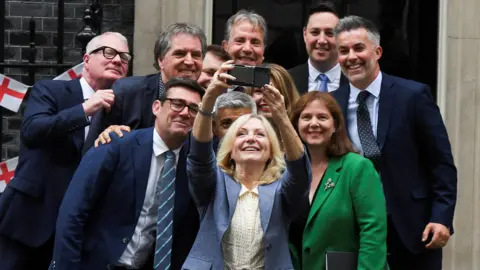
Andy Burnham has unveiled plans to hand more control to the country's elected mayors, promising to oversee "the biggest rebalancing of power our country has ever seen".
But what would his proposals mean for Yorkshire and how might "Manchesterism" work on the other side of the Pennines?
In his first major speech since launching his bid to replace Sir Keir Starmer, Burnham pledged to redistribute power across the UK.
He said he would use what he had learned in almost a decade as Mayor of Greater Manchester to spread success to "every post code of the UK".
Central to that plan was a commitment to devolving power to local communities and away from senior civil servants in Whitehall, which he said had "blocked" progress in Manchester.
"It is time for Whitehall to accept that growth cannot be ordered from the top down - it can only be nurtured from the bottom up," he said.
What has he promised?
While Burnham did not spell out what powers might be given to which areas, he suggested regions could expect to see "greater public control of essential services" such as water, energy and transport.
He also promised to deliver the biggest council house building programme since the post war period, and focus was on post-16 education, giving mayors more power to ensure they are "growing a workforce" to match the job market in their area.
But perhaps the most headline-grabbing idea was to create a new Downing Street team based in Manchester and labelled 'No 10 North'.
How that works with the 'original' Downing Street remains to be seen, but it seems the idea would be to support regions in reforming essential utilities, to help bring costs down and provide greater public control of services - such as the Bee Network, which runs the buses and trams in Greater Manchester.
Is it achievable?
Andy Mycock, chief policy fellow at University of Leeds, has studied devolution and said for a lot of the plans to work local government would need rebuilding.
"This radical form of devolution across all parts of England is going to be hugely constrained by the capacity of local government and combined authorities to be able to deliver," he said.
He pointed to the relatively new combined authorities in York and North Yorkshire and Hull and East Yorkshire, saying they were "only just starting to find their feet".
He said the idea they would be able to take on "huge amounts of new powers and deliver on them effectively" would require "a substantial reorganisation of the civil service".
He added that after 15 years of austerity, when local councils have seen hundreds of millions of pounds stripped from their budgets, there would need to be a "large amount" of funding in local government to replace the staff lost.
What could it mean for Yorkshire's mayors?
 West Yorkshire Combined Authority
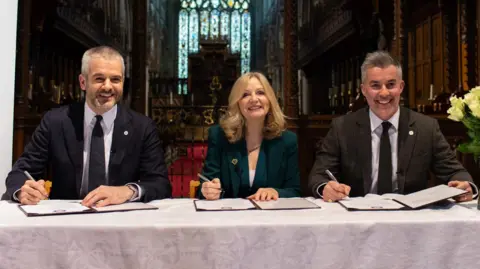
Yorkshire has three directly elected Labour mayors in North, South and West Yorkshire, while Reform UK's Luke Campbell holds the position in Hull and East Yorkshire.
Perhaps unsurprisingly given what he was about to say, the Labour trio of David Skaith, Oliver Coppard and Tracy Brabin had front row seats for Burnham's speech, and have all welcomed his promises.
Each of them faces their own challenges and priorities and will all be looking to Burnham to hope his plans help meet those.
In West Yorkshire, Brabin has continually pledged to have "spades in the ground" for the mass transit system she believes will get the region moving better, but those plans have were delayed in December 2025 following a government review.
However, if powers around transport and infrastructure were handed to local mayors, instead of final approval resting with the Department of Transport, perhaps it could be approved locally.
Brabin said "people are desperate for change" and that "transferring more powers to Mayors who know their regions best, will help us lower the cost of living, regenerate our high streets and enable good growth across our region".
Burnham has also spoken about giving regional mayors more power over employment support schemes, and greater "in work" mental health support.
In South Yorkshire, Coppard told the BBC it was "undeniable" mayors like him should have more power.
He said the region faced a "massive" challenge around the number of people not in employment, education or training - known by the acronym Neets - and welcomed the proposed shake up of post-16 education.
In North Yorkshire "affordable housing" is a crucial issue in many parts of the county, so perhaps Burnham's words about the biggest council house building programme since the post war period will hit home here.
Skaith said with the powers Burnham has promised he was confident York and North Yorkshire could achieve the same as Manchester, "if we were given the trust".
Campbell hasn't responded to the devolution announcement to date, but has previously complimented Burnham and said if he became prime minister he would be a "champion for the North".
What are business saying?
Businesses in Yorkshire have offered a "cautious welcome" to Burham's plans for devolution, and will be hoping for some of the "Manchester effect".
Official statistics suggest that Greater Manchester has grown faster than other English city regions, including London, since 2015.
The Combined Authority there said it has attracted "more foreign direct investment than any area outside London" and job growth as well.
Mark Casci, head of policy at York and North Yorkshire Chamber of Commerce, said "enhanced devolution" was something business here have "wanted for quite a long time".
He pointed to the key tenet of Burnham's argument and said it was about power flowing to the cities and regions "akin to American and German cities, who have more autonomy than they do now".
Ultimately though, for business, he said it was a question of "is it worth the risk?".
In addition, to help calm the markets, Burnham has said he would stick to the current chancellor, Rachel Reeves' "fiscal rules".
A former minister and Burnham backer said: "He has committed to the rules as they are. It is totally essential. He understands the cost of borrowing is a huge constraint on government."
Haven't we heard it all before?
 Reuters
While Burnham may be the new kid on the block, you may be forgiven for thinking his plans for greater devolution sound familiar.
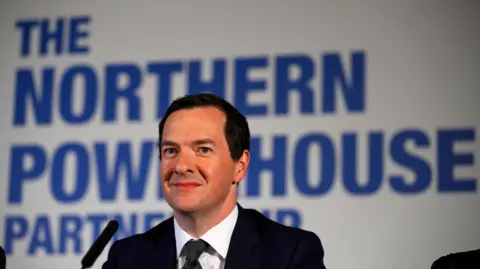
I remember George Osborne standing in the Manchester Museum for Science and Technology selling his concept of a "Northern Powerhouse" for the first time in 2014.
That paved the way for a patchwork of devolution deals across the country and focused minds and political arguments around the "North-South divide".
I also spoke to Boris Johnson, during his time as prime minister, on many occasions talking about "levelling up" and making the North the economic powerhouse it should be.
In 2022, I sat in a press conference in Leeds when former PM Gordon Brown addressed an audience at the University Nexus Campus having written the plan for Starmer's devolution plan to go "further and faster".
And just a few weeks ago, after Labour's crushing local election results Starmer spoke to me in York about how it was crucial to move power out of Westminster, because he believed those with "skin in the game" made better decisions for their communities.
So, yes, we have heard some of the promises around devolution before.
But, there is a hope that, with Burnham's first-hand experience as a mayor and a clearer vision of what's needed, this time the promises may be more than just words.
Listen to highlights from West Yorkshire on BBC Sounds, catch up with the latest episode of Look North.
