Met says sex workers more willing to report crimes

 BBC
The Metropolitan Police says more women involved in street-based sex work are reporting serious sexual offences after a pilot was launched to improve trust and engagement.
More than 40 women who may previously have had little or no contact with police are now regularly engaging with officers through Operation Amicus, the force said.
It described the scheme, which began in January, as a "fundamental shift" in how it tackles violence, exploitation and vulnerability experienced by women involved in street-based sex work.
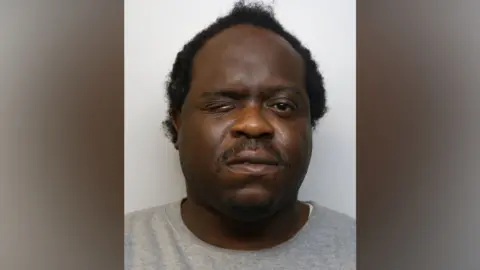
The force has faced criticism over failings linked to convicted sex offender Simon Levy, whose victims were vulnerable and had at times engaged in street-based sex work.
Levy was on bail when he murdered Sheryl Wilkins, 39, and Carmenza Valencia-Trujillo, 53, and raped another woman.
The rape survivor had reported the attack while being arrested by police but later said "nobody ever listened to me".
The Met and Crown Prosecution Service apologised for failures that allowed Levy to remain free.
 Met Police
During the pilot, female officers in unmarked vehicles carried out regular night-time patrols, building relationships through repeated contact with women involved in street-based sex work.
Earlier this year, the BBC joined one of the patrols and was told officers had heard accounts of widespread violence against women involved in street sex work, with some too frightened to report abuse because they did not trust the police.
One woman who reported being raped during the pilot told officers "you won't believe me, so do your job and check the CCTV" - a comment which the Met said highlighted the scale of the challenge in building trust.
Preventing further harm
Supt Rob Gibbs said women involved in street-based sex work were "among the most vulnerable people in our communities".
He said: "Many have endured years of violence, exploitation and abuse while feeling that nobody would listen to them or take their experiences seriously."
Gibbs claimed the scheme had led to women reporting rape, sexual violence and other serious offences that might otherwise have remained hidden.
"Every report gives us an opportunity to safeguard a victim, pursue an offender and prevent further harm," he said.
"Just as importantly, it helps us build a clearer picture of those who target and exploit vulnerable women.
"This is not simply about supporting women involved in street-based sex work. It is about identifying dangerous offenders, bringing them to justice and making our communities safer."
The next phase of the operation will focus on identifying and disrupting sexual predators, repeat offenders, kerb crawlers and those responsible for exploitation.
However, the English Collective of Prostitutes (ECP), which campaigns for the decriminalisation of sex work, said many women remained wary of police because of past enforcement activity.
Laura Watson, a caseworker for the group, previously told the BBC a "very intense and aggressive police crackdown" in north London had led to "quite aggressive arrests of women" in Enfield and Haringey.
She said closure zones and anti-social behaviour orders had led to "mass criminalisation because women were breaching those orders".
"Women really describe absolute terror from the police, running up and down the road, running away from the police," she said.
Prof Kate Brown, of the University of York, said liaison teams could improve safety and access to justice but were not a solution on their own.
"Our research shows that sex work liaison officers can make a real difference to safety and access to justice, but only when they are designed and delivered in the right way," she said.
However, she said they "cannot fix a system that continues to police and criminalise sex workers" and argued that "decriminalisation is the best way to deliver safety and justice" for them.
Listen to the best of BBC Radio London on Sounds and follow BBC London on Facebook, X and Instagram. Send your story ideas to hello.bbclondon@bbc.co.uk
