Wildfires are UK's 'new reality', MPs warn

 PA Media
Record wildfires that destroyed homes, scorched thousands of hectares of countryside and stretched fire crews across the UK exposed weaknesses in preparedness, a committee of MPs has warned.
The Environment, Food and Rural Affairs Committee said firefighting aircraft, disposable barbecue restrictions and a public awareness campaign were needed to tackle rising wildfire risk.
The report follows this year's severe wildfire season, including fires that prompted military deployment in south Wales, destroyed 19 homes in Stourbridge and scorched land in the Cairngorms, Staffordshire and Suffolk.
The government said improving wildfire preparedness was a "major priority".
A report by the cross-party committee said fires could no longer be regarded as rare or exceptional events, warning that climate change was increasing both their frequency and severity.
It said wildfire should now be treated as part of the UK's long-term climate resilience challenge, with better preparation needed for future fire seasons.
 Reuters
Fire and rescue services in England and Wales responded to 1,132 wildfires between 1 January and 16 August, more than the total number recorded during the whole of 2025.
During the August heatwave, millions of people across England and Wales received an emergency phone alert warning of a very high wildfire risk.
Major incidents were declared in several areas, including Dunwich Heath and RSPB Minsmere in Suffolk, the Cairngorms, Hampshire and Holme Fen in Cambridgeshire, while firefighters faced what MPs described as increasingly demanding conditions.
At one stage in August, fire chiefs admitted they were under "incredible pressure" with 11 major fires in 48 hours and several wildfires across many parts of the West Midlands, as well as in Hampshire and south Wales.
The committee said the 2026 season had exposed weaknesses in national resilience, including access to aerial firefighting resources, securing water supplies during major incidents and coordinating resources at a national level.
MPs said the current system for obtaining aerial firefighting support was "no longer fit for purpose" and called for a detailed implementation plan for a UK aerial firefighting capability ahead of next year's wildfire season.
The report also urged ministers to fund a national wildfire prevention campaign and said activities such as using disposable barbecues, lighting campfires and discarding cigarettes during periods of elevated fire risk should become "socially unacceptable".
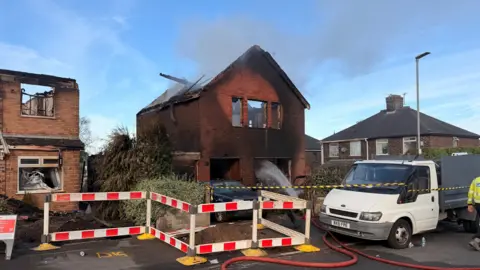
MPs welcomed the government's temporary restrictions on disposable barbecue sales during this summer's heatwave but said action should have been taken sooner.
A disposable barbecue was blamed for a fire that destroyed four homes in Stoke-on-Trent in August, while another major blaze in Macclesfield, Cheshire, was also thought to have been caused by one.
The committee stopped short of backing any single approach to land management, instead calling for an evidence-based "toolbox" including measures such as grazing, cutting, peatland restoration and prescribed burning where appropriate.
It also said ministers should recognise the role played by land managers and local communities in responding to wildfires and the physical and emotional toll such incidents can have.

Alistair Carmichael, chair of the committee, told the BBC: "What we've seen as serious wildfires this year is going to be normal in years going forward."
"If we don't get serious, if we don't have a strategy, if we don't put money behind it, then that is going to keep happening.
"We can't force the government to start spending money, but if they find themselves in the situation that they were this year, again next year, they will not be able to say that nobody warned them."
A spokesperson for the Ministry of Housing, Communities and Local Government said: "Improving wildfire preparedness is a major government priority."
They said ministers were holding a summit this week with fire and rescue leaders, land managers and other organisations, and pointed to a pilot scheme involving six teams of specialist firefighters that can be deployed to major wildfire incidents across the country.
Follow BBC Birmingham on BBC Sounds, Facebook, X and Instagram.
