Killer 'hid in the shadows', lawyer tells inquiry

 Nottinghamshire Police
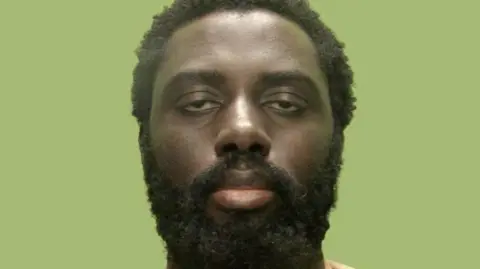
A killer "hid in the shadows" before he stabbed two students and a grandfather, the Nottingham Inquiry has heard.
Valdo Calocane, who was diagnosed with paranoid schizophrenia, killed Barnaby Webber, Grace O'Malley-Kumar and Ian Coates, and tried to kill three others on 13 June 2023.
The Crown Prosecution Service (CPS) accepted the killer's guilty pleas to manslaughter on the grounds of diminished responsibility and to attempted murder before he was sentenced on 25 January 2024.
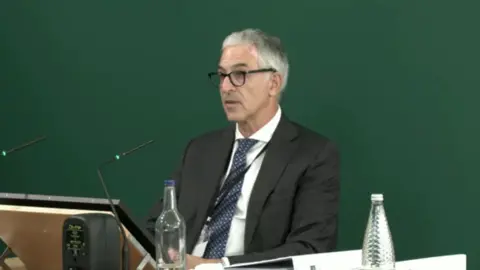
On Monday, Karim Khalil KC, lead prosecutor at the sentencing, said the killer's capability to plan did not alter the prosecution's judgement of the case.
 Supplied
Evidence in the judge-led inquiry - which is examining the lead up to the attacks and decisions made in the aftermath - started again on Monday following a short break over Easter.
Khalil told the inquiry: "When I prepared the opening in this case, I made it absolutely clear that the Crown's case was that although the individuals hadn't been pre-selected, his conduct that night, early morning, involved extensive, comprehensive planning.
"He acquired weaponry beforehand, he changed his clothing, he changed his sim card, he hid in the shadows.
"All of this was indicative of planning, and so to find that he has had an obsession with a particular person previously adds to that aspect, but it doesn't actually - in the context of what he did in this case - alter any of the decisions that would have flowed from it."
The inquiry had earlier heard a number of experts had been instructed by the CPS to assess Calocane and his defence had also produced its own psychiatric report. However, the victims' families had raised concerns about those reports.
 The Nottingham Inquiry
On the day of the attacks, Calocane first stabbed Barnaby and Grace - both students - before killing Ian and taking his van, which he then drove into Wayne Birkett, Sharon Miller and Marcin Gawronski.
Previously, while a student at the University of Nottingham, Calocane had assaulted his flatmate Sebastian, tried to get into his room as he slept, and later followed him home on two occasions.
Asked about the relevance of those incidents and the killer's earlier fixation on Sebastian - in relation to his capability to plan - Khalil said he did not see how they would "alter my judgement as to the proper conclusions to reach".
Khalil said he knew from the evidence that Calocane was "perfectly capable" of planning and preparing to commit "the most appalling offences".
Khalil said the fact that Calocane "planned to kill" was "clearly" considered by psychiatrists who assessed him, but added his planning did not mean the partial defence of diminished responsibility was not available to him.
He said a note found in Calocane's bag on the day of the attacks, which had the names of other students he lived with previously, would also not have affected his decision-making.
 Supplied
Calocane is currently serving an indefinite hospital order for his crimes.
The inquiry heard how the prosecution had hoped to obtain a hybrid order for Calocane, whereby an offender can be transferred to prison after hospital treatment.
Khalil told the inquiry the hospital order was not "letting him [Calocane] off with some easy disposal, far from it".
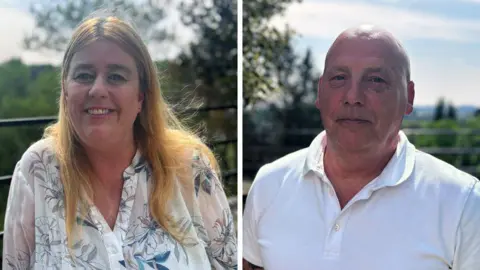
Following Calocane's sentencing, Khalil met with survivor Wayne Birkett and his partner Tracey Hodgson, who wanted to know what Calocane's hospital order might look like and whether he would ever be released.
Explaining what he told the couple, he said: "Such people are not free to go about their time as they wish.
"I've represented others when defending who have been subject to similar orders and I know that they, in periods of lucidity, do all they can to get out of that hospital environment because it is so restrictive."
The inquiry continues.
Listen to BBC Radio Nottingham on Sounds and follow BBC Nottingham on Facebook, on X, or on Instagram. Send your story ideas to eastmidsnews@bbc.co.uk or via WhatsApp on 0808 100 2210.
