Restored china clay pit 'handed back to nature'

 BBC
BBCA six-year project to fill a china clay pit in mid Cornwall is aiming to increase biodiversity.
The former quarry called Dubbers, which is Cornish for a miner's pick axe, stopped working in the 1960s and as the industry progressed the hole was used for the waste process from the kaolin - or china clay - works.
The 150 hectare (371 acre) site is owned by mineral company Imerys, which manages extensive kaolin operations in the area.
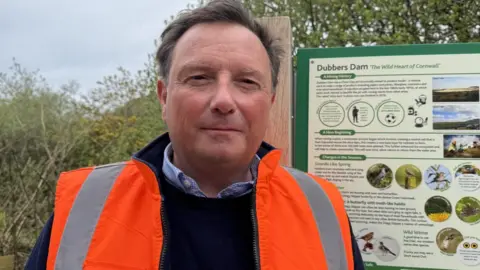
Mark Hewson, Imerys' lead in the UK, said the company had planted 100,000 trees at Dubbers in "one of the largest forestation projects in the South West" so the site could be handed "back to nature".
The site is at one of the highest points in Cornwall and the company said the public could enjoy up to four miles (6.4km) of public footpaths with outstanding views.
Hewson added: "We have about 4,500 hectares (11,120 acres) of land overall in mid Cornwall and we have around 800 hectares (1,977 acres), which we class as non-operational land which we gradually work to restore."
Bob Bosisto, ecologist on behalf of Imerys, said Dubbers had attracted a lot of protected species such as bats, birds and doormice.
"The little ringed plover bred at Dubbers in 2024, it was the first time they had ever bred in Cornwall, so that was very exciting for the team."
Bosisto said they also had a "very large population" of a bird called a jack snipe, adding: "These wading birds come all the way from Russia to spend their winter on Dubbers Dam and they feed at night time.
"With up to 60 birds we've got the largest population that is known in the south west of England."
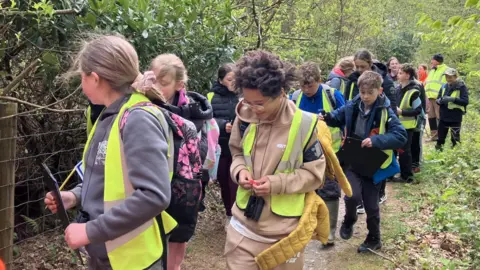
Children from Whitemoor Academy in St Austell helped plant some of the trees at Dubbers and were invited for the launch of the new trail.
Work is currently under way to restore Scarcewater mine, increasing the 25 miles (40km) of trails that are available in mid Cornwall.
Cornwall Council's nature recovery manager Philippa Hoskin said Dubbers was a "great example of landscape-scale nature recovery" and she looked forward to seeing how it developed as the trees established themselves.
Follow BBC Cornwall on X, Facebook and Instagram. Send your story ideas to spotlight@bbc.co.uk.
