Serious questions for Cambridge after professor at centre of plagiarism row resigns

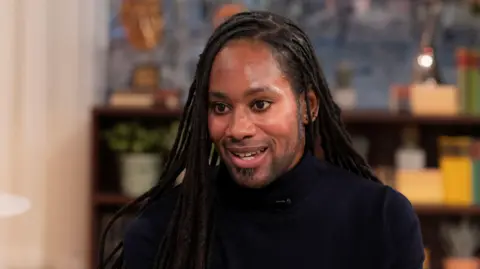 ITV/Shutterstock
The University of Cambridge is facing serious questions about its academic standards and push for diversity after its youngest black professor resigned amid allegations of copying other academics' research.
Jason Arday's appointment in 2023 was hailed at the time as a progressive moment. Now, Cambridge says it has launched an investigation after "new information" emerged about his academic qualifications and honorary appointments.
There are two fundamental questions for the university.
Did it fail to adequately check Arday's credentials when appointing him, and did it defend that decision because of an institutional push to position itself as more diverse?
For one of the world's leading universities known for academic excellence and globally significant research, this is about its institutional culture and decision-making at the highest level.
The biggest reputational risk surrounds the accusations of academic plagiarism now under investigation - and denied by Arday - because they get to the heart of what a university is about.
The University of Cambridge uses the common definition of plagiarism as "passing off someone else's work as if it were your own without appropriate acknowledgement".
There is no allegation more serious that can be levelled at an academic.
One of the fundamental purposes of a research-led university is the creation of knowledge through original thinking, insights and inquiry.
The quality of this is the foundation of Cambridge's reputation, and a source of significant funding.
Arday did not start his university journey at an elite institution.
He has a degree from the University of Surrey in education studies and physical education, a master's from St Mary's University in London, and a PhD in education awarded by Liverpool John Moores University.
The reason the PhD has attracted so much attention is because it is the first major piece of original research anyone wanting a career as an academic must complete.
Arday's critics claim that his work relied on copying other academics without properly crediting their work from the outset, which he denies.
He went on to become an associate professor at Durham University and professor of sociology of education at the University of Glasgow.
In other words, there is a line of institutions behind Cambridge now facing similar questions about their appointment processes.
The entire higher education system relies on accepting the qualifications awarded by another institution in good faith. Regulation and standards are meant to create a common currency.
That has now unravelled with what began as a blog a couple of years ago escalating in recent weeks, with more journalists unpicking aspects of Arday's life story and asking questions.
It is at this point Cambridge faces questions about whether it was defending its own reputation as much as an individual academic.
Just a couple of weeks ago, the university was briefing journalists that this was a campaign against a black academic, its appointment system was rigorous, and it would be robustly defended.
So why might Cambridge have had a blind spot that delayed an investigation which could settle the matter?
The university has spent the last decade working to redress the perception that the institution is a bastion of affluent white privilege.
Roger Mosey, the former master of the university's Selwyn College, said Arday's academic background was "unconventional" for a Cambridge professor, but that his life story as an autistic man who said he could not read until he was 18 was what had seemingly "made him a compelling candidate".
Equality, diversity and inclusion are reasonable goals for a leading university, Mosey wrote in the Times, but risk becoming contentious "when they are baked into inflexible policies and questionable appointment processes".
Part of the answer may also lie in how black academics feel in general as part of a tiny minority in the wider university community.
In the last academic year, only 75 of Cambridge's 6,180 academics at all levels were identified as black, according to the Higher Education Statistics Authority (HESA).
If you look at professors across the UK, 270 are identified as black out of a total of more than 26,000, according to HESA definitions - around 1%.
The University and College Union has previously highlighted an ethnicity pay gap and called for it to be redressed.
A spokesperson said Arday was "entitled to due process and a fair opportunity to respond to the allegations made against him", adding that he had been "relentlessly targeted" by some since he was first appointed.
They added that the case "should not be used to undermine the wider principle that UK higher education continues to have a serious underrepresentation of Black professors".
Both Cambridge and Oxford have faced sustained scrutiny over their whiteness as institutions, with vocal critics over the last 15 years including the MP David Lammy.
He extracted data from the universities showing how few offers were made to black students despite the number being awarded top A-Level grades which would potentially qualify them for a place.
In 2018, Cambridge said it needed help to attract more talented black students, and unexpectedly the rapper Stormzy answered the call by setting up a scholarship to encourage students to apply.
Although the support was for a handful of students, it was a reputational coup for the university - allowing it to position itself as a more open and inclusive institution.
Now it will have to balance the potential reputational fall out of the Jason Arday row for its academic credibility, with how that might be perceived by future talented black students and academics.
