How Manchester Pride evolved from a bring-and-buy sale

 Getty Images
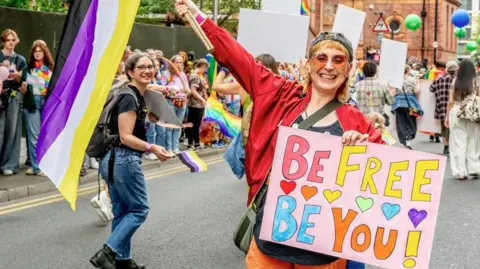
Manchester Village Pride may look and feel familiar this year but a lot has changed over the past 12 months.
The annual event, held over the August bank holiday weekend, hit the headlines in October 2025 when the company behind it went into voluntary administration.
Manchester Pride Events LTD owed more than £1m to suppliers and performers.
Many of these have still not been paid and the Charity Commission has launched an investigation into the organisation's finances.
But how did Manchester Pride reach this point and what does the future hold?
Pride in Manchester began in 1985 from very humble beginnings and grew into one of Europe's largest LGBTQ+ festivals attracting more than 170,000 visitors.
Big names from the pop world such as Ariana Grande and Nelly Furtado have graced the stage and huge corporate brands were queuing up to have their logos associated with the weekend-long event.
This is a world away from the very first Manchester Pride.
 Stuart Rhoades
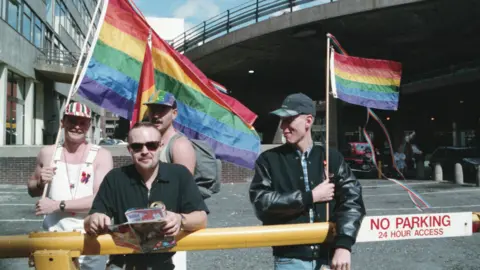
It started with a bring-and-buy sale on Canal Street in the city's Gay Village in 1985.
The aim was to raise funds for the ward at Monsall Hospital in north Manchester that was treating patients at the height of the HIV and Aids crisis.
The ward looked drab and depressing so fundraisers used the money raised to transform the unit into a welcoming space for patients and their families.
From these humble beginnings, Manchester Pride started to evolve.
There was also a commercial reason for choosing the August bank holiday weekend.
"Everybody in Manchester went over to Blackpool for the August bank holiday weekend," said Paul Martin, chief executive of the charity LGBT Foundation.
"It's a knockout...all sorts of games like that were an enticement to drag people back to Manchester."
Since that first event more than 40 years ago, Pride has always been held on the August bank holiday weekend.
The timing may have remained consistent, but the name has changed over the years.
It has been called Tickled Pink, as well as Mardi Gras, and The Carnival of Fun.
It was simply known as Manchester Pride for the last few years and this summer it will be Manchester Village Pride.
 Stuart Rhoades
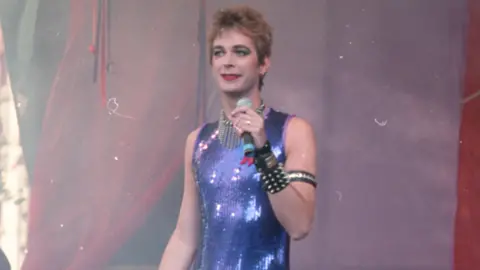
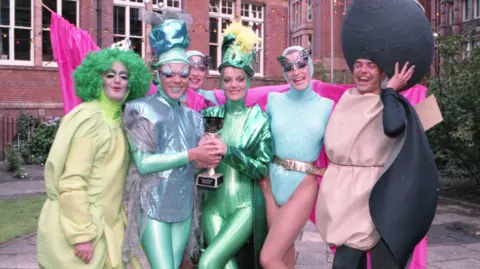
By the 1990s, the event was established and growing.
The Village Charity was set up and Manchester Mardi Gras - The Carnival of Fun became the latest incarnation and, for the first time, the event stretched over the whole bank holiday weekend.
Manchester is renowned across the world for its LGBTQ+ scene.
One of the reasons for its success was the Gay Village situated around Canal Street.
This dates back to the time when homosexuality was illegal.
Gay men faced legal penalties and social shame, but those quiet, dimly lit canal-side streets became a discrete place to meet up.
The first dedicated venue, The New Union Hotel, which is still open today, provided a safe space for the community.
Gradually more venues sprung up in the area and the Gay Village was born.
 Stuart Rhoades
In 1990 a new bar opened in the Gay Village called Manto, meaning Manchester Tomorrow.
This venue, which is now called On Bar, was not hidden away and discreet.
It stood proud with large windows and balconies and showed that LGBTQ+ party goers no longer needed to hide away in dingy little bars.
Manchester's Canal Street started to become a popular destination.
This was partly fuelled by the 1999 Russel T. Davies drama Queer as Folk, which centred around life on Canal Street and showed a side of the gay community rarely represented in the media.
Such was the draw of a Pride in Manchester's Gay Village, thousands of visitors flocked from all over and new measures were needed.
In 1999 Manchester City Council took over the reins and introduced barriers around the Gay Village and attendees were charged an entrance fee.
This still proves controversial for some.
"Prides are expensive to stage and there are always tensions in every city in the country," said Martin.
"Pride operators are criticised for the price of the tickets.
"The police costs rise every year, the street cleaning costs rise every year, the security costs etc. I've got a lot of sympathy for Pride organisers."
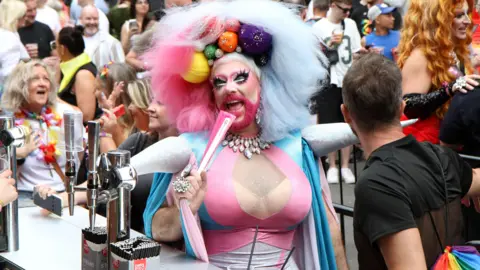 Stuart Rhoades
In 2003 Manchester hosted Euro Pride and this set the foundation for how Pride would be held in the city.
This included The Big Weekend element where big name pop stars were booked to perform.
There was now a template for how Pride would run.
The parade on the Saturday, a big party in the Gay Village with a live music stage and the candlelit vigil in Sackville Gardens on the Monday evening.
The names were getting bigger and bigger and in 2019 Ariana Grande was booked to headline.
However, this was the first time the live music element was moved away from the Gay Village to a new venue across town at Mayfield Depot.
There was also a noticeable hike in ticket prices.
Carl Austin-Behan, who is the co-organiser of this year's Manchester Village Pride, said this was the start of things going wrong.
"I'm very happy to spend my own money to watch someone big at one of the arenas but I don't think this is the place to do that.
"It's about the community. When it got moved out of the Village for Ariana Grande that was the start of the decline.
"And that year they made the most profit but gave the least money to charity."
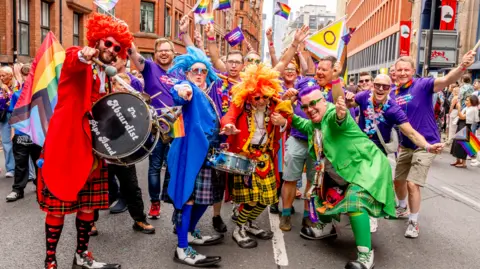 Getty Images
This move away from the Gay Village area was heavily criticised.
The organisation also came under fire for scrapping charity donations to the LGBT Foundation for a sexual health scheme, which they had supported for 27 years, and to the George House Trust, despite spending a reported £1.5m on securing Grande.
After a year off due to the Covid pandemic, Manchester Pride responded to the criticism by returning the event to the Gay Village.
Then in 2025, the extra stage at Mayfield Depot was back hosting pop names like Olly Alexander and Nelly Furtado.
The expansion had proved a step too far and just a couple of months after this event the organisation behind Manchester Pride went bust.
A statement from the former board of trustees previously said rising costs, declining ticket sales and its "ambitious refresh of the format" meant the organisation was no longer financially viable.
So, what is happening this year?
There will be a Pride this year across the bank holiday weekend as normal, beginning on 28 August.
"It will be much more community focused," said Austin-Behan.
"We are keeping it a lot more low key and the charities are a lot more involved and on the Monday we are having a free family day to keep it inclusive for everyone.
"We are using a lot more local talent and we are working with Equity.
"We have managed to secure the full line-up for the less than the cost of one of last year's headliners.
"Manchester needs a Pride."
Listen to the best of BBC Radio Manchester on Sounds and follow BBC Manchester on Facebook, X, and Instagram. You can also send story ideas via Whatsapp to 0808 100 2230.
