First Lionesses honoured again with blue plaque

 Nicola Haseler/BBC
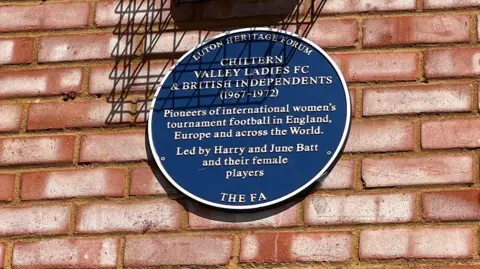
A blue plaque has been unveiled for a second time to honour the first women to represent England at an international football tournament after vandals removed it from its previous location.
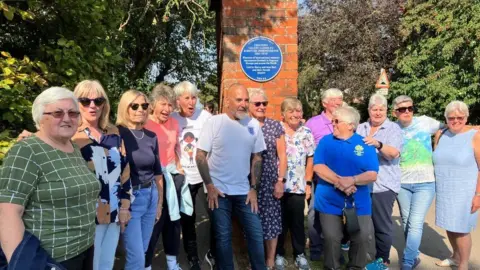
The FA and Luton Heritage Society unveiled the restored plaque at the clubhouse at Crawley Green Recreation Ground in Luton on Saturday.
It honours Chiltern Valley Ladies and the team's founders Harry and June Batt, as well as the British Independents who played between 1967 and 1972.
The couple's son, Keith, attended the unveiling and said: "It will be so prominent now and in the place where we originally wanted it to be."
 Louise Parry/BBC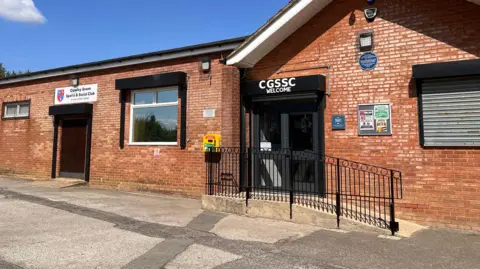
He added that the plaque, which was previously mounted on a gate pillar at the recreation ground, was found by club members after it was vandalised in 2023.
Keith said he believed it had been used as a "frisbee", but it was still in one piece when it was discovered.
He then arranged for it to be reinstated.
 Keith Batt
The ban on women playing football lasted for 50 years from 1921 until January 1970, when an FA Council meeting rescinded the resolution.
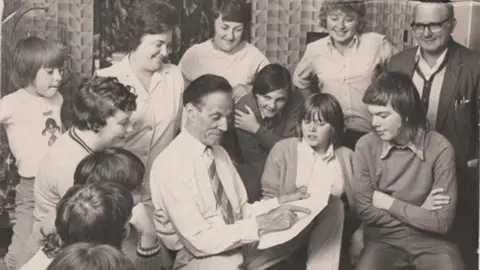
Harry Batt, a bus driver in Luton, had a "passion and a vision of what women's football could become" in the late 1960s and early 1970s, according to one of the event's organisers, Stephanie Daniels.
Harry defied the ban and formed teams to represent England in overseas tournaments.
His teams were made up with players he had scouted from across the country, but the majority came from squads such as Luton Ladies, Southampton Ladies and the one he managed, Chiltern Valley Ladies, based at Crawley Green.
Keith said the plaque was for all the women that had been "forgotten" and "overlooked".
Leah Caleb attended the unveiling and said she was 13 when she played for the Lionesses at the unofficial Women's World Cup in Mexico at the Azteca Stadium in 1971.
"I was very young and thankful to Harry and June for that [opportunity]," Caleb said.
"It lives in the memory bank and was quite surreal
"I carried on playing football until I was 32, but for Harry and June that is a different story and their legacy needs to be understood. They did some amazing things."
Do you have a story suggestion for Beds, Herts or Bucks? Contact us below.
Follow Beds, Herts and Bucks news on BBC Sounds, Facebook, Instagram and X.
