Sign of life as bright orange 'fire fungus' grows at park ravaged by wildfire

 FLS
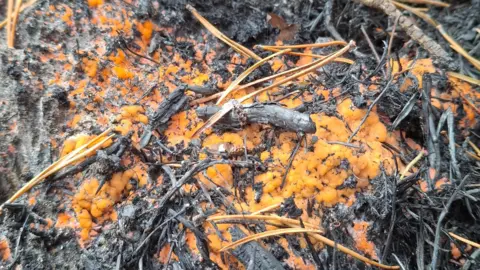
FLSA fungus that grows in places damaged by fire has been found at the site of a major wildfire in the Cairngorms National Park.
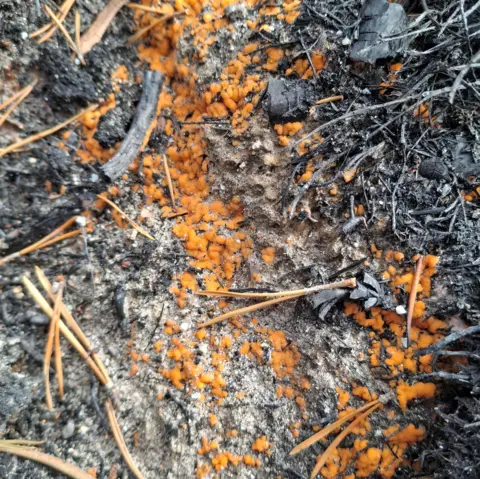
Forestry and Land Scotland (FLS) said the bright orange, pyrophilous (fire-loving) fungus could be the first sign of nature's recovery at Glenmore near Aviemore.
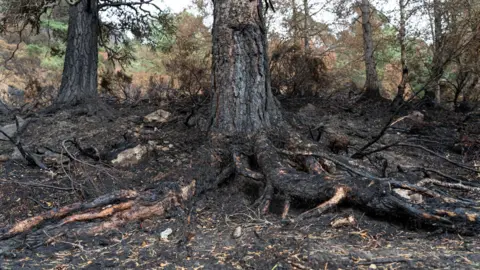
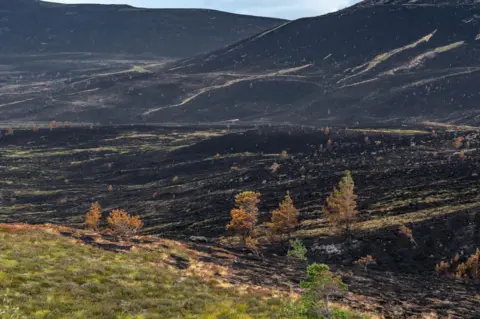
A wildfire started in the area on 15 July and the incident, which has burned through thousands of acres of woodland and moor, continues to be monitored for hotspots.
FLS said the fungus was among the "first colonisers" of burned ground and played a role in breaking down carbon and preventing soil erosion.
Dave Clarke, FLS senior programme manager, said: "In the aftermath of any fire people always have concerns about wildlife and habitat recovery, often looking to spot the first green shoots.
"But before that stage, these charcoal-loving fungi get to work and prepare the way by gradually creating the sorts of conditions and nutrient that will accommodate plants and grasses.
"And some grasses are already beginning to re-appear."
 FLS
FLSGerman naturalist Carl Gustav Carus carried out the first scientific studies of pyrophilous fungi in the 1830s.
The orange blobs are mushroom-like "fruiting bodies" while the rest of the fungus is underground.
FLS said pyrophilous was present in soils and appeared above ground following fires, or spreads from unaffected areas.
 FLS
FLSLast month, the national park said the "apocalyptic" wildfire had killed plant life, insects and other wildlife that had not been able to escape the flames.
The Royal Society for the Protection of Birds (RSPB) Scotland's Loch Garten reserve at Abernethy has been badly burned, and the incident led to residents and campsites being evacuated.
At its height, more than 500 firefighters were involved in the response and Police Scotland declared it a "major incident".
A recovery fund has opened for businesses affected by the wildfire.
Drones fitted with heat-sensing equipment continue to be used to detect hotspots in areas of peaty ground.
 FLS
FLS