'Dementia reading group makes my life easier'

 BBC
BBCFor Paul McCooey, reading with others has become a lifeline.
Paul has dementia and has been taking part in a reading group for people with the condition.
"When you get this thing hitting you, you think 'this is it, this is the end of the world,'" he said.
"But now we have our group together, we talk about our problems, we swap ideas and so on."
"We now have something to say, and we do say it."
And Paul, who is from Belfast, is not alone in getting a boost from reading with others while living with dementia.
Research carried out by academics from Queen's University Belfast (QUB) and Dementia NI suggests many benefits to meeting over a book.
Those include a sense of enjoyment, an enhanced quality of life, improved social engagement and mood.
Paul had always read books but had worried that dementia would bring that side of his life to an end.
"I forget things, I don't remember what I'm supposed to be doing sometimes," he said.
"I still read but I have to work really hard."
"You try to do what you were doing before but it's really, really difficult and you sort of have to keep on going."
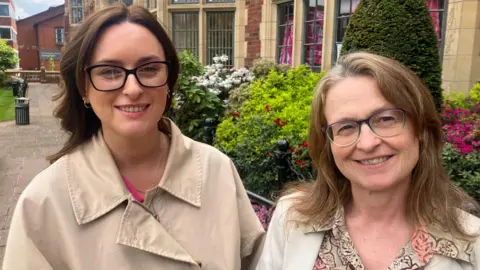
But being part of a shared reading group in Belfast has helped.
"People sit down in a group and we read large bits out of books," he said.
"It's to learn something and to read a book but it's more than that."
"It's where you actually try to express yourself, and once you're trying to express yourself it makes life easier for you."
Dementia NI has set up a number of reading groups, and a number of libraries have begun to run groups for people with dementia, including Roscommon County Libraries in the Republic of Ireland.
Hilary Daly from Roscommon County Libraries said that those living with dementia came to the groups with their carers.
"We read a short story and then we read a poem and we discuss what's in the short story and in the poem, we explore it a little bit," she said.
"They really love it."
'It gets the creativity flowing'
Aisling Brennan from Roscommon County Libraries said that running the groups had been "really positive".
"With short reading, it can be interpreted in so many different ways," she said.
"We often find that we read a story and talk about one thing, and then we end up talking about something completely different."
"You never know what way the story is going to go."
"It gets the creativity flowing."
There are six libraries in Roscommon and Aisling said they plan to roll out the reading groups across all of them.
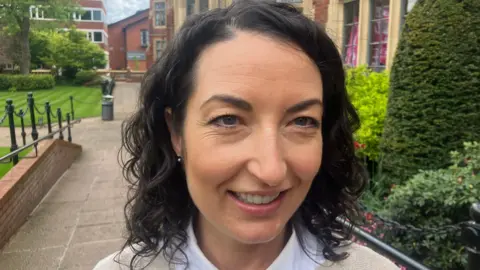
Dr Jane Lugea from QUB has been working with Dementia NI to set up the reading groups and study their impact.
They have now produced a resource pack with advice for any organisations looking to set up their own reading groups.
"We read fiction and poetry and both play different complementary roles," Lugea said.
"People often assume that reading literature is a skill that might be lost with dementia, that's not the case."
"Or at least it doesn't have to be."
"If you make adjustments it can be an activity that's still enjoyed, even more so when you do it in a social setting because that brings additional benefits."
'Lots of benefits'
She said that social isolation and lack of stimulation could compound the symptoms of dementia and reading together in a group helped to combat those.
"So there's the reading and getting back into reading that it offers, but there's also the social aspect of reading together," she said.
Lugea said that, more widely, reading for pleasure had "plummeted" but that it had been shown to improve people's wellbeing.
"Reading is something that brings with it lots of benefits," she said.
"There's plenty of reasons why we should do it but also why we should do it socially."
