Heat pump growth stalls as government support cut, warns climate watchdog

 Getty Images
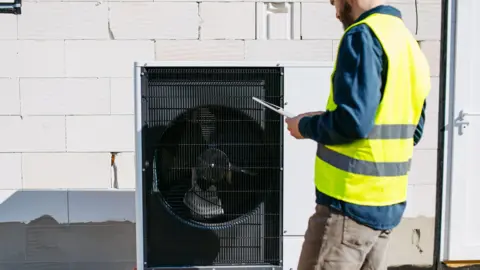
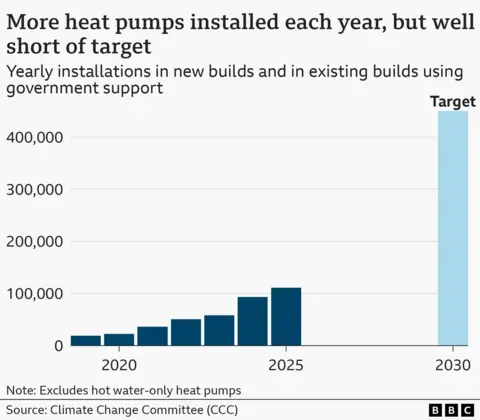
Installations of heat pumps in the UK grew just 7% last year - down from a bumper 56% in 2024 - in a worrying sign for government climate efforts.
The UK's independent climate advisors published the figures on Wednesday as part of its update on the country's progress to reduce planet-warming emissions.
The fall in sales comes after the government withdrew a controversial grant scheme to help poorer households install the technology - which can help tackle emissions by heating homes using electricity instead of gas.
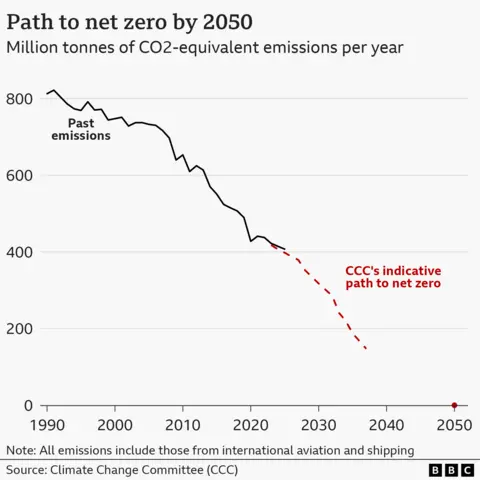
Overall, carbon emissions continued to fall, the advisors said, putting the UK in a "leading group of countries"- but slow progress in home heating risks future targets being missed.
Almost a fifth of the country's emissions come from the way that we heat our homes.
The vast majority of households currently use gas boilers, but the government's ambition is to move most properties over to heat pumps. These run on electricity rather than gas which can be generated from green energy sources like solar and wind.
However for most, heat pumps are prohibitively expensive to install. The government does have the Boiler Upgrade Scheme which offers a £7,500 grant upfront towards the cost of the technology but that can still leave households more than £2,500 to pay.
And the government removed the ECO scheme, that provided heat pumps fully funded to lower-income homes in Great Britain, after reports of botched installations.
The Committee and the industry have said a new grant system needs to be provided but also efforts need to be made to bring down running costs.
"This transition in our homes is no different to the ones we've had before. Fresh running water in homes, indoor sanitation, central heating, heat pumps. It's just another transition. We have to find a way to make it affordable. And that's the government job," said Bean Beanland, former director of the Heat Pump Association.
The UK has some of the highest electricity bills in Europe because of upgrades to the network, charges on energy bills and spikes in gas prices which can affect the price of all electricity.
A Department for Energy Security and Net Zero spokesperson acknowledged the ECO scheme "faced serious challenges".
But added: "We are taking action on energy bills, as well as going further and faster in our clean energy mission, to end our dependency on fossil fuels, give us energy security and get bills down for good."
In contrast to heat pumps, continuing record sales of electric cars indicate they are all but set to replace their petrol and diesel counterparts in the coming years on UK roads.
Emma Pinchbeck, CEO of the Climate Change Committee, praised the improvement in greener transport.
"We've made big progress on things like electric vehicles, where one in four cars being bought in the UK today is now an EV."
She said the growth had been accelerated by the Iran fuel crisis, which has seen significant increases in petrol and diesel prices at the pump pushing people to seek out other options.
"We can see in the numbers what people want - cheap cars and cars that will save them money, particularly as fossil fuels are volatile," she said.
But the industry body, Society of Motor Manufacturers (SMMT), said most of this demand had been brought about by huge discounts offered by car manufacturers.
"This has cost the industry more than £10 billion since 2024 – an unsustainable amount when that money should be going into R&D, manufacturing and the workforce," said Mike Hawes, CEO of SMMT.
It supported the government's plan to weaken its Zero Emission Vehicles (ZEV) mandate - which sets a target for the number of EVs that manufacturers sell in the UK and potential penalties for failing to meet that target.
The UKCCC disagreed and urged the government to keep the policy.
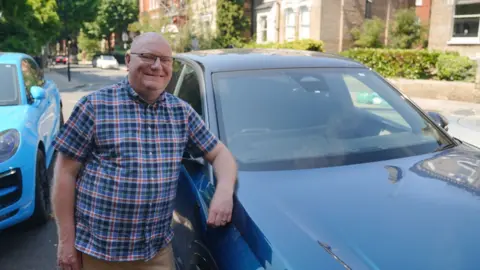
Nicholas Theobald, who lives in London, made the switch to a second hand EV earlier this year over concerns about petrol prices.
"It seemed like the right thing to do we just [had] this whole feeling of being dependent upon fossil fuel countries," he said. "I did have anxieties that, oh, we're going to have to charge all the time but my experience in the last five months I've been astonished at how easy it is."
But he added that not having access to his own charger at home, and having to rely on public chargers, was making it more expensive - up to ten times more than if he charged at home.
 Gwyndaf Hughes/BBC News
This was one of numerous other issues highlighted by the Committee that the government was too slow in addressing.
It said minimal progress in sectors like farming and aviation risked the country missing future targets.
The advisors reminded the government of the importance of cutting emissions to reduce the country's contribution to climate change.
Parts of the UK are under a red alert for extreme heat this week, as temperatures are set to climb to close to 40C.
The Met Office have said such extreme temperatures are made more likely and more frequent by climate change.
Additional reporting Mark Poynting and Becky Dale.

