Vineyard 'devastated' as frost destroys half of crop

 BBC
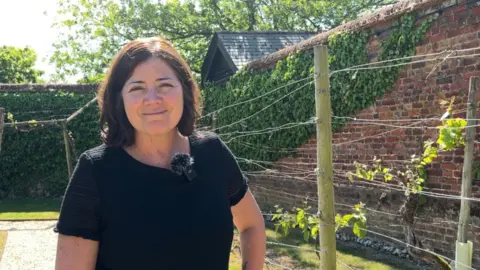
BBCA vineyard has said the loss of half its crop in April due to frost was "devastating".
Natalia Pezzone, the director of Stanlake Park in Twyford, Berkshire, said it preferred not to rely on expensive frost protection measures because they would "make all our sustainability efforts go to waste".
Independent viticultural consultant Stephen Skelton said vines were vulnerable to frost because it destroys the green tissue, and due to it being a high-value crop, the impact was worse.
Pezzone said the frost was a "stark reminder of how fragile viticulture can be" and that it has had a "big" financial hit on the business.
Although vines will produce secondary shoots, yields are expected to be significantly lower this year.
However, reduced crops can sometimes result in greater fruit concentration and quality.
While some days in April were fairly warm, the nights were a different story, with forecasts predicting temperatures would drop close to freezing, meaning some places could be expected see a touch of ground frost.
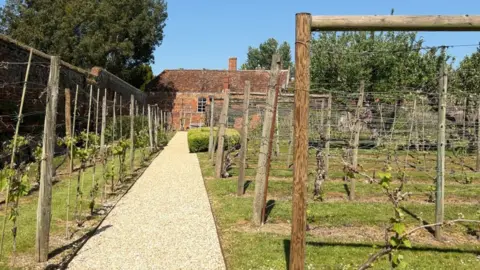
Pezzone said initial assessments indicate that approximately 40-50% of this year's crop had been lost, with some areas, including the estate's walled garden vineyard, experiencing near total damage.
"It's the second time in the last seven years, so it's not really frequent in a way, but it has very devastating effects," she added.
 Wendy Wilmot
Skelton, who has been involved with growing grapes and vines in the UK for more than 50 years, said: "If you're growing vines, which are very expensive to establish, very expensive to grow, and high value, you need to think about this.
"You should know your site, and you should know which bits of your site are most likely to get frost damage, and then you can take preventative measures."
While many vineyards do use protective methods such as frost candles or wind machines to heat the air, these come with financial and environmental costs.
Stanlake Park has chosen not to rely on such interventions "in line with its sustainability approach".
Pezzone said: "Yes it is a choice and we know that this could happen - it happened in 2020 and it happened again this year.
"But it's still a choice that we prefer to make rather than intervene with very expensive frost protection systems that then will force us to raise our prices in wine which we don't want to do - or use a non-sustainable methods, which will make all our sustainability efforts go to waste."
